

Fear of Rats: Understanding and Overcoming Rat Phobia
Understanding the Fear of Rats
A fear of rats can feel intense, unsettling and difficult to shake. Rats often appear suddenly, move quickly, stay close to walls, and are strongly associated with dirt, disease, drains, bins, and hidden spaces. Even the thought of one nearby can be enough to make the body tense.
For some people, the fear comes from seeing a rat run across a path or garden. For others, it is the idea of rats inside a house, beneath floorboards, near food, or somewhere unseen. The fear may involve being bitten, contamination, infestation, loss of control, or the feeling that if one rat is visible, many more may be nearby.
This profile explores the fear of rats, why it develops, how it affects daily life, and how it can be overcome. It also looks at rat behaviour, common myths, public-health concerns, ecological roles, compassion, and peaceful coexistence. The aim is to help you understand the animal and your fear response more clearly.
If rats make you avoid bins, gardens, city streets, underground stations, sheds, alleys, or certain outdoor spaces, you are not alone. Animal phobias are learned fear responses. With the right support, they can change.
What Is the Fear of Rats?
The fear of rats is often linked to musophobia, a term sometimes used for a fear of mice and rats.
It is also sometimes called murophobia (derived from the family Muridae) or suriphobia (from the French word for mouse)
Some people may also describe it as rat phobia, rodent phobia, or part of a wider fear of contamination or infestation.
A rat phobia can involve fear of seeing a rat, hearing one move, finding droppings, noticing gnaw marks, seeing rats on television, or imagining rats hidden nearby. Unlike ordinary caution around wild animals, a phobia causes the nervous system to react as though danger is immediate and difficult to escape.
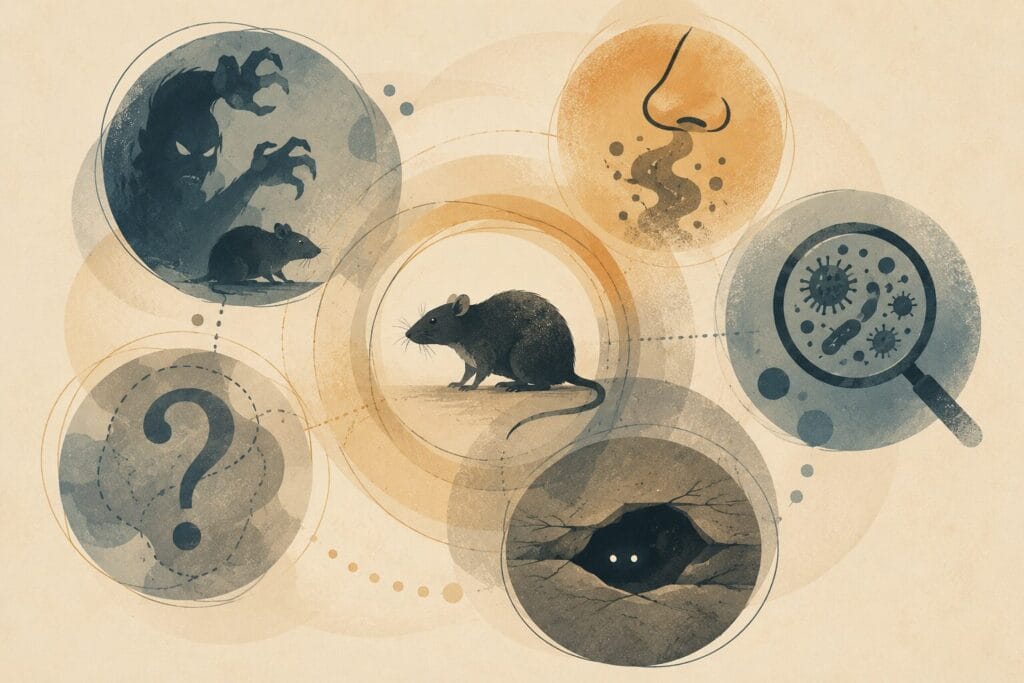
Rat fear often has several layers. There may be fear of the animal itself, fear of disease, disgust at contamination, fear of bites, fear of infestation, and fear of hidden movement in dark or enclosed spaces. Because these layers overlap, rat phobia can feel more complicated than simply disliking an animal.
Creature Courage explains this wider pattern in its guide to animal phobias and zoophobia, including why the brain can attach powerful fear to specific animals and then keep repeating the alarm.
Symptoms of Rat Phobia
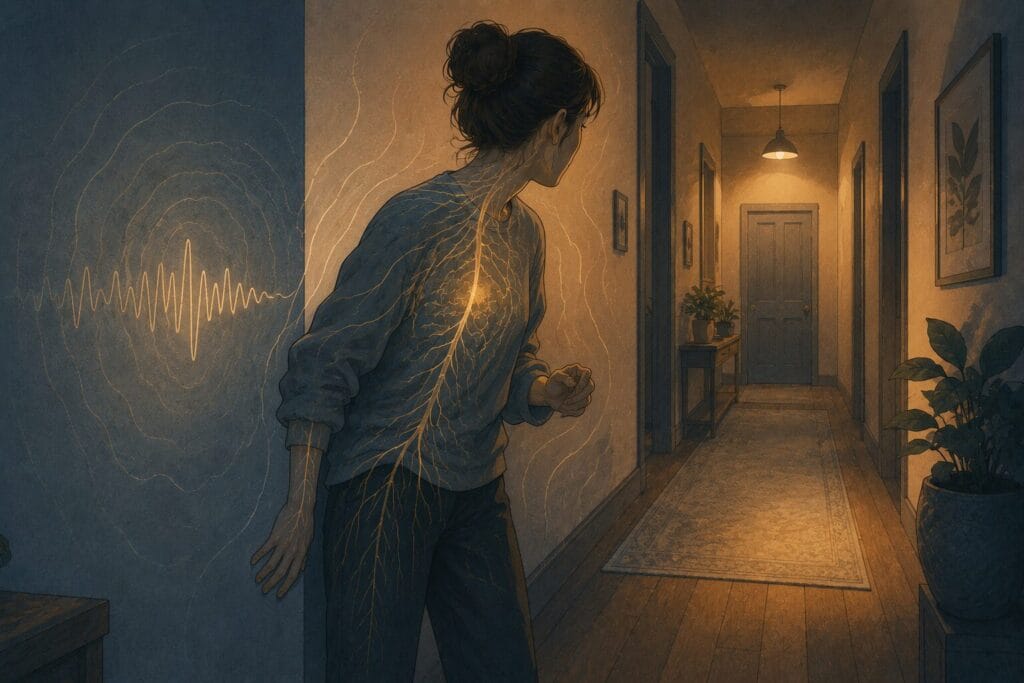
Rat phobia can affect the body, thoughts, emotions and behaviour. Symptoms may appear when seeing a rat, anticipating a rat encounter, finding signs of rodents, or entering a place where rats might be present.
Physical Symptoms
Physical symptoms may include a racing heartbeat, sweating, trembling, nausea, tightness in the chest, dizziness, breathlessness, muscle tension, or a strong urge to leave immediately. Some people freeze when they see a rat because the nervous system briefly cannot decide whether to run, hide, shout, or stay still.
Emotional Symptoms
Emotionally, rat phobia may create panic, disgust, dread, vulnerability, embarrassment, anger, or a feeling of being unsafe in your own environment. It can also lead to persistent worry, especially if you have seen a rat near your home or workplace.
Behavioural Symptoms
Behavioural changes often include avoiding bins, sheds, garages, gardens, basements, alleyways, parks, canals, farms, underground stations, or food storage areas. Some people check rooms repeatedly, avoid taking rubbish out after dark, or feel unable to relax until they are certain no rat is nearby.
Common Rat-Specific Triggers
The most common triggers include quick movement along walls, long tails, small dark shapes moving at ground level, scratching sounds, droppings, gnaw marks, bins, drains, railway tracks, compost heaps, and stories about infestation. For many people, the fear becomes stronger because rats are associated with what is hidden rather than what is openly visible.
Why Rats Feel Different From Many Other Animals
Rats occupy a particular place in human fear. They are not usually feared because they are large or powerful. Instead, they are feared because they cross boundaries.
They move between drains and gardens, streets and kitchens, outside spaces and indoor walls. They can appear where people feel things should be clean, private, and controlled. That boundary-crossing quality is one reason rat phobia can feel so personal. A rat in a field may feel unpleasant. A rat near the house can feel like an invasion.
This fear is often intensified by the idea that rats are hidden. A person may not only fear the rat they saw, but the possibility of more rats nearby. The mind begins to search for clues: a sound, a smell, a shadow, a gap under a door, a rustle behind a bin.
Understanding this matters because rat phobia is not always about the visible animal. It is often about uncertainty, contamination, invasion, and loss of control. Once those ingredients are recognised, the fear becomes easier to work with.
How Rat Phobias Develop
Rat phobia can develop through experience, learned fear, cultural messages, disgust, and avoidance. Sometimes there is one clear event. More often, the fear grows from a collection of impressions that gradually become linked together.
Startling Encounters
A sudden rat encounter can be powerful because rats move fast and low to the ground. A rat running across a path, appearing in a garden, or entering a home can create a strong memory, especially if the person felt trapped or unprepared.
The brain may later treat similar places as risky even when no rat is visible. This is one of the ways a single encounter can widen into avoidance of bins, gardens, sheds, or evening walks.
Contamination and Disease Concerns
Rats are strongly linked in public imagination with disease and dirt. There are sensible reasons to practise hygiene around wild rodents, droppings, urine, and food storage areas. However, phobia can magnify sensible caution until every possible rat-related sign feels catastrophic.
The important distinction is balance. Hygiene is useful. Panic is exhausting. Good support helps the brain separate realistic precautions from overwhelming fear.
Learned Fear From Family or Culture
Many people grow up hearing rats described as filthy, dangerous, sneaky, or disgusting. These messages can be absorbed long before someone has direct experience with rats.
Children may also learn fear by watching adults react. If a trusted adult screams, panics, or repeatedly warns that rats are terrible, the child’s nervous system may learn the association quickly. Creature Courage explores this pattern in its article on parent anxiety and child phobia therapy.
Media and Historical Associations
Rats have appeared in stories about plague, sewers, horror, infestation, decay and urban neglect for centuries. These images are culturally powerful. Even when they are exaggerated or incomplete, they can shape how the brain interprets ordinary rat behaviour.
The Avoidance Cycle
Avoidance often feels like the only sensible response. If you avoid the bins, avoid the shed, avoid the garden, avoid the street where you once saw a rat, your anxiety may drop quickly.
However, that short-term relief teaches the brain that avoidance kept you safe. Over time, the fear may spread to more places. Creature Courage explains this survival-brain pattern in its article on caveman brain awareness, which describes why the body can react before the rational mind has caught up.
The Reputation Problem: Rats in Human Stories
Rats have one of the heaviest reputations of any small animal. They are often cast as villains before they even appear. In films, stories and public conversation, rats are used to symbolise neglect, disease, poverty, betrayal, darkness and decay.
This reputation matters because fear is not built only from direct experience. It is also built from symbols. If an animal is repeatedly presented as disgusting or dangerous, the brain may react to the story as much as to the animal.
Rats are not moral creatures. They are not dirty as a personality trait. They are opportunistic animals that follow food, shelter, warmth, water and safety. Their behaviour can create problems for humans, especially in homes and food areas, but that does not make the animal evil.
When the story changes from “rats are sinister” to “rats are adaptable survivors that sometimes come into conflict with people”, there is more room for calm, practical thinking.
Fear, Disgust and the Contamination Alarm
Many rat phobias are fuelled by disgust as much as fear. Disgust is one of the body’s oldest protective systems. It helps humans avoid things that may carry infection, decay or contamination. Around rats, this alarm can become extremely sensitive.
You might know that seeing a rat on a path does not mean you are contaminated, yet still feel the urge to wash, clean, leave, check, throw things away, or avoid the area completely. This is because disgust often feels physical. It can sit in the stomach, tighten the throat, and make proximity feel unbearable.
Disgust is not foolish. It has a purpose. The problem arises when the alarm becomes too broad and begins treating indirect, low-risk situations as though they are immediate threats.
In treatment, the goal is not to remove sensible hygiene. It is to help the nervous system become more accurate, so you can respond appropriately rather than being pulled into panic.

Rats, Homes and the Need for Control
Rats can feel especially frightening when the fear is connected to the home. A house is supposed to feel safe, private and predictable. The idea of a rat inside walls, under floors, in a kitchen, or near food can disturb that sense of security.
This is one reason rat phobia can become emotionally draining. It may not end when the rat disappears. The person may keep wondering whether there are more, where they came from, whether the home is clean, or whether something has been missed.
Practical action can help. Securing food, closing gaps, managing waste, and getting professional advice where needed are reasonable steps.
The RSPCA guidance on rats and mice in the wild recommends humane methods to deter rodents from homes and gardens, including reducing access to food and shelter.
For phobia recovery, practical steps work best when paired with nervous system support. Otherwise, checking and reassurance can become endless. The aim is not to create a world where uncertainty never exists. The aim is to feel able to respond calmly and effectively.
Why Address a Fear of Rats?
A fear of rats can quietly shrink everyday life. It may affect how comfortable you feel in your garden, when taking out rubbish, walking near canals, using public transport, visiting older buildings, going into basements, or staying in accommodation where you feel unsure about cleanliness.
Some people feel embarrassed because they assume everyone is disgusted by rats, so they should simply be able to cope. Others feel ashamed because their reaction is stronger than ordinary dislike. Neither response is helpful. A phobia is not a character flaw. It is a learned alarm pattern.
Addressing the fear does not mean inviting rats into your life. It means reducing the amount of power the fear has over your decisions. You can still take sensible precautions. You can still prefer not to be near rats. The difference is that the fear no longer gets to run the whole household.
Fascinating Facts About Rats
Fear often turns rats into symbols. Curiosity helps bring them back into focus as animals.
Rats Are Highly Intelligent
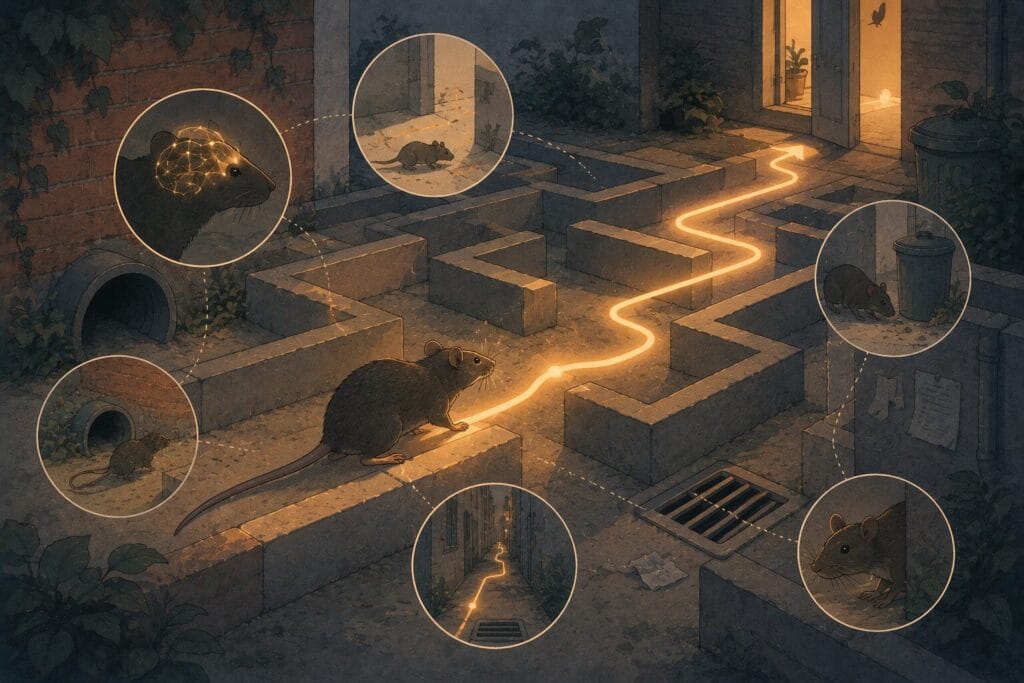
Rats can learn routes, solve problems, remember locations, respond to patterns, and adapt quickly to new environments. Their intelligence is one reason they are so successful, but it is also one reason they can feel unsettling to people who fear them.
Rats Are Social Animals
The RSPCA pet rat guidance describes rats as social animals that need companionship. Although pet rats and wild rats live very different lives, the social nature of rats can help readers see them as more complex than the frightening stereotype suggests.
Rats Use Their Whiskers to Explore
Rat whiskers are sensitive tools that help them navigate in low light, judge spaces, and understand nearby surfaces. A rat moving close to a wall is not trying to appear sinister; it is using its body and senses to move safely.
Rats Are Excellent Survivors
Rats thrive in human environments because they are adaptable. They can find food, shelter and routes through places that change constantly. Their success can create conflict with people, but it also shows remarkable behavioural flexibility.
Rats Play an Important Role in Science
Rats have contributed significantly to scientific and medical research. This does not erase the fear many people feel, but it does add another layer to their place in human history.
Common Myths About Rats
Myth: Rats Are Aggressive
Why People Believe It
Rats have sharp teeth, move quickly, and are often shown as threatening in media. A startled rat may also behave defensively if trapped.
The Reality
Most rats prefer to avoid humans. Like many wild animals, they are more likely to flee than confront. Problems are more likely when rats are cornered, handled, injured, or trapped in confined spaces.
Why Understanding Matters
Knowing that avoidance is normal rat behaviour can reduce the feeling that a rat is seeking conflict.
Myth: Seeing One Rat Means There Are Hundreds Nearby
Why People Believe It
Rats are social and can live in groups, so the mind may quickly imagine an infestation.
The Reality
Seeing one rat does not automatically prove a large infestation. It may indicate food sources, shelter, or local activity that should be checked calmly and practically.
Why Understanding Matters
This helps prevent the imagination from turning one sighting into a certainty of disaster.
Myth: Rats Are Dirty Because They Want to Live in Filth
Why People Believe It
Rats are often seen near bins, drains, waste areas and neglected spaces.
The Reality
Rats follow resources. They seek food, water, warmth and shelter. If human environments provide those resources, rats may use them.
Why Understanding Matters
Understanding attraction points makes practical prevention easier and reduces moralising fear.
Why Rats Matter in Nature
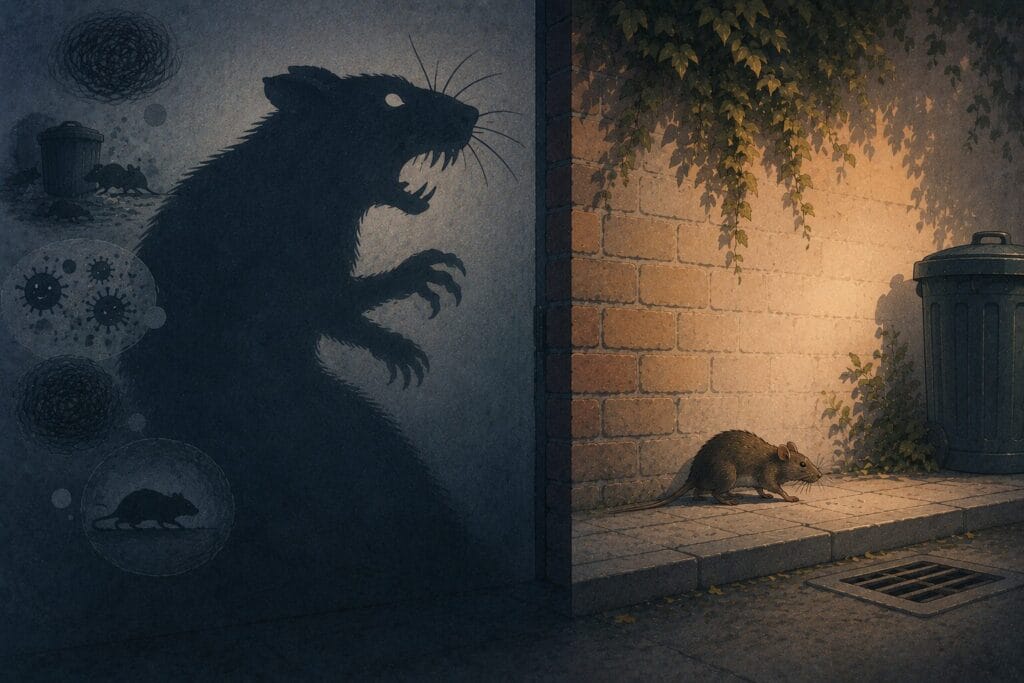
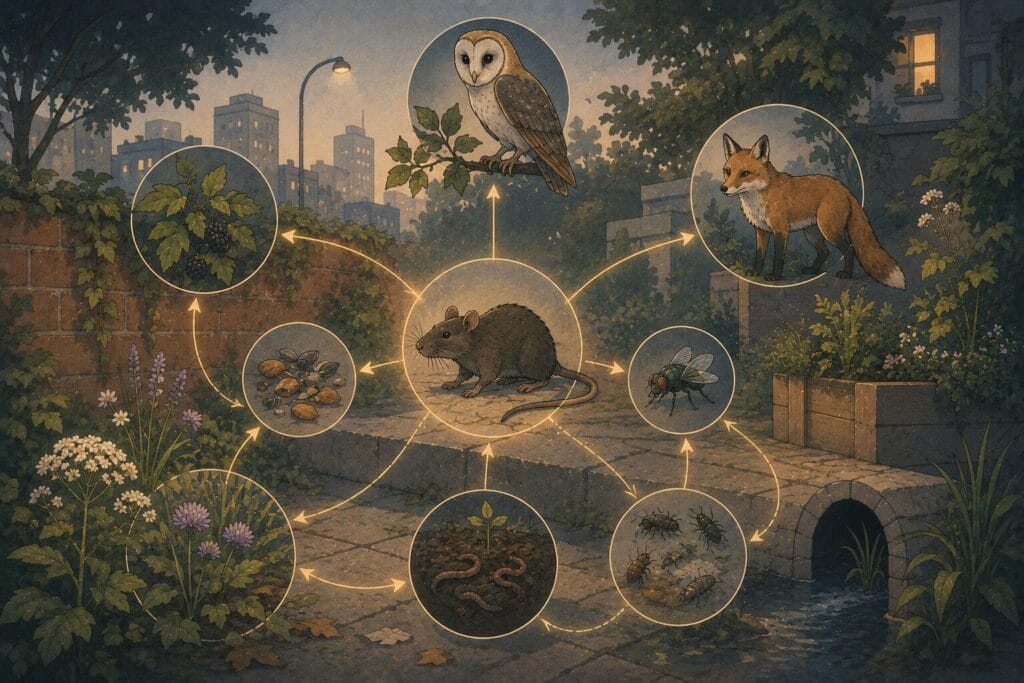
Rats are part of wider ecosystems, even when their relationship with humans is complicated. They are omnivores, scavengers, prey animals, seed movers, and adaptable survivors.
In natural systems, rodents can help move seeds, recycle organic matter, and provide food for predators such as owls, foxes, stoats, snakes, and birds of prey. In urban settings, their ecological role becomes tangled with waste management, buildings, food storage, and public health.
This is where balance matters. It is possible to understand rats as living animals while still recognising that uncontrolled rat activity near homes, food businesses, or vulnerable environments can create real problems.
Creature Courage’s approach is not about romanticising animals. It is about seeing clearly. When fear is reduced, practical judgement often improves.
Seeing Rats Through a Compassionate Lens
Fear can turn rats into a single idea: contamination, danger, invasion. Compassion asks what life is like for the animal itself.
A wild rat lives close to the ground, often in darkness, constantly searching for food while avoiding predators, traps, traffic, poisons, harsh weather, territorial conflict, and human hostility. It does not know it has inherited centuries of human fear. It is simply trying to survive.
Rats are vulnerable in ways that fear rarely lets us notice. Their quick movements are not designed to frighten us. Speed is protection, there only way they have to escape being eaten alive. Their caution is not scheming. It is survival. Their use of hidden routes is not moral secrecy. It is how a small prey animal avoids danger.
Building empthay for rats can help fear to dissolve. Recognising rats as a living, feeling creatures that want to survive just like we do can go a long way in breaking down fear.
Peaceful Coexistence With Rats
Peaceful coexistence with rats does not mean accepting infestations or ignoring hygiene. It means responding realistically, calmly and humanely.
In gardens and outdoor spaces, practical steps can reduce conflict. Keep food waste secure, avoid leaving pet food outside, manage bird feeding carefully, clear fallen fruit, maintain compost responsibly, and block access points only after checking that animals are not trapped inside. The RSPCA recommends humane deterrence and prevention rather than causing unnecessary suffering.
If you believe rats are inside your home, it is sensible to seek appropriate advice and take action. However, phobia can make action feel chaotic. A calm plan is more effective than panic: identify signs, reduce attractants, secure entry points, and get professional help if needed.
The emotional goal is to move from alarm to agency. You may not control every rat in the world, but you can build confidence in how you respond.
Can the Fear of Rats Be Treated?
The great news is yes!
Specific animal phobias are highly treatable. Fear is learned through experience, association, imagination, repetition and avoidance. Because it is learned, it can also be changed through new learning.
Treatment may involve education about rat behaviour, Cognitive Behavioural Therapy, gradual exposure, nervous system regulation, imagination exercises, disgust tolerance work, and practical confidence-building. The NHS guidance on phobias explains that phobias can cause intense anxiety and that treatment may include talking therapies such as CBT.
The NHS Inform phobia self-help guide is also based on CBT principles and explains how thoughts, feelings and behaviours can maintain phobic responses.
Creature Courage explains supported fear-retraining in its article on exposure therapy for animal phobias. For rat phobia, this work does not begin with forcing someone near a live rat. It may begin with language, images, education, imagination exercises, video, distance work, or carefully structured steps based on the individual’s goals.
Good therapy is not a trapdoor into terror. It is a staircase, built one manageable step at a time.

The Creature Courage® Approach
At Creature Courage®, we understand that overcoming an animal phobia requires more than being told there is nothing to fear. That is especially true with rats, where fear often overlaps with hygiene concerns, disgust, urban anxiety, and worries about the home.
Founded by Britain Stelly, Creature Courage specialises in animal phobia therapy using psychology, neuroscience, animal education, and carefully guided exposure experiences. Through our Animal Phobia Therapy programme, clients learn how fear develops, how the nervous system responds to perceived threats, and how confidence can be rebuilt step by step.
If your fear of rats is part of a wider fear of rodents, contamination, insects, wildlife, or animals generally, our animal phobia treatment can be tailored to your specific triggers.
Many clients are surprised to discover why one-day phobia therapy can work so effectively for specific animal fears. Others may benefit from a more gradual approach, especially when the fear involves disgust, infestation anxiety, home safety, or previous distressing experiences.
Creature Courage also uses a holistic approach to animal phobias, recognising that fear is not only about the animal itself but also about the wider nervous system. For younger clients, our children's phobia therapy provides age-appropriate support designed to build confidence without pressure.
Every fear story is different. Some people fear seeing rats outdoors. Some fear rats in the home. Some fear disease. Some fear tails, teeth, speed, scratching sounds, or hidden movement.
Our goal is not to make you love rats. Our goal is to help you feel calmer, safer, and more in control.
Therapeutic Techniques Used to Treat Rodent Phobias
At Creature Courage, we use a holistic and neuroscience-informed approach that may include:
- Exposure Therapy: To allow the brain to update its fear response
- CBT: (Cognitive Behavioural Therapy): To give powerful thought awareness
- Guided Imagination Exercises: To transform how you see the animal
- NLP Techniques: (Neuro-Linguistic Programming) Changes how you understand the animal and anchors courage
- Hypnotherapy: To make changes in the deep subconscious and create relaxation
- Art Therapy: To help strengthen other techniques and make them memorable
- Animal Education:To build fascination and compassion, and to dispel myths
Rather than relying on a single technique, we combine approaches to create a personalised experience that works with both the mind and body.
Taking the First Step
Living with a fear of rats can make everyday places feel charged with threat. A bin area, garden shed, basement, alleyway or train platform can become a place the mind watches too closely.
However, phobias are not fixed forever. With the right support, education and gradual exposure, the brain can learn a new response. You do not need to begin by standing near a rat or forcing yourself through panic.
You begin with understanding. Understanding gives the fear edges. Once fear has edges, it becomes something that can be worked with rather than something that fills the whole room.
If you are ready to explore support, you can contact Creature Courage to discuss your experience, ask questions, and discover which approach may be right for you.
Frequently Asked Questions About the Fear of Rats
What is the fear of rats called?
The fear of rats is often linked to musophobia, a term used for fear of mice and rats. Many people simply call it rat phobia or fear of rats.
Is a fear of rats a real phobia?
Yes. If rats cause intense anxiety, panic, avoidance, or disruption to daily life, the fear can function as a specific animal phobia.
Why am I so scared of rats?
Your fear may be linked to sudden movement, contamination concerns, disease associations, past experiences, cultural messages, infestation worries, or the way your nervous system interprets hidden spaces.
Are rats dangerous to people?
Wild rats should not be handled or approached. Sensible hygiene and prevention are important, especially around food, droppings, urine, and indoor activity. However, most rats prefer to avoid humans rather than confront them.
Does seeing one rat mean there is an infestation?
Not necessarily. One sighting may indicate local activity or nearby food sources, but it does not automatically prove a large infestation. Calm checking and practical prevention are more helpful than panic.
Why do rats trigger disgust?
Rats are strongly associated with waste, drains, disease, and hidden spaces. Disgust is a protective system, but in phobia it can become overactive and treat low-risk situations as emergencies.
Can children develop a fear of rats?
Yes. Children may develop rat phobia after a startling encounter, frightening story, family anxiety, or repeated messages that rats are dirty or dangerous.
Can exposure therapy help with rat phobia?
Yes. Gradual exposure therapy can help the brain learn that rat-related situations are more manageable than the phobia predicts.
Do I need to touch a rat to recover?
No. Recovery goals should be personal. For many people, being able to remain calm after seeing a rat outdoors, entering a garden, or managing household concerns is enough.
Can I overcome a fear of rats?
Many people achieve significant improvement with the right support, education and carefully planned exposure work.
What should I do if I think rats are in my home?
Take practical steps calmly. Secure food, reduce waste, check possible entry points, and seek appropriate professional advice if needed. If the fear feels overwhelming, phobia support can help you manage the anxiety while practical steps are taken.
Where can I get help for rat phobia?
Specialist support from Creature Courage's Animal Phobia Therapy programme can help you understand and retrain your fear response around rats.
Further Reading
You may also find these resources helpful:
Creature Courage Resources
- Animal Phobia Therapy
- Animal Phobia Treatment
- Exposure Therapy for Animal Phobias
- Why One-Day Phobia Therapy Works
- A Holistic Approach to Animal Phobias
- Understanding Animal Phobias (Zoophobia)
- Children's Phobia Therapy
- Contact Creature Courage
External Resources
- NHS Specific Phobias Guide
- NHS Inform Phobias Self-Help Guide
- RSPCA Rats and Mice in the Wild
- RSPCA Pet Rat Advice