Introduction
Art therapy is often misunderstood as something only for creative people.
In reality, it is a powerful psychological tool that helps the brain process fear in a completely different way.
For people with animal phobias, this approach can gently transform fear into something far less threatening — and sometimes even something that feels safe, manageable, or even slightly amusing.
In this article, we will explore how art therapy can help anyone overcome fear, whether you are good at art or not.
What Is Art Therapy?
Art therapy is a psychological technique that uses creative expression — such as drawing, sketching, or visualisation — to explore and reshape emotional responses.
It works by:
- Engaging non-verbal areas of the brain
- Allowing emotions to be processed more safely
- Creating new associations with previously feared triggers
Unlike traditional talk-based approaches, art therapy focuses on experience rather than explanation.
Research in expressive therapies shows that non-verbal processing can help access emotional material that is not easily reached through language alone, particularly in fear-based conditions, as outlined by the British Association of Art Therapists.
How It Works in Therapy
Art therapy helps change how the brain responds to fear by combining imagination, emotion, and physical action.
Instead of analysing fear logically, it allows you to:
- Experience the feared animal in a controlled mental environment
- Shift the emotional tone of that experience
- Reinforce the new response through creative expression
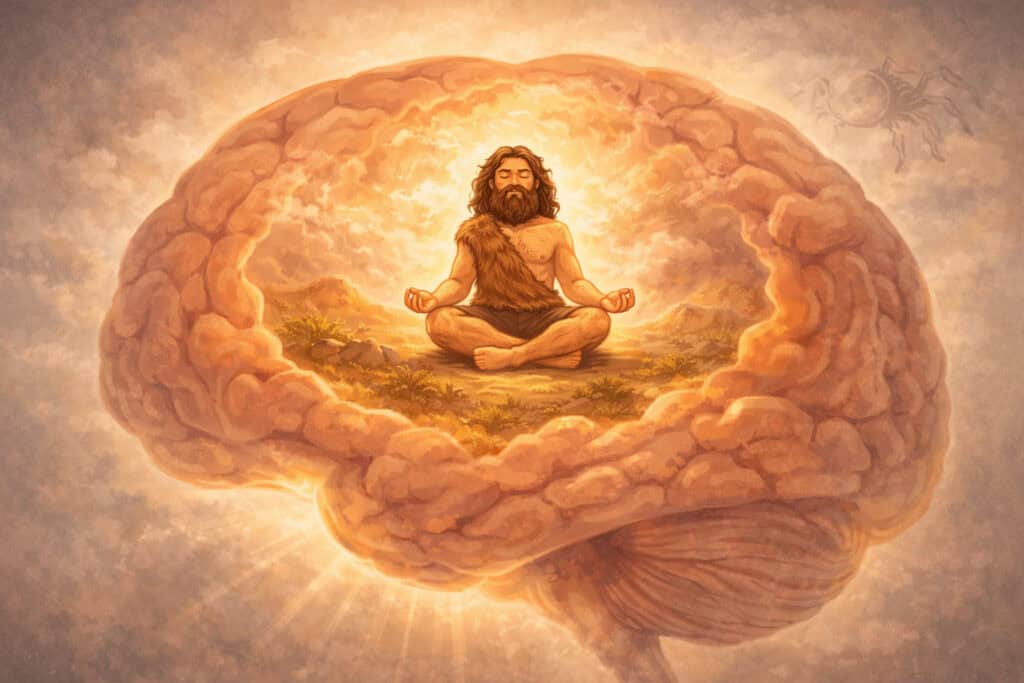
This process helps align the emotional brain (often called the “caveman brain”) with the rational mind.
From a neuroscience perspective, this reflects interaction between the amygdala (responsible for threat detection) and the prefrontal cortex (involved in regulation and reasoning), a relationship explained in accessible terms by Simply Psychology’s overview of the amygdala.
Examples
Art therapy exercises for animal phobias can be simple but surprisingly powerful.
For example:
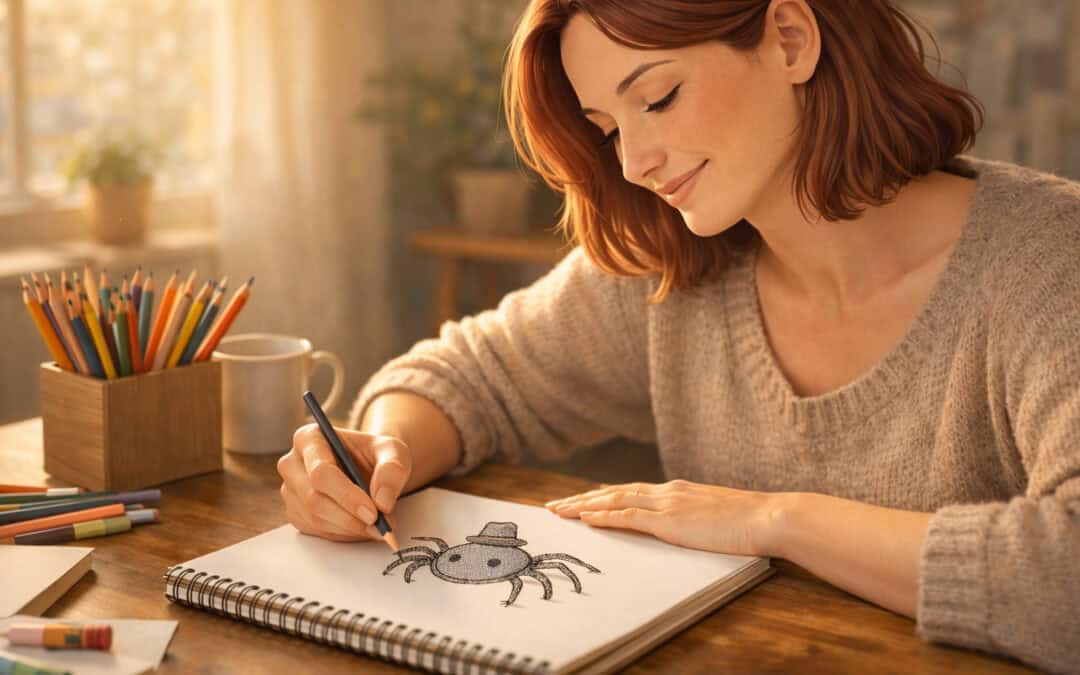
- Drawing a spider wearing a tiny hat or smiling
- Sketching an insect in a gentle or friendly way
- Creating a cartoon version of the animal that feels non-threatening
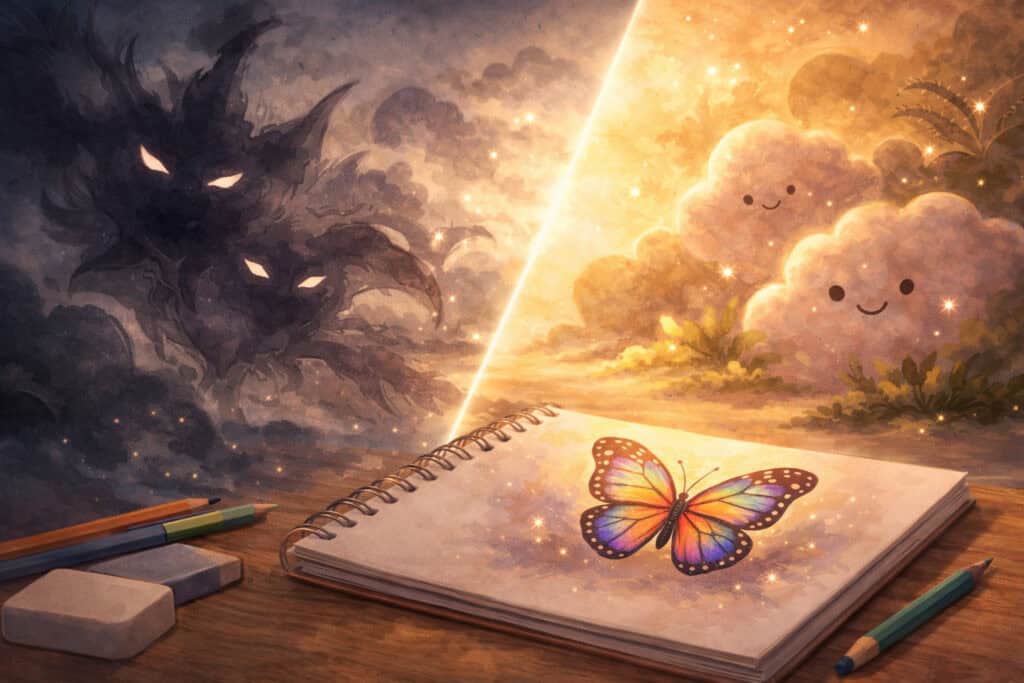
- Reimagining the animal in a calm, peaceful setting
These exercises are not about artistic ability.
They are about changing how the animal feels in your mind.
What Does the Science Say?
Research shows that creative expression plays an important role in learning and emotional processing.
Organisations such as the American Art Therapy Association highlight that drawing and visual expression can support emotional regulation and memory formation.
For example, studies have shown that engaging in creative activities can significantly reduce cortisol levels — a key biological marker of stress — as demonstrated in research from Drexel University.
In addition, emotional experiences are more likely to be stored as long-term memories, which is why emotionally engaging techniques such as drawing and imagination can be so effective. This relationship between emotion and memory is well explained in Harvard Health’s overview of how memory works.
This means that when you draw or recreate an experience, your brain is more likely to retain and reinforce the new, safer association.
Common Misconceptions
Art therapy is often misunderstood. Here are some common myths:
“You have to be good at art.”
Not true — the quality of the drawing is completely irrelevant. The therapeutic benefit comes from the process, not the outcome, as supported by guidance from the British Association of Art Therapists.
“It’s just for children.”
Art therapy is widely used with adults in clinical and trauma settings.
“It’s not scientific.”
Creative processing is supported by evidence in neuroscience, particularly in emotional regulation and memory formation, including research discussed by Harvard Health.
“It won’t work for strong fears.”
When used correctly, it can significantly reduce emotional intensity and support deeper change, particularly when combined with exposure-based approaches.
How Art Therapy Treats Animal Phobias
Art therapy is not usually a standalone solution.
Instead, it plays a supportive role in a holistic approach by:
- Reducing the intensity of fear
- Making exposure feel more approachable
- Helping the brain prepare for real-world interaction
Modern psychological approaches emphasise combining emotional processing with behavioural experience, which is why treatments such as exposure therapy are commonly recommended by sources like the NHS guidance on phobia treatment.
It is especially useful before and after exposure work, where emotional reinforcement is key.
How We Use It at Creature Courage
At Creature Courage, art therapy is used in a very specific and intentional way. We believe in a holistic approach, combining several different phobia-fighting techniques, such as:
- Animal Education: To build fascination and compassion, and to dispel myths
- Exposure Therapy: To allow the brain to update its fear response
- CBT: (Cognitive Behavioural Therapy): To give powerful thought awareness
- Guided Imagination Exercises: To transform how people see the animal
- General Anxiety Education: (Caveman Brain Awareness): To get the brain working for you instead of against you
- NLP Techniques: (Neuro-Linguistic Programming) Change how you understand the animal and anchor courage
- Hypnotherapy: To make changes in the deep subconscious and create relaxation
- Art Therapy: To help strengthen other techniques and make them memorable
It is not about creating artwork.
It is about rewiring how the brain feels about the animal.
Step 1: Guided Imagination
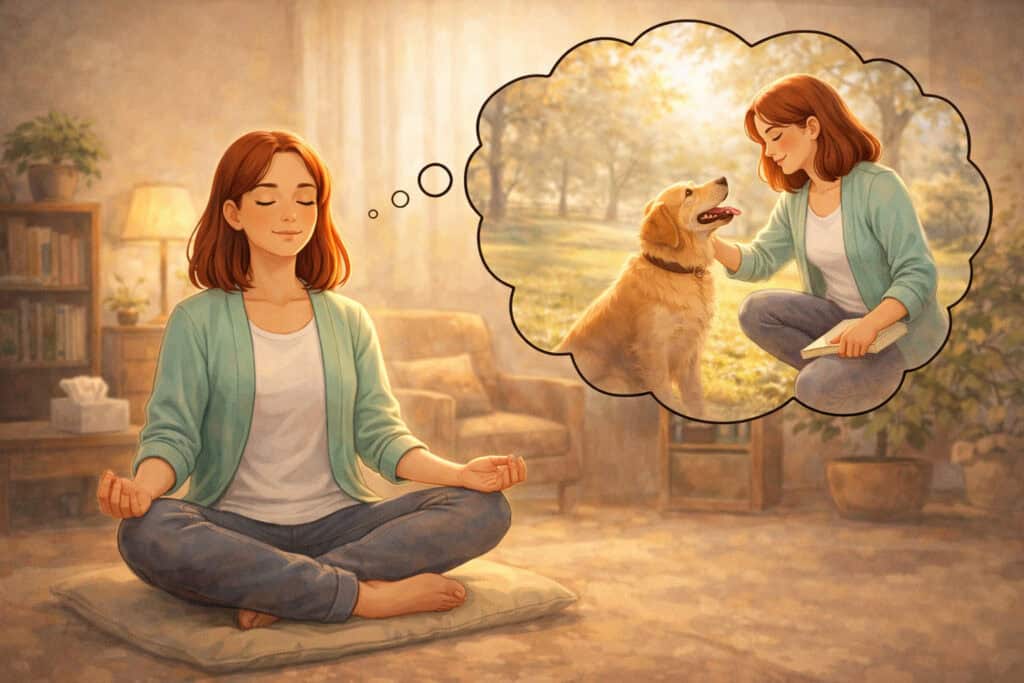
We begin with a structured imagination exercise.
(This can be explored further in our Imagination Exercise blog.)
During this process, you:
- Visualise the animal in a safe and controlled way
- Imagine it behaving in a gentle, humorous, or exaggerated way
- Begin to feel less threatened and more at ease
Mental imagery activates similar neural pathways to real experiences, which is why it is widely used in psychological techniques and is explored in sources such as Psychology Today’s explanation of mental imagery.
This stage also includes:
- Making peace with the animal
- Letting go of fear-based assumptions
- Reframing the animal as something neutral or even positive

Step 2: Emotional Reframing
At this stage, the shift becomes deeper.
Instead of just thinking differently, you begin to:
- Forgive the animal for scaring you
- Recognise that the fear response comes from the brain, not the animal
- Replace tension with warmth, curiosity, or humour
This reflects how emotional memories can be updated when new experiences are introduced — a process widely discussed in modern psychology and neuroscience.
Step 3: Creative Reinforcement Through Drawing
You then recreate the experience through drawing.
It does not matter if the drawing is:
- Simple
- Messy
- Childlike
- Or completely unrealistic
What matters is that it reflects:
- The new, safe version of the animal
- The emotional experience from the exercise
This works because:
- Drawing strengthens memory encoding
- It creates a visual anchor for the new association
- It helps the brain reconnect with the feeling, not just the idea
The combination of visual and emotional learning strengthens recall, which aligns with cognitive research on memory formation described by Harvard Health.
How It Fits Into a Broader Approach
As mentioned, art therapy is most effective when combined with other techniques.
In animal phobia treatment, art therapy works well with:
- Education about animals (to build understanding and compassion)
- Nervous system regulation techniques
- Real-time exposure experiences
This combination allows the brain to:
- Understand the animal
- Feel differently about the animal
- Experience safety in real life
Together, these steps create lasting change.
Conclusion
Overcoming fear is not just about logic.
It is about changing how the brain feels.
Art therapy offers a powerful way to do this by combining:
- Imagination
- Emotion
- Creativity
- And humour
By transforming how you see the animal in your mind, you begin to transform how you respond to it in real life.
And sometimes, that transformation starts with something as simple as a drawing.
FAQ for Art Therapy in Animal Phobia Therapy
Is art therapy effective for animal phobias?
Yes. Art therapy can help reduce the emotional intensity of fear and create safer associations with the animal. It is particularly effective when combined with exposure-based approaches, as it helps prepare the brain and reinforce new learning.
Do I need to be good at drawing for art therapy to work?
No. Artistic skill is not important. The benefits of art therapy come from the process of expressing and reshaping emotions, not from how the final drawing looks.
How does drawing help reduce fear?
Drawing helps the brain process and store new experiences more effectively. When you create a visual representation of a safer or more positive version of the animal, it strengthens memory and reinforces emotional change.
Can art therapy replace exposure therapy?
Art therapy is best used as a supportive technique rather than a replacement. Real-life exposure is still important for fully updating fear responses, but art therapy can make that process feel safer and more manageable.
Is art therapy backed by science?
Yes. Art therapy is supported by research in neuroscience and psychology. Studies show that creative activities can reduce stress, improve emotional processing, and strengthen memory, all of which are important when overcoming fear.