
Can One Day Phobia Treatment Really Work?
If you’re considering treatment for an animal phobia, one of the most common questions is: how long will it take?
Creature Courage takes pride in the fact that we are able to help most of our clients achieve dramatic results in just one day. So for most people, the answer is yes, one day phobia treatment can absolutely work!
We know firsthand from thousands of people whom we have helped. Many of whom have travelled far distances because of our high success rate in achieving these kinds of results. You can read more about how this science works in our detailed guide.
However, occasionally, some people do need a little more time. This article explains why many people can overcome their fear in just one day — and why, in a few cases, a little more time may be helpful.
What Does “Success” Actually Mean in One Day?
At Creature Courage, success does not mean fear disappears completely in one day, but rather is so far reduced that finishing the process is easy on your own.
Many people do feel a dramatic shift by the end of a session — often far more than they expected.
What’s important to understand is this: we are not trying to completely recondition every layer of the brain in just one day.
Instead, the goal of one-day phobia treatment is to significantly reduce how sensitive your brain is to the trigger.
In other words, we change your starting point.
We bring the fear response down to a level where continuing exposure no longer feels overwhelming or unmanageable.
At that point, you are capable of continuing the process yourself — without needing ongoing therapy.
That is a key part of our approach.
We aim to empower clients with the tools, understanding, and confidence to move forward independently, rather than creating long-term reliance.
So success means:
- You feel calm enough to be around your trigger animal
- You can interact with it without overwhelming panic
- You understand what your fear response is doing and how to calm it down
- You know how to continue exposure safely on your own
For most people, reaching this point in a single day is entirely possible.
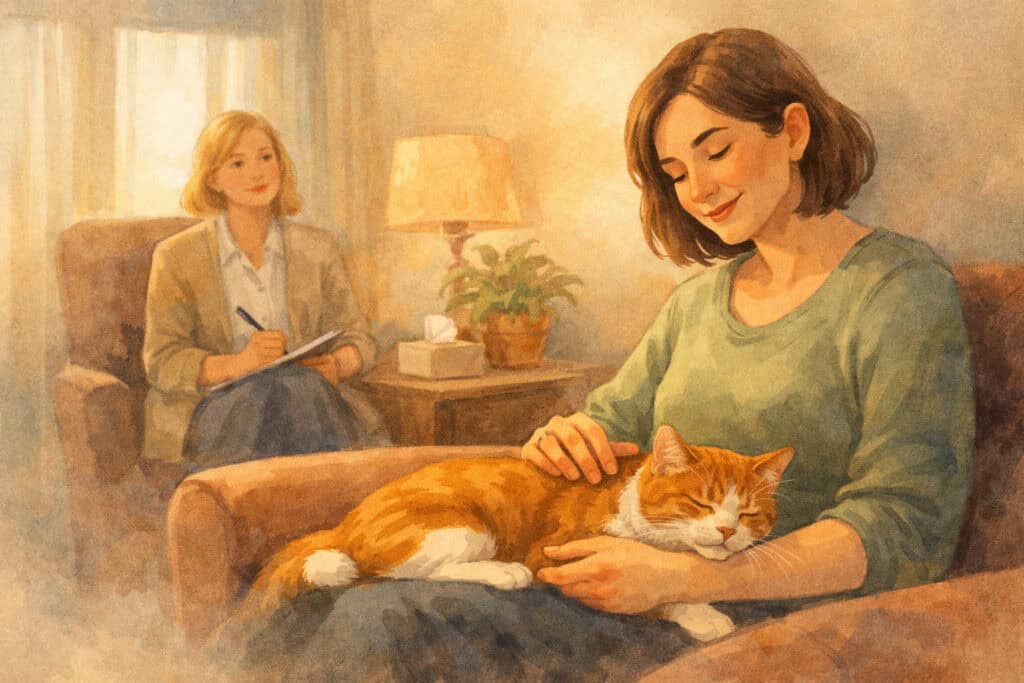
This is exactly what is achieved in immersive experiences such as our Spider Courage Experience, where people move from fear to calm interaction within a structured and supportive environment.
This is why one-day treatment can be so effective — it gives you the tools and the experience needed to continue building confidence independently.
Why One Day Is Often Enough
For many people, fear is not a lack of knowledge — it is a learned emotional response.
When the brain is given the opportunity to experience the feared situation safely, it can rapidly update that response.
This process is known as exposure learning and is widely supported within psychology as one of the most effective ways to treat phobias.
Research from organisations such as the American Psychological Association supports exposure-based approaches as a frontline treatment for phobias.
In a structured, immersive setting, the brain can move from:
- “This is dangerous.”
to - “I can handle this.”
Once that shift happens, people are usually able to continue practising exposure themselves.
If you’d like a deeper explanation of why this works so quickly, we break it down further in our article:
Why One-Day Phobia Therapy Works
Why Ongoing Exposure Still Matters
Even after a successful one-day session, a short period of continued exposure is important.
This is not because the treatment “didn’t work,” but because the brain strengthens what it repeats.
After your session, exposure becomes:
- A manageable activity rather than a stressful one
- A habit rather than a challenge
- A way to reinforce calm responses
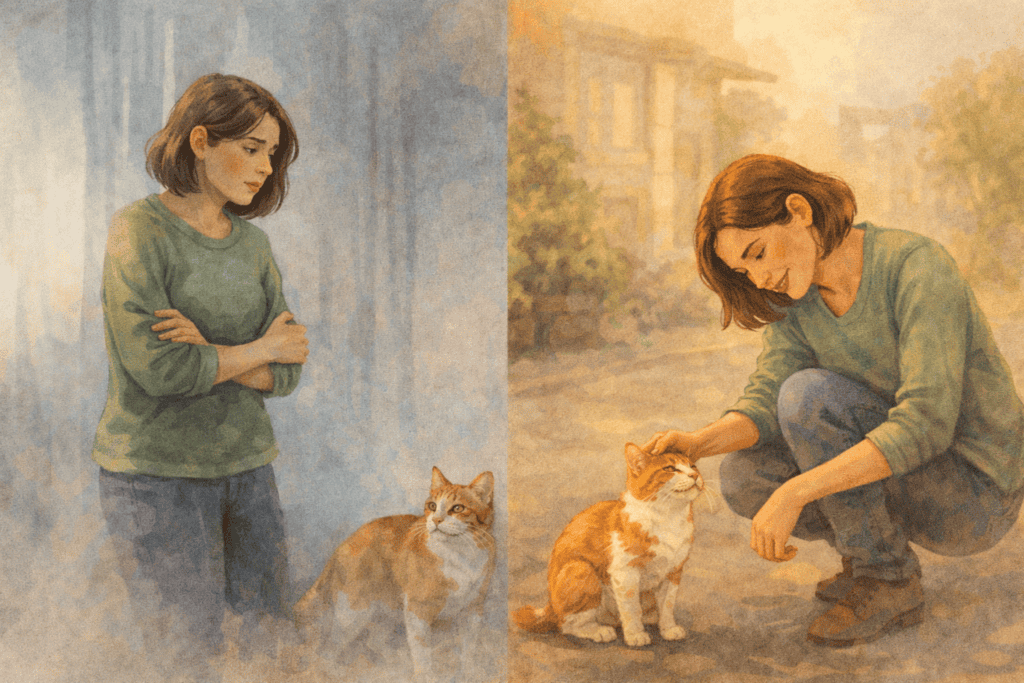
This is how long-term change is created. At Creature Courage, we also encourage our clients to not only continue to expose themselves and face their fears with the trigger animal, but also all potential fear and anxiety triggers. The more people develop habits of courage instead of avoidance in all areas of their lives, the less likely the animal phobia will ever come back.
For those who want additional support in building these courage habits, a structured follow-up, such as our
Freedom in Courage coaching can help reinforce long-term change.
Why Some People May Need More Than One Session
While most clients achieve strong results in one day, everyone is different and has different experiences, history, and relationships with anxiety.
Occasionally, some people benefit from a little more time.
1. Higher Overall Anxiety Levels
Some people suffer from overall higher anxiety and have a very heightened limbic system that is overstimulated and constantly on the lookout for danger. This is because they have been accidentally training it to be afraid by avoiding fear triggers instead of confronting it.
This is why exposure therapy in all its forms is so important, even with small anxiety triggers. Read more about exposure therapy in our detailed guide.
These types of people can absolutely still be treated, but they may need a slightly slower pace than just one full day.
That does not mean it will take weeks or months of treatment.
Usually, only one or maybe two additional sessions are needed.
These extra sessions also do not have to be full days. They can often be:
- A half-day session
- A short 2-hour top-up
This is also why anxiety coaching before animal phobia treatment can be helpful, as it supports reducing overall anxiety levels, which are often connected to animal phobias.
At Creature Courage, the focus is not just on the phobia itself, but on helping people build long-term habits in how they respond to fear.

2. Physical and Mental Exhaustion
Another common reason is simple exhaustion.
Exposure therapy involves activating the body’s fear response, which releases stress hormones such as adrenaline and cortisol.
According to the American Psychological Association, prolonged activation of the stress response can impact both physical and mental energy levels.
A one-day therapy session is a long and immersive experience.
Many people:
- Wake up early to attend
- Spend the day actively engaging with fear
- Experience repeated emotional and physiological activation
By the end of the day, this can be physically tiring.
Even when someone has made excellent progress, they may benefit from:
- Returning to do more exposure therapy when they are rested
- Completing the final stage of exposure with fresh energy
These follow-up sessions are typically much shorter, as most of the learning has already taken place.
3. Deeper or Trauma-Linked Phobias
In some cases, an animal phobia may be connected to a deeper or more complex experience.
This is often referred to in psychology as the difference between:
- Simple (specific) phobias
- Complex or trauma-linked fear responses
Simple phobias are typically linked to a specific object or situation (such as spiders, heights, etc.) and are often maintained by learned fear responses and avoidance behaviours.
Complex or trauma-linked phobias, however, may involve:
- A past distressing or traumatic experience
- Strong emotional associations beyond the animal itself
- A wider pattern of anxiety or fear responses
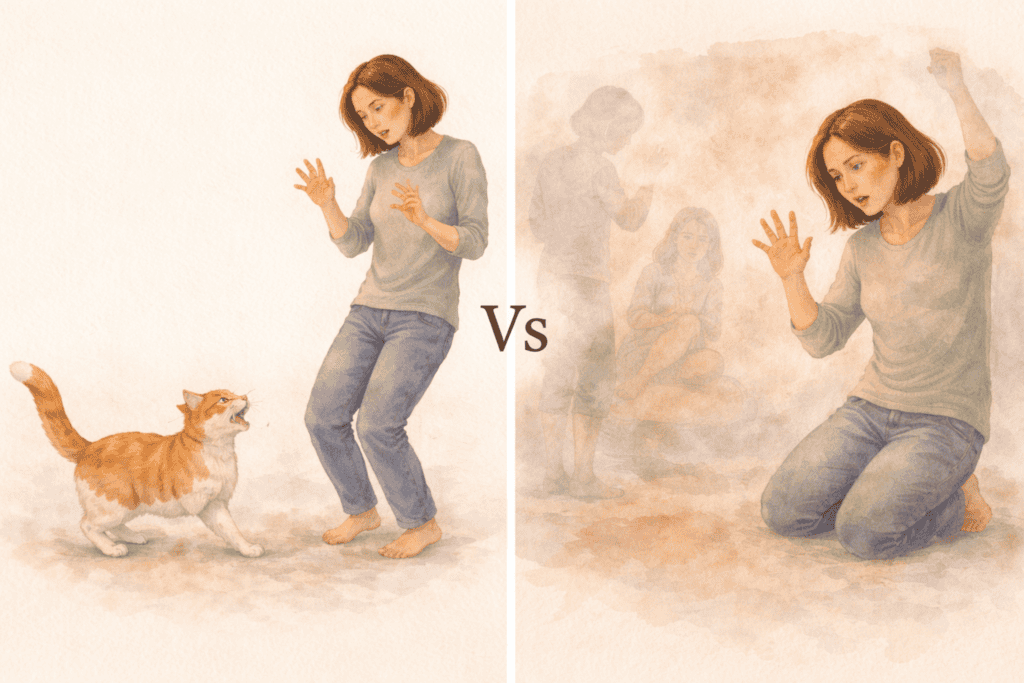
Research discussed in sources such as the National Health Service explains that specific phobias are usually highly treatable with exposure therapy, while trauma-linked responses may require a more layered approach.
In these cases, therapy can still be highly effective.
However, it may need:
- A slightly slower pace
- More time to explore underlying associations
- Additional sessions to fully resolve the fear response
This does not mean the outcome is different — only that the process may need to be more gradual.
4. Readiness and Willingness to Change
Another important factor is something that often gets overlooked — a person’s readiness to face their fear.
All of the techniques used in animal phobia treatment are grounded in neuroscience and are designed to work with the brain’s natural learning processes.
However, for those processes to take place, the person must be willing to actively engage with the experience.
Exposure therapy works by gently and progressively confronting the fear.
This means:
- Stepping towards discomfort rather than away from it
- Staying present during moments of fear
- Allowing the brain to learn that the situation is safe
For many people, this feels empowering and freeing.
But for others, they may not feel quite ready yet.
This can happen when:
- Someone is feeling pressured by a partner or family member
- They want the fear gone, but are not ready to face it directly
- Their overall anxiety levels are still too high
In these situations, the issue is not that treatment will not work — but that the timing may not be right.
This is why preparation can be so important.
Building confidence, emotional regulation, and a willingness to engage with fear can make the process much smoother and more effective.
For this reason, some people benefit from starting with a more gradual approach, such as doing our
Freedom in Courage coaching before moving into full exposure-based phobia treatment.
At Creature Courage, the goal is not just to remove fear, but to help people develop the courage and mindset needed to handle it — both during the session and beyond.
The Key Takeaway
Most people do not need weeks or months of therapy to overcome an animal phobia.
With the right approach, many can reach a point of calm, confident interaction in just one day.
However, needing a little more time is completely normal. If you are a person who needs a little extra time, remember, the goal is not speed — it is lasting change. And with Creatur Courage, we will still be able to help you a lot quicker than traditional therapies. We aim to get you independent as soon as possible to live a fear-free life!

Ready to Take the First Step?
If you’ve been living with an animal phobia, it can feel like something that will take a long time to fix — or something you simply have to live with.
But for many people, meaningful change can happen much faster than expected.
Whether you’re ready to take action now or just exploring your options, the first step is understanding what’s possible.
Please get in touch to discuss your situation and find the right approach for you.
You don’t need to feel completely fearless to begin — you just need to be willing to take the first step.
Frequently Asked Questions
Can a phobia really be treated in one day?
Yes, many people can reach a calm and manageable level of interaction with their fear in one day, especially with structured exposure therapy.
What if I don’t succeed in one session?
You are not expected to be perfect. Some people simply need a little more time, and short follow-up sessions are often enough.
How many sessions do most people need?
Most people need just one full-day session. Occasionally, one or two shorter follow-up sessions may be helpful.
Will my fear come back after treatment?
Fear can return if it is avoided. Continued, gentle exposure helps maintain and strengthen progress.
Is exposure therapy exhausting?
It can be. The body uses energy when processing fear responses, which is why rest and recovery can be important after a session.