
Fear of Slugs and Snails (Molluscophobia)
Understanding, Managing and Overcoming the Fear of Slugs and Snails
If the sight of a slug or snail makes you feel anxious, uncomfortable or disgusted, you are far from alone. Many people experience a strong reaction to these slow-moving molluscs, even though they pose little threat to humans. For some individuals, the reaction is mild. For others, simply seeing a slug on a garden path or a snail after rainfall can trigger intense feelings of fear, revulsion or panic.
In this guide, we will explore what the fear of slugs and snails is, why it develops, how it can affect daily life and what can be done to overcome it. We will also look at the fascinating lives of these often misunderstood creatures, drawing upon information from respected wildlife organisations such as the Natural History Museum and other experts in the natural world.
At Creature Courage®, we believe that knowledge, compassion and carefully guided experience can transform even long-standing fears. Our approach combines education with practical experience through our specialist animal phobia therapy programmes. Therefore, whether your reaction is based on fear, disgust or a combination of both, this article will help you better understand your experience and show that lasting change is possible.
What Is the Fear of Slugs and Snails?
The fear of slugs and snails is commonly referred to as molluscophobia. The term comes from the word mollusc, which describes a large group of soft-bodied animals that includes slugs, snails, octopuses, squid and many others.
For most people with molluscophobia, the fear centres specifically on slugs and snails rather than all molluscs. The reaction can range from mild discomfort to severe anxiety. Some individuals avoid gardens, parks or outdoor activities after rainfall because they worry about encountering these animals.
Interestingly, many people who describe themselves as having a fear of slugs or snails are not experiencing fear alone. Their reaction may also involve a strong sense of disgust. The animals' soft bodies, moist appearance and distinctive movement patterns can trigger feelings of contamination, unease or revulsion.
Although fear and disgust are different emotions, both are generated by protective systems within the brain. As a result, they can feel equally intense and equally difficult to control.
Like many specific phobias, molluscophobia is not a sign of weakness or irrationality. In fact, the NHS recognises specific phobias as a common form of anxiety disorder that can often be successfully treated. Instead, molluscophobia is a learned response that has become strongly associated with a particular trigger. Fortunately, learned responses can also be unlearned.
Symptoms of Molluscophobia
People experience the fear of slugs and snails in different ways. While some individuals feel only mild discomfort, others experience significant emotional and physical symptoms.
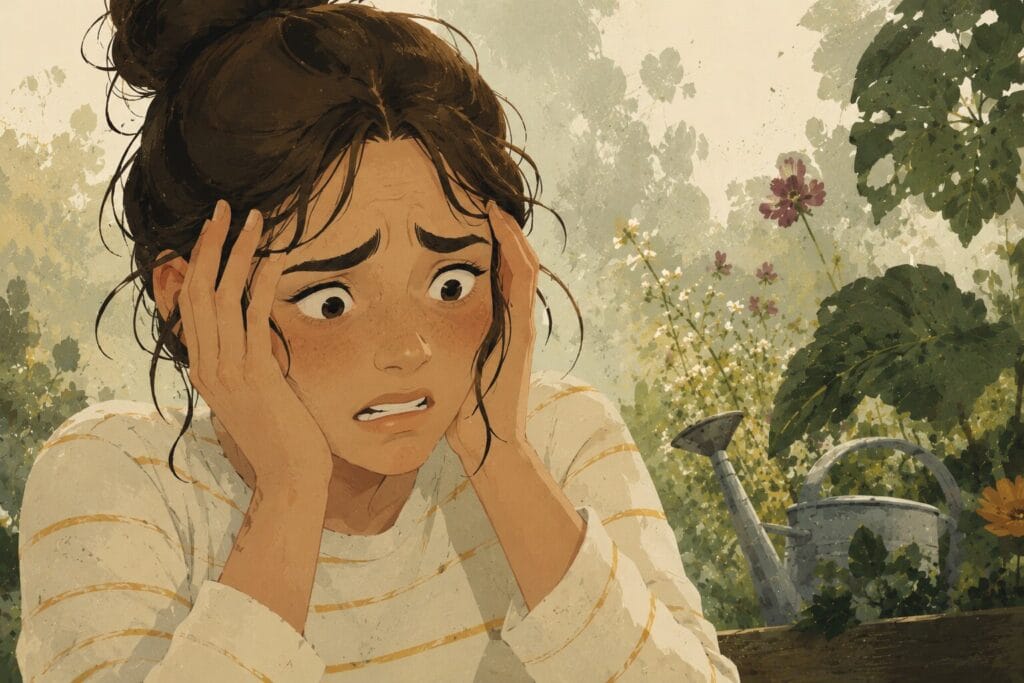
Common symptoms include:
- Feeling anxious when seeing a slug or snail.
- Feeling disgusted by their appearance or movement.
- A racing heart.
- Sweating.
- Shaking or trembling.
- Feeling tense or unable to relax.
- Nausea or stomach discomfort.
- Wanting to move away immediately.
- Avoiding gardens, parks or outdoor spaces.
- Checking paths and pavements for slugs after rain.
- Feeling panicked if a slug or snail gets close.
- Persistent worry about encountering them unexpectedly.
Children may cry, freeze, hide behind a parent or refuse to enter areas where slugs and snails might be present.
The severity of symptoms often depends on how strongly the brain has learned to associate slugs and snails with danger, discomfort or contamination.
How Slug and Snail Phobias Are Formed
People are not usually born fearing slugs and snails. Instead, the fear often develops through learning and experience, usually in childhood.
Negative Experiences
In some cases, the fear begins after an unpleasant encounter. A child may accidentally touch a slug, step on one barefoot or find several gathered in a garden. Although the experience may not be dangerous, it can leave a strong emotional impression.
The brain is designed to learn quickly from experiences that feel unpleasant. Therefore, a single event can sometimes create a lasting association.
Learning From Others
Fear can also be learned indirectly.
Children often observe how adults react to animals. If a parent, sibling or friend screams, recoils or expresses disgust when seeing a slug or snail, a child may begin to view the animal as something to fear.
Over time, these reactions can become deeply embedded, even if the individual has never had a negative personal experience.

Similar learning processes are thought to contribute to many animal fears. People with a fear of snails and slugs might also have the fear of spiders, the fear of bees, or the fear of wasps. Though snails and slugs are not insects, they are still in the general bug category for many people, and a fear of all insects can also be common alongside this phobia.
Media and Cultural Influences
Slugs and snails are frequently portrayed in ways that emphasise sliminess, dirt or unpleasantness. Television programmes, films, stories and social media content can reinforce negative perceptions.
Although these portrayals are often intended as humour, repeated exposure can strengthen existing fears and disgust responses, reinforcing negative perceptions long before a person has any direct experience with them.
The Avoidance Cycle
One of the most important factors in maintaining any phobia is avoidance.
Imagine seeing a slug and immediately moving away. At first, this creates relief. However, the brain learns an unintended lesson:
"Avoidance kept me safe."
The next encounter then feels even more threatening.
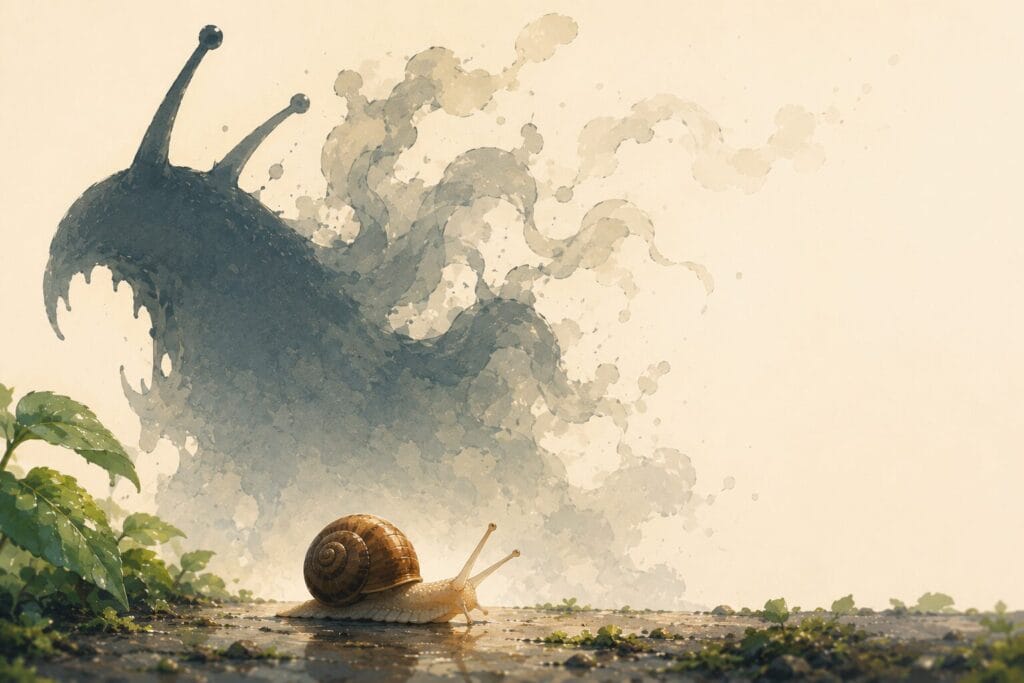
Over months or years, the brain becomes increasingly convinced that slugs and snails are something that must be avoided and even feared. Consequently, the fear can grow stronger despite there being no real danger. Somehow, a tiny garden creature becomes a monster in the mind.
Over time, avoidance can spread beyond the original trigger. A person who fears slugs and snails may begin to avoid gardens, ponds, and woodland areas where they might also encounter animals such as frogs or insects.
This is one reason why exposure therapy is considered one of the most effective approaches for treating specific phobias. Rather than reinforcing avoidance, it helps the brain learn that the feared situation can be handled safely and successfully.
The Role of the Brain
A small structure in the brain called the amygdala helps detect potential threats and prepares the body to react quickly to avoid danger.
When a person has molluscophobia, the amygdala can become overprotective. It responds to slugs and snails as though they represent a significant threat, even when the logical part of the brain knows they are harmless.
This explains why many people say:
"I know it sounds silly, but I just can't help it." The mind thinks one way while the body reacts in another.
The reaction is not a conscious choice. It is an automatic response that has been strengthened over time through learning and repetition.
The encouraging news is that the brain remains adaptable throughout life. Through education, positive experiences and carefully structured exposure, new and healthier associations can be formed.
Why Address Your Fear of Slugs and Snails?
Some people wonder whether it is worth working on a fear of slugs and snails at all. After all, these animals can often be avoided.
However, avoidance often comes with hidden costs.
For example, a person may avoid gardening, outdoor hobbies, woodland walks or spending time in nature after rain.
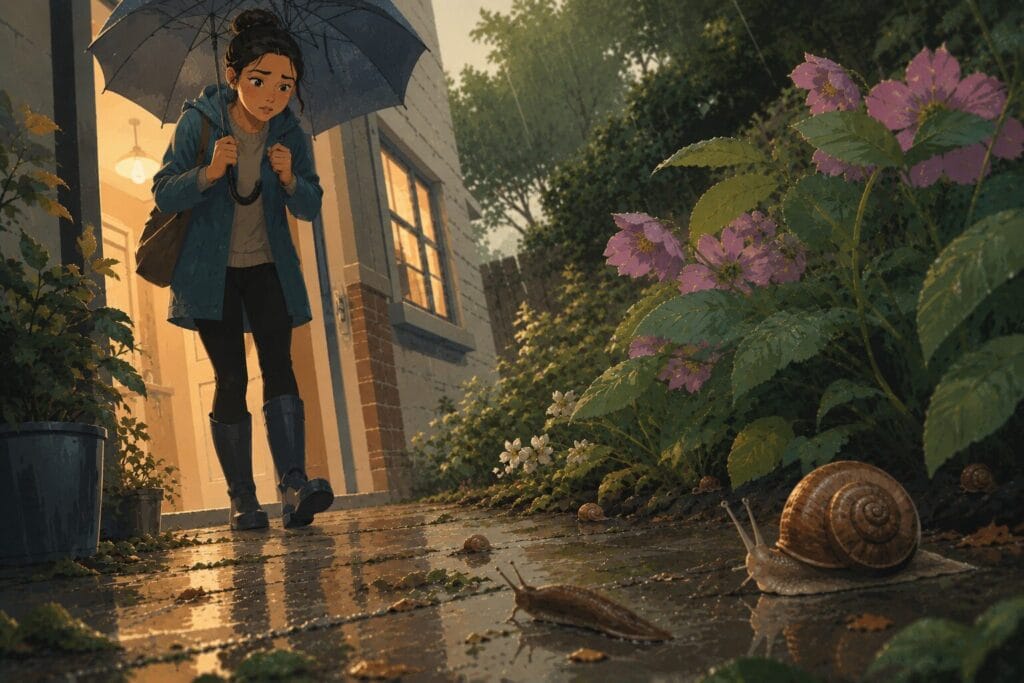
Parents may feel unable to fully enjoy outdoor activities with their children. Others may experience embarrassment because they know their reaction feels disproportionate to the situation.
More importantly, overcoming a phobia is rarely just about the animal itself. Most animal phobias are actually about the fear of losing control. Animals are unpredictable after all.
Many of our clients arrive seeking help with a specific animal fear but leave with a greater sense of confidence and emotional control in other areas of life. Their success stories often demonstrate how overcoming one fear can positively influence many other aspects of everyday living.
Each time you face a fear successfully, you teach your brain an important lesson:
"I can handle more than I thought."
Courage grows when we gradually learn that we can cope with situations we once believed were overwhelming.
Many people discover that as they become more confident around a feared animal, they also feel more resilient in other areas of life. They become less controlled by anxiety, more willing to try new experiences and more confident in their ability to manage uncertainty.
Freedom rarely comes from avoiding what scares us. More often, it comes from learning that we are capable of facing it.
For that reason, addressing your fear of slugs and snails can be about far more than the animals themselves. It can be an opportunity to build lasting courage and confidence that benefits many aspects of your life.
Fascinating Facts About Slugs and Snails
One of the most effective ways to reduce fear is to replace uncertainty with understanding. The more we learn about an animal, the more likely we are to see it as a fascinating part of nature rather than something to fear.
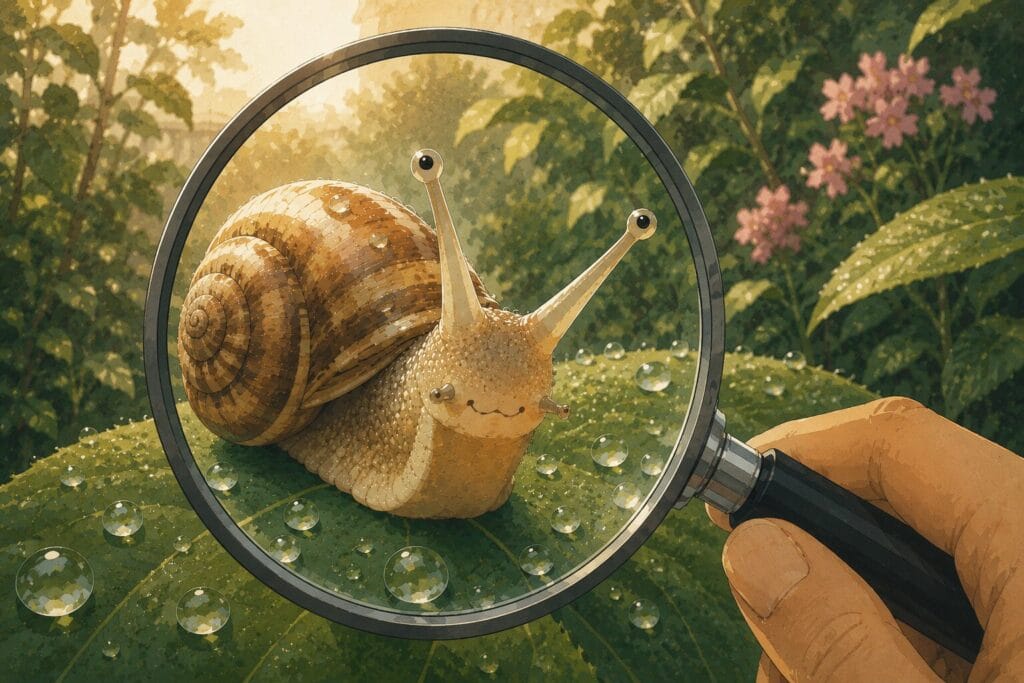
Although slugs and snails are often overlooked, they possess a number of remarkable adaptations that have helped them survive for millions of years.
Slugs and Snails Are Both Male and Female
One of the most surprising facts about slugs and snails is that most species are hermaphrodites, meaning they possess both male and female reproductive organs.
However, despite this unusual ability, they still typically need to find a partner to reproduce. During mating, both animals can exchange reproductive cells, allowing each individual to produce offspring.
This remarkable adaptation increases their chances of reproducing successfully and highlights just how unique and fascinating these often-overlooked creatures really are.
Slugs and Snails Are Ancient Survivors
Slugs and snails belong to a group called gastropods, which have existed for more than 500 million years. That means their ancestors were already living on Earth long before dinosaurs appeared around 230 million years ago, and hundreds of millions of years before humans evolved.
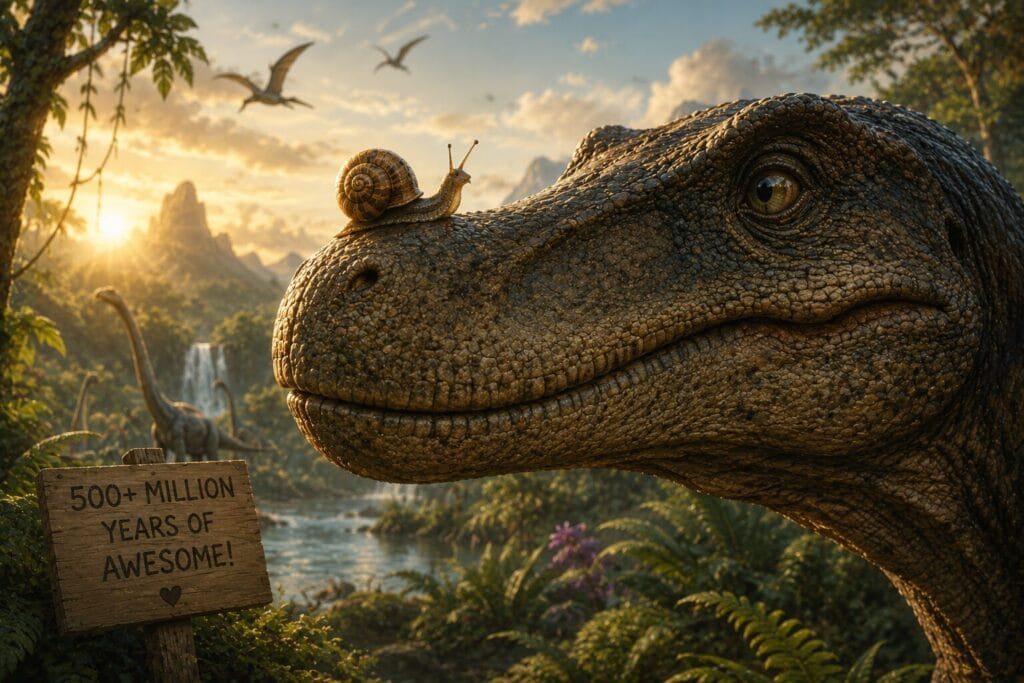
Today, slugs and snails can be found on every continent except Antarctica, occupying an astonishing range of habitats, from tropical rainforests and deserts to mountains, rivers and British gardens.
Their ability to survive dramatic environmental changes for over half a billion years demonstrates just how adaptable and successful these remarkable animals have been.
Some Snails Hibernate
Many people are surprised to learn that snails can enter periods of dormancy to survive harsh conditions.
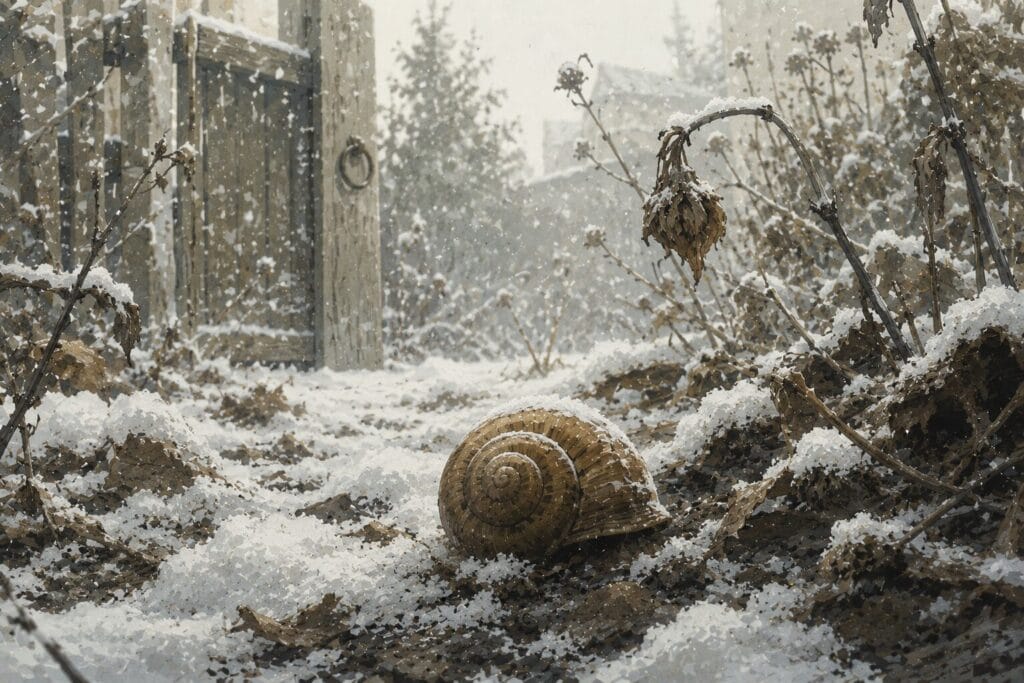
During cold winters or dry weather, some species seal themselves inside their shells using a layer of mucus. This helps prevent dehydration and allows them to conserve energy until conditions improve.
This remarkable adaptation enables them to survive environmental challenges that many other animals could not endure.
Slime Is a Survival Tool
The mucus produced by slugs and snails often triggers feelings of disgust. However, slime performs several important functions.
It helps these animals move across rough surfaces, prevents dehydration and offers a degree of protection from injury. Some species can even alter the properties of their mucus depending on the situation.
Viewed through a scientific lens, slime is not simply something unpleasant. It is a highly effective survival adaptation that has helped these animals thrive for millions of years.
Slugs and Snails Are More Active Than They Appear
Because they move slowly, people often assume that slugs and snails are simple creatures. In reality, they constantly explore their surroundings in search of food, shelter and suitable environmental conditions.
Using specialised sensory tentacles, they gather information about the world around them and navigate surprisingly complex environments.
Although they experience life very differently from humans, they are far from the passive creatures many people imagine.
Dispelling Myths About Slugs and Snails
Misunderstandings often play a major role in maintaining fear. Therefore, separating fact from fiction can help reduce anxiety and create a more balanced perspective.
Myth: Slugs and Snails Are Dangerous
In the UK, the vast majority of slugs and snails pose no threat to humans.
They do not chase people, attack people or seek human contact. In fact, their natural response to perceived danger is usually to retreat or hide.
While some people dislike encountering them, they are not aggressive animals.
Myth: They Want to Crawl Onto People
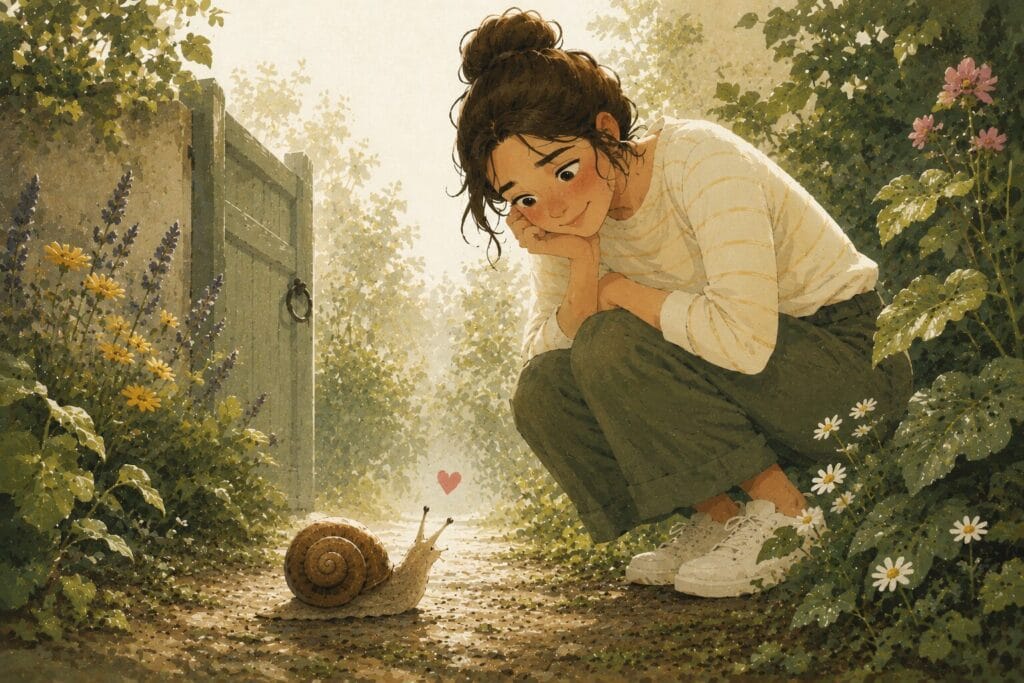
Many people with molluscophobia worry that a slug or snail might crawl onto them unexpectedly.
In reality, these animals have no interest in humans. They are simply searching for food, moisture and shelter. Any interaction with a person is accidental rather than intentional.
Understanding this can help reduce the feeling that slugs and snails are somehow targeting or approaching people.
Myth: Slime Is Harmful
Another common misconception is that slug or snail slime is inherently dangerous.
While sensible hygiene should always be practised after handling any wild animal, the mucus itself is primarily a protective and functional substance.
For the animal, it is simply an essential tool for movement and survival.
Myth: Slugs and Snails Are Dirty Creatures
People often associate slugs and snails with dirt because they are frequently found in damp environments.
However, these animals are simply adapted to habitats that provide the moisture they need to survive. They are not dirty by nature any more than frogs, worms, or insects are.
Similar misconceptions often contribute to fears of frogs, worms, and insects, despite the important roles these animals play in healthy ecosystems.
How Slugs and Snails Help Humans and the Environment
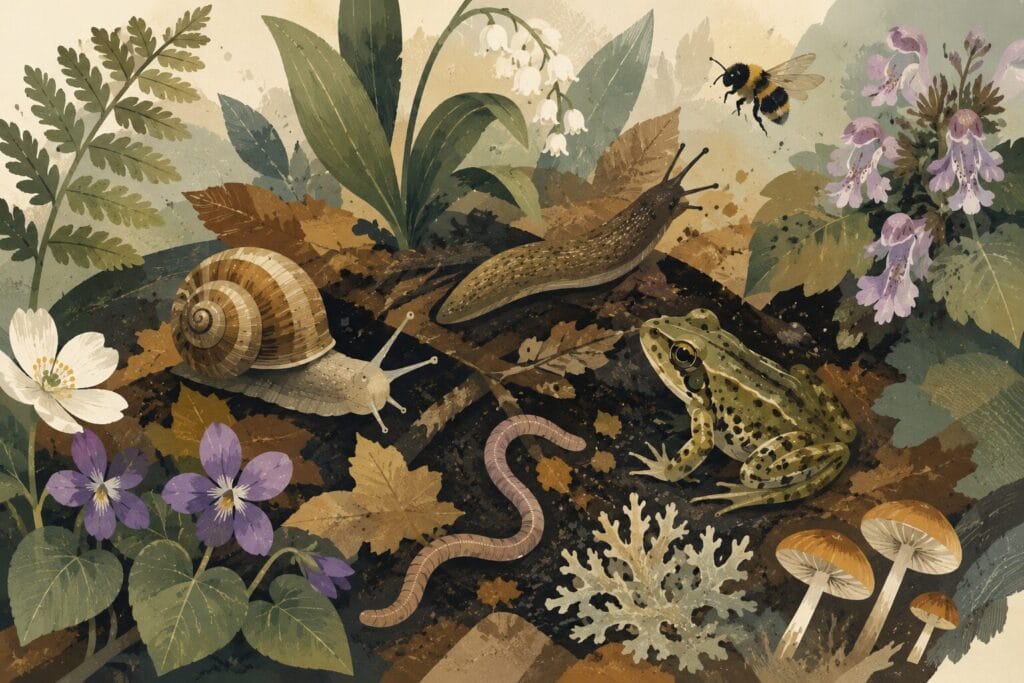
When people fear an animal, it is easy to focus only on the qualities they dislike. However, every species plays a role within the natural world.
Slugs and snails are no exception.
Nature's Recyclers
Many species feed on decaying plant matter, fungi and organic material.
As they break down this material, nutrients are returned to the soil where they can be used by plants and other organisms. This natural recycling process helps maintain healthy ecosystems.
Without decomposers and recyclers, organic waste would accumulate, and nutrient cycles would become less efficient.
An Important Food Source
Slugs and snails provide food for a wide range of animals.
Birds, hedgehogs, amphibians, reptiles, beetles and many other species rely upon them as part of their diet. As a result, slugs and snails help support entire food webs.
Supporting Biodiversity
Healthy ecosystems depend upon a wide variety of species performing different roles.
According to The Wildlife Trusts, biodiversity helps maintain resilient ecosystems that benefit both wildlife and people.
Although slugs and snails may not always be popular, they contribute to this biodiversity and help maintain ecological balance.
Helping Scientists Understand Nature

Snail Venom Is Helping Scientists Develop New Medicines
Some species of marine cone snail produce complex venoms containing hundreds of unique compounds. Scientists study these compounds because they can target nerves with remarkable precision.
In fact, one cone snail compound inspired a powerful pain medication called ziconotide, which is used to treat severe chronic pain in some patients.
Snail Mucus Is Inspiring Medical Research
Scientists have studied snail mucus because of its remarkable properties.
It helps snails move across rough surfaces, protects them from infection and assists with healing damaged tissue.
Researchers have investigated whether similar properties could help improve wound dressings and tissue repair technologies.
Snails Help Scientists Monitor Environmental Health
Many snail species are highly sensitive to pollution and environmental change.
Because of this, scientists use them as bioindicators to help assess the health of ecosystems and detect environmental problems early.
Their presence can provide valuable clues about the condition of habitats.
Snails Have Helped Scientists Understand Memory and Learning
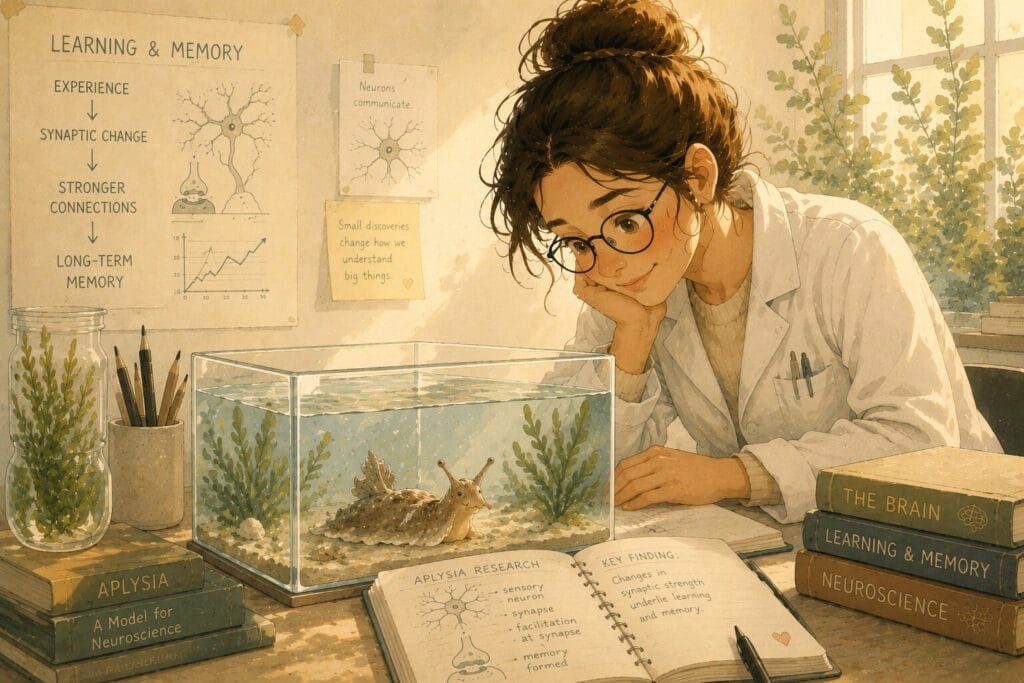
A sea snail called Aplysia has played an important role in neuroscience research.
Because its nervous system is relatively simple, scientists have used it to study how memories form, how learning occurs and how nerve cells communicate.
Research using these snails helped advance our understanding of the biological basis of memory.
Snail Shells Help Scientists Study the Past
The shells of some snails contain chemical information about the environment in which they lived.
Scientists can analyse ancient shells to learn about past climates, rainfall patterns and environmental changes.
In this way, snails help researchers understand Earth's history.
Appreciating the Bigger Picture
When viewed individually, a slug crossing a garden path may not seem particularly important.
However, when viewed as part of a larger ecosystem, their significance becomes much clearer.
Recognising these contributions does not mean you have to love slugs and snails. However, it can help replace fear with a greater sense of understanding and respect.
How Humans and Slugs and Snails Can Peacefully Coexist
For many people, they want to simply feel calmer and more comfortable sharing the environment with slugs and snails. Fortunately, peaceful coexistence is entirely possible.
Remember That They Are Not Interested in You
Slugs and snails are focused on finding food, moisture and shelter. They are not seeking out human interaction.
Reminding yourself of this fact can help reduce feelings of threat when encountering them outdoors.
Observe From a Comfortable Distance
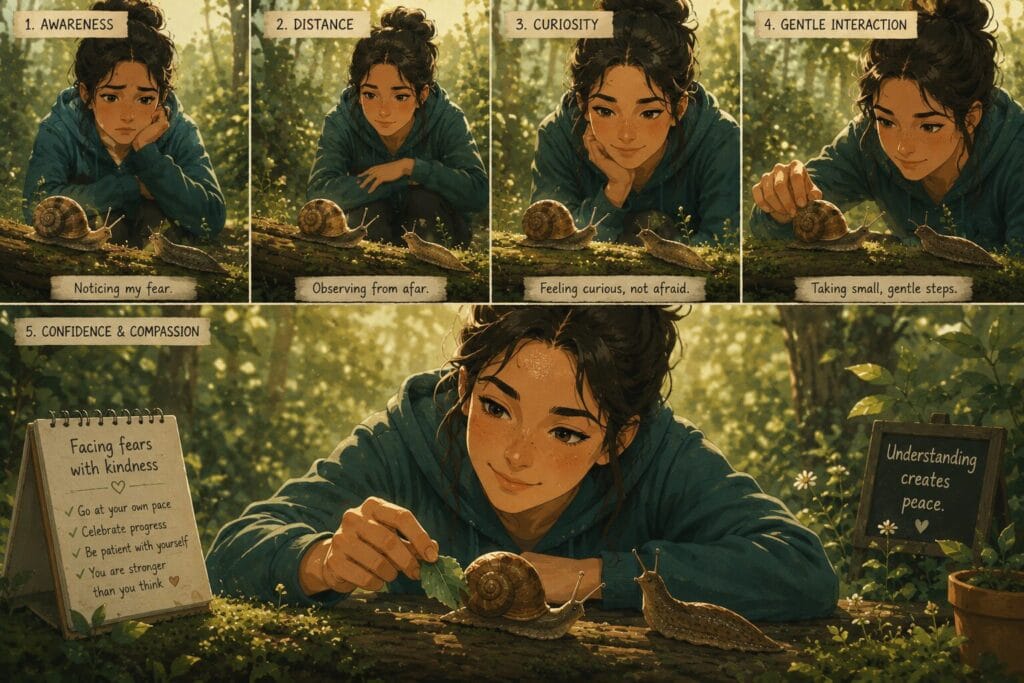
If slugs and snails make you feel anxious, there is no need to force yourself into close contact immediately.
Instead, begin by observing them from a distance that feels manageable and move closer to start facing your fears bit by bit.
Over time, gradual exposure can help the brain develop new associations and reduce automatic fear responses.
Spend More Time in Nature
Avoidance often strengthens fear. Therefore, spending time in gardens, parks and natural environments can be beneficial.
Many people find that as they become more familiar with wildlife in general, they become less reactive to specific animals.
This is particularly true when learning about other misunderstood creatures
Focus on Curiosity Rather Than Judgement
When encountering a slug or snail, try asking:
- What is it doing?
- Where is it going?
- How is it interacting with its environment?
Curiosity often reduces fear because it shifts attention away from emotional reactions and towards observation and understanding.
Small Changes Can Lead to Big Results
Overcoming a fear does not usually happen in a single moment.
Instead, confidence is often built through many small positive experiences.
Each calm encounter teaches the brain that the situation is safer than it previously believed. Over time, these experiences can create meaningful and lasting change.
How to Overcome Your Fear of Slugs and Snails
The good news is that molluscophobia can be overcome.
Whether your reaction is driven primarily by fear, disgust or a combination of both, the brain is capable of learning new responses. While phobias can feel deeply ingrained, they are not permanent.
Many people spend years believing they will always react strongly to slugs and snails. However, with the right approach, it is possible to reduce anxiety, challenge negative associations and build genuine confidence.
The goal is to help you reach a point where your fear no longer controls your emotions, influences your decisions or prevents you from enjoying everyday life.

Start With Understanding
Fear often grows in the absence of knowledge.
As we explored earlier in this article, slugs and snails are not dangerous animals. They are simply living creatures trying to survive within their environment. We always do animal education at Creature Courage to build fascination and compassion.
Learning about their behaviour, biology and ecological importance can help replace uncertainty with understanding. This process is often the first step towards reducing both fear and disgust.
Gradual Exposure Builds Confidence
Avoidance teaches the brain that a feared situation is dangerous. Exposure teaches the brain that it is manageable.
This is why Exposure Therapy for Animal Phobias is widely recognised as one of the most effective approaches for overcoming specific animal fears.
Exposure does not mean forcing yourself into overwhelming situations. Instead, it involves gradually and safely building familiarity with the feared animal.
For example, a person might begin by:
- Looking at photographs of slugs and snails.
- Watching videos.
- Learning about their behaviour.
- Observing them from a comfortable distance.
- Gradually reducing avoidance behaviours.
- Progressing towards closer interactions if appropriate.
Each successful experience teaches the brain that the situation is safer than it previously believed.
Remember That Disgust Can Be Retrained Too
Many people assume they are frightened of slugs and snails when their strongest emotion is actually disgust.
Fortunately, disgust responses are also learned and can therefore be changed.
The same processes that help reduce fear can often help reduce feelings of revulsion. As understanding, familiarity and confidence increase, the emotional intensity of the reaction often decreases.
For this reason, overcoming molluscophobia is often about more than simply reducing fear. It is about developing a more balanced and accurate perception of the animal itself. This means reframing negative thoughts into more positive versions, choosing to see the animal in different ways.
Some people can even start to see them as cute by this process of retraining the mind.
Therapeutic Techniques Used to Overcome Fear of Slugs and Snails
At Creature Courage®, we use a holistic phobia therapy approach that combines neuroscience, psychology, education and carefully structured experiences.
Every individual is different. Some people fear touching slugs and snails. Others are distressed by seeing them. Some experience intense disgust, while others experience anxiety or panic.
Therefore, treatment is always tailored to the individual rather than using a one-size-fits-all approach. We also combine several different phobia fighting techniques into one powerful life changing day of therapy.
Techniques we use include:
Exposure Therapy
Exposure Therapy for Animal Phobias is considered one of the most effective treatments for specific phobias.
Rather than overwhelming you, exposure is carefully structured and progresses at a pace that feels manageable.
The goal is to help your brain discover that slugs and snails are not as dangerous or threatening as it currently predicts.
As confidence grows, the nervous system gradually learns that encounters with these animals can be handled safely and successfully.
Hypnotherapy
When used appropriately, Hypnotherapy for Animal Phobias can help individuals enter a deeply relaxed state where new ways of thinking and responding can be rehearsed.
This can be particularly useful when fear or disgust feels deeply ingrained and automatic.
Many clients find hypnotherapy helps them approach situations with a greater sense of calm and control.

Cognitive Behavioural Therapy (CBT)
Fear is often maintained by catastrophic thinking and exaggerated threat predictions.
Cognitive Behavioural Therapy (CBT) for Animal Phobias helps identify these thought patterns and replace them with more realistic interpretations.
This can reduce anxiety, improve confidence and help individuals respond more calmly when encountering slugs and snails.
Neuro-Linguistic Programming (NLP)
Many phobias involve powerful mental imagery and automatic emotional associations.
NLP for Animal Phobias can help change how the brain represents feared situations, reducing the emotional intensity attached to them.
Many people find that changing the way they mentally picture an animal can significantly alter how they feel about it.
Guided Imagery and Imagination Exercises
The brain often struggles to distinguish between vividly imagined experiences and real experiences.
Our Guided Imagery for Animal Phobias allows clients to mentally rehearse success before confronting real-world situations.
This can help reduce anticipatory anxiety and build confidence before exposure takes place.
Animal Education Therapy
Fear and disgust often thrive in uncertainty.
The more we understand an animal, the less mysterious and threatening it tends to become.
Our Animal Education Therapy helps replace misconceptions with knowledge, understanding and perspective.
For many people, learning about the remarkable lives of slugs and snails becomes an important turning point in the recovery process.
Art Therapy
Research suggests that writing, drawing and visually engaging with information can improve learning and memory.
Our Art Therapy for Animal Phobias helps make important concepts, insights and therapeutic exercises more memorable.
The good news is that artistic talent is not required. The focus is on learning, reflection and personal growth rather than creating perfect artwork.
Compassion-Based Approaches
Many people spend years viewing slugs and snails through the lens of fear, disgust or both.
Sometimes a profound shift occurs when people begin seeing these animals as living creatures trying to survive rather than threats to avoid.
Compassion does not mean you have to love slugs and snails. It simply means understanding them more accurately, finding appreciation and respect for the animals.
However, when curiosity, fascination and compassion begin replacing fear and avoidance, remarkable changes can happen. Many people discover a level of confidence and even affection for the animal they never thought possible.

Creature Courage®: The Expert Slug and Snail Phobia Specialists
At Creature Courage®, we specialise in helping people overcome fears of animals through practical, experiential and neuroscience-informed methods.
Unlike approaches that focus solely on talking about fear, we help people develop confidence through carefully structured real-world experiences.
Our specialist Animal Phobia Therapy combines education, emotional regulation techniques, psychological tools, and guided exposure to help clients create lasting change.
We believe that courage is not the absence of fear. Rather, courage is learning that you are capable of handling situations that once felt overwhelming.
Many of our clients arrive feeling convinced they will never overcome their fear. Yet time and time again, we see people achieve breakthroughs they previously thought were impossible.
Our approach is also supported by the principles explained in Why One-Day Phobia Therapy Works, where we explore why immersive, focused experiences can often create powerful and lasting results.
Our goal is to help you regain freedom and confidence in as little as one day.
Get Help with Your Fear of Slugs and Snails
If your fear of slugs and snails is affecting your quality of life, you do not have to face it alone.
The first step towards overcoming any phobia is recognising that change is possible.
With the right guidance, support and approach, many people are able to dramatically reduce their fear and build lasting confidence around the animals they once avoided.
If you would like professional support, explore our Animal Phobia Therapy services, read our client Testimonials or Contact Creature Courage® to discuss your situation.
Every journey begins with a single step. Your journey towards greater freedom and confidence could begin today.
Frequently Asked Questions About the Fear of Slugs and Snails
Can I overcome my fear of slugs and snails?
Yes. Many people successfully overcome molluscophobia through education, gradual exposure and evidence-based therapeutic techniques. Although progress varies from person to person, meaningful improvement is absolutely possible.
Do I have to touch a slug or snail to overcome my fear?
Not necessarily. However, it is important for a lasting breakthrough.
Treatment should always progress at a pace that feels appropriate for you. Many people begin by simply learning about the animal, viewing images or observing from a distance before considering any closer interaction.
How long does it take to overcome molluscophobia?
There is no universal timeline. Some individuals experience significant improvements quickly, while others benefit from a more gradual process.
Factors such as the severity of the fear, previous experiences and willingness to engage with treatment can all influence progress.
Why do I react so strongly to slugs and snails?
Your reaction is likely the result of learned associations within the brain.
Past experiences, social learning, cultural influences, fear responses and disgust responses can all contribute to the development of molluscophobia.
Importantly, these learned reactions can be changed.
Is my fear of slugs and snails normal?
Yes.
Many people experience anxiety, discomfort or disgust when encountering slugs and snails.
While severe reactions may indicate a specific phobia, having a strong emotional response does not mean there is anything wrong with you. It simply means your brain has learned to associate these animals with danger, discomfort or contamination.
With understanding and the right support, those associations can be retrained.