
The Fear of Insects: Understanding Entomophobia
What Is the Fear of Insects?
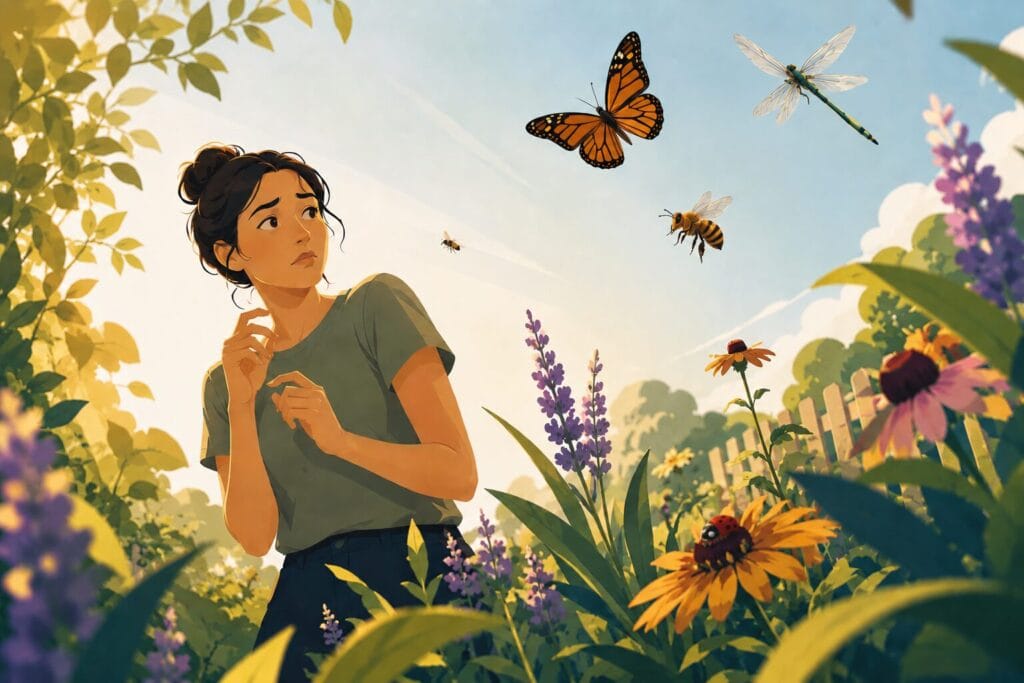
Entomophobia, or the fear of insects, is a common but often debilitating condition that affects many people worldwide. From buzzing bees and flies to skittering beetles and cockroaches, these tiny creatures can cause immense fear, anxiety and discomfort for those who suffer from this specific phobia.
If you struggle with a fear of insects, you are far from alone. In this article, we will explore what entomophobia is, what causes it, the symptoms it can create, and how it can impact daily life. We will also uncover some fascinating facts about insects, challenge common myths, and explore effective ways to overcome this fear so that you can feel more confident and in control.
After all, understanding is often the first step towards overcoming fear.
What Is Entomophobia?
Entomophobia is the persistent and excessive fear of insects.
While many people feel uncomfortable around certain insects, a phobia goes beyond simple dislike or unease. The fear becomes strong enough to cause significant distress and may interfere with everyday life.
For some people, the fear centres on a particular insect. For others, the anxiety extends to insects more generally, causing many different species to feel threatening.
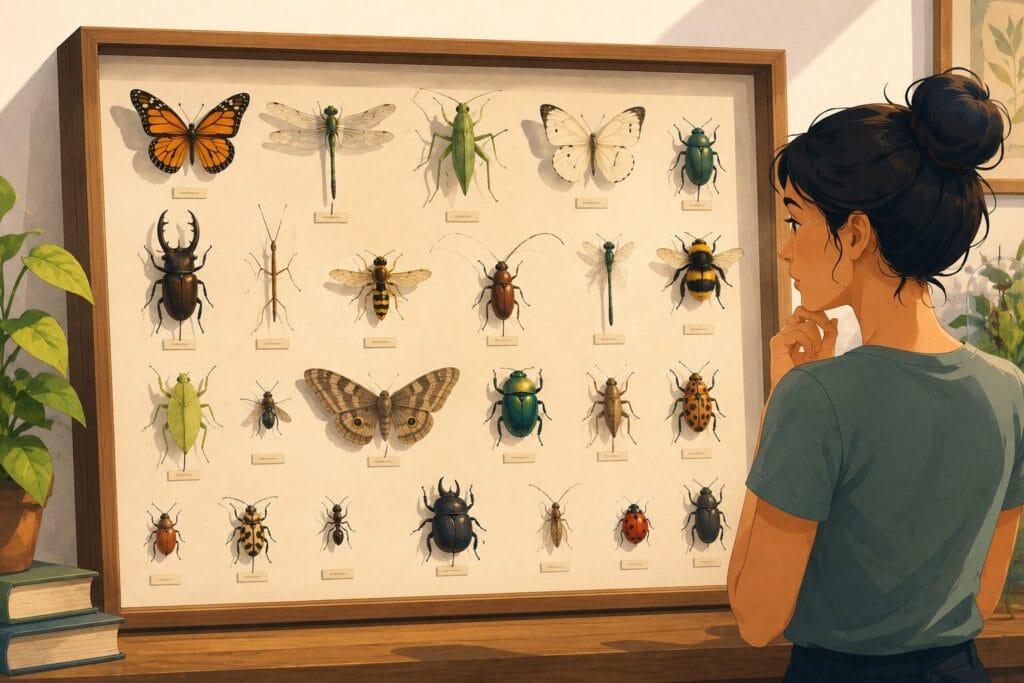
Common insects associated with entomophobia include:
- Flies
- Wasps
- Bees
- Beetles
- Cockroaches
- Ants
- Moths
- Butterflies
A Fear of "Bugs" Rather Than Just Insects
Interestingly, many people with entomophobia also experience fear around spiders.
Although spiders are not technically insects and belong to a separate group called arachnids, they share many characteristics that commonly trigger fear, including multiple legs, rapid movement and an unfamiliar appearance. As a result, many people experience a broader fear of "bugs" or "creepy crawlies" rather than insects alone.
If spiders are a significant part of your fear, you may also find The Fear of Spiders: Understanding Arachnophobia helpful, or be interested in the Spider Courage Experience®, Creature Courage's specialist one-day spider phobia workshop.
Similarly, some people discover that their anxiety centres on specific insects such as flies, bees or wasps. If this sounds familiar, our guides on the Fear of Flies, Fear of Bees and Fear of Wasps may also be useful.
Additionally, we have guides on the Fear of Moths and the Fear of Butterflies.
Entomophobia can range from mild anxiety to severe panic. In some cases, individuals may avoid gardens, parks, outdoor activities or even opening windows because of the possibility of encountering insects.
Symptoms of Entomophobia
The symptoms of entomophobia can vary from mild anxiety to extreme panic attacks.
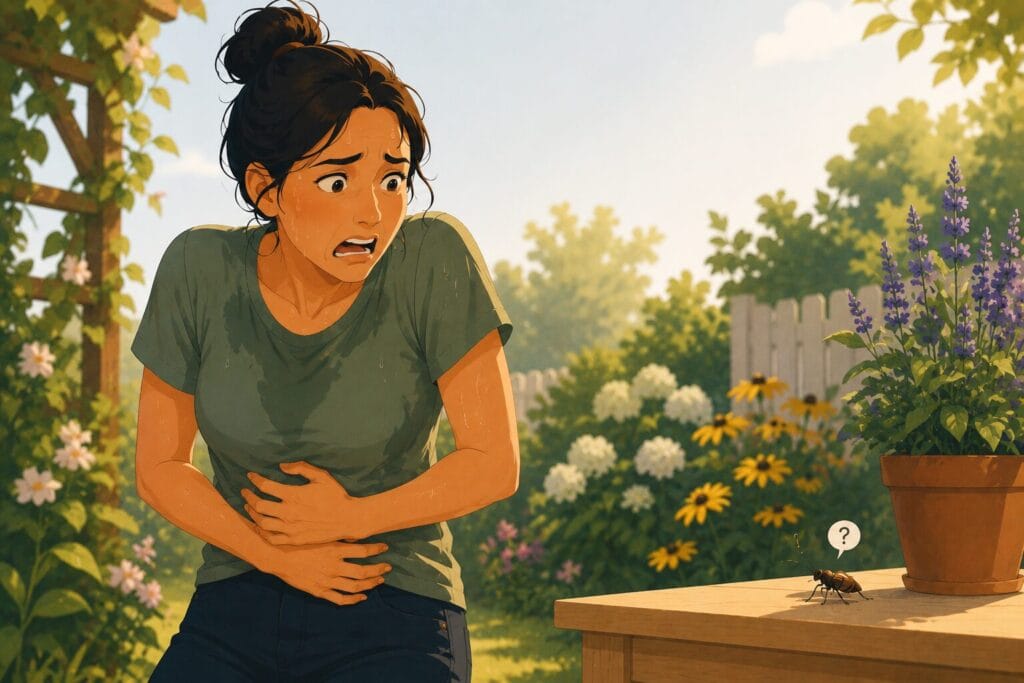
Physically, individuals may experience increased heart rate, sweating, dizziness, nausea and trembling when encountering insects or even thinking about them.
Emotionally, sufferers often feel a sense of dread, intense fear or uncontrollable panic, which can leave them feeling powerless.
In severe cases, the fear can lead to avoidance behaviours, where individuals go to great lengths to steer clear of situations where they might encounter insects, further reinforcing the phobia.
Physical Symptoms
- Increased heart rate
- Sweating
- Dizziness
- Nausea
- Trembling
- Muscle tension
- Shortness of breath
Emotional Symptoms
- Intense fear
- Panic
- Feelings of dread
- Anxiety
- A sense of losing control
Behavioural Symptoms
- Avoiding gardens and outdoor spaces
- Refusing to open windows
- Avoiding holidays or countryside walks
- Excessively checking rooms for insects
- Leaving situations where insects are present
- Seeking reassurance from others
Fear Is Not Weakness
While these reactions can feel overwhelming, they are not a sign of weakness.
Rather, they reflect the way the brain has learned to interpret insects as a threat.
How Insect Phobias Are Formed
Entomophobia can stem from a variety of factors, including traumatic experiences, learned behaviour and our evolutionary instincts.
Negative Experiences
For some, a negative encounter with insects, such as being stung by a bee or bitten by a spider, can trigger a lasting fear. These traumatic experiences form powerful associations in the mind, which can mean that even the sight of an insect triggers fear and panic.
Learned Behaviour
Learned behaviour can also play a significant role.
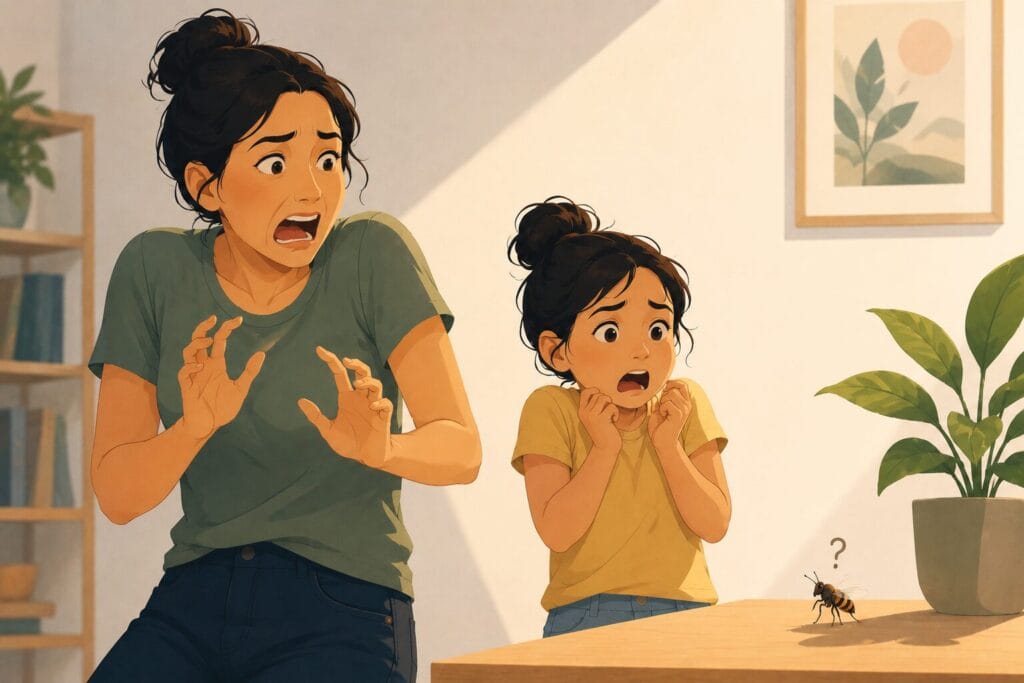
If a child witnesses a parent or sibling reacting fearfully to an insect, they may adopt the same pattern of behaviour. This learned response can easily continue into adulthood and make the fear feel difficult to overcome.
Evolutionary Survival Mechanisms
Evolutionary factors may also explain why insects are so feared.
Many people have an innate aversion to creatures that sting, bite or are associated with disease. This is thought to be part of our natural survival system. While these instincts may have helped protect our ancestors from harm, they can sometimes become disproportionate in modern life.
The Role of the Amygdala
At Creature Courage, we often explain phobias through the brain's threat-detection system.
Deep within the brain sits a structure called the amygdala. Its role is to rapidly identify potential dangers and prepare the body for action.
When entomophobia develops, the amygdala begins treating harmless or low-risk insects as if they are genuine threats. As a result, the body's fight, flight or freeze response can activate almost instantly.
The logical part of the brain may understand that a fly, moth or beetle poses little danger.
However, the emotional part of the brain reacts as though danger is present.
The Avoidance Cycle
Unfortunately, avoidance often strengthens the fear.
When someone avoids an insect or escapes from a feared situation, anxiety immediately decreases. While this feels relieving in the short term, the brain learns an important lesson:
"Avoidance kept me safe."
As a result, the fear becomes reinforced.
Over time, the fear can become stronger, spread into more areas of life and begin limiting everyday experiences.
Why Address Your Fear of Insects?
Many people live with entomophobia for years without seeking help.
Instead, they gradually adapt their lives around the fear.
They avoid gardens, countryside walks, outdoor dining, holidays and other situations where insects may be present. While these adjustments can seem manageable at first, they often come at the cost of freedom, confidence and enjoyment.

Fear Can Quietly Shrink Your World
A fear of insects is rarely just about insects themselves.
More often, it is about the limitations that fear creates.
Activities that should feel relaxing or enjoyable can become sources of anxiety. Opportunities may be avoided, experiences missed, and everyday situations approached with unnecessary stress.
The Goal Is Freedom
The goal is not necessarily to love insects.
The goal is to stop feeling controlled by them.
Many people discover that overcoming an insect phobia improves confidence in other areas of life as well. Learning to face fear, regulate emotions, and challenge avoidance often creates benefits that extend far beyond insects themselves.
After all, courage is not the absence of fear.
It is the ability to move forward despite it.
Fascinating Facts About Insects
One of the most effective ways to reduce fear is to increase understanding.
The more we learn about insects, the harder it becomes to see them simply as frightening or unpleasant creatures. While you certainly do not need to become an insect enthusiast, gaining a greater appreciation for their remarkable abilities can help create a healthier and more balanced perspective.
Insects Were Here Long Before Humans
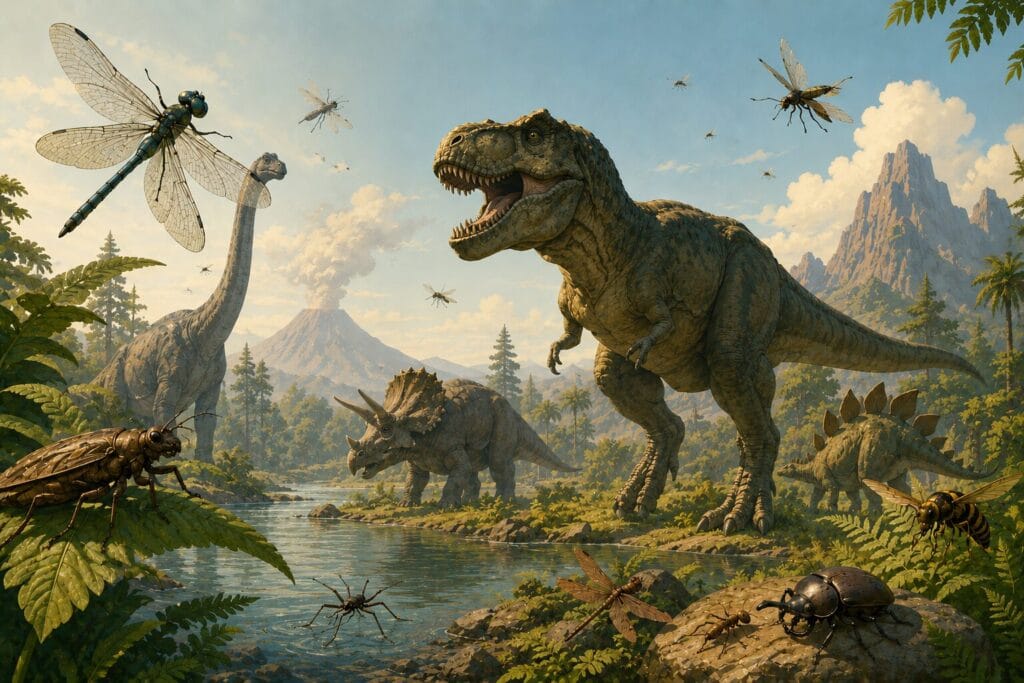
Insects have existed for approximately 480 million years!!!
Long before humans appeared, insects were already thriving on Earth. In fact, many modern insect groups evolved before the dinosaurs disappeared.
Their incredible adaptability has allowed them to survive ice ages, environmental changes and mass extinctions that wiped out countless other species.
Far from being fragile creatures, insects are among nature's greatest success stories.
Insects Are Astonishingly Diverse
Insects are the most diverse group of animals on Earth.
Scientists have identified more than one million insect species, and many experts believe there are millions more still waiting to be discovered. In fact, insects make up well over half of all known animal species on the planet.
From brightly coloured butterflies and dragonflies to industrious ants and beetles, insects occupy almost every environment imaginable.
This extraordinary diversity means that when we talk about "insects", we are actually referring to an enormous variety of animals with very different appearances, behaviours and lifestyles.
Tiny Creatures With Extraordinary Abilities
Many insects possess abilities that seem almost unbelievable.
Some beetles can produce light. Certain ants build complex underground cities. Dragonflies can fly in multiple directions with incredible precision, while bees communicate with one another through sophisticated movements known as the "waggle dance".
Even humble houseflies possess remarkable reflexes that help them avoid predators and navigate their environment. A housefly can beat its wings approximately 200 times per second.
Its reaction speed is so fast that swatting one is surprisingly difficult.
Scientists have studied fly vision and flight mechanics for decades because of how efficiently they process information. The more scientists study insects, the more impressive they become.
The Hidden Intelligence of Social Insects
When people think about intelligence, insects are rarely the first animals that come to mind.
Yet social insects such as ants, bees and termites display astonishing levels of organisation.
Working together, they can:
- Build complex nests
- Raise young cooperatively
- Defend their colonies
- Allocate resources efficiently
- Solve problems as a group
While individual insects may have tiny brains, their collective behaviour often appears surprisingly sophisticated.
Bees Can Understand the Concept of Zero
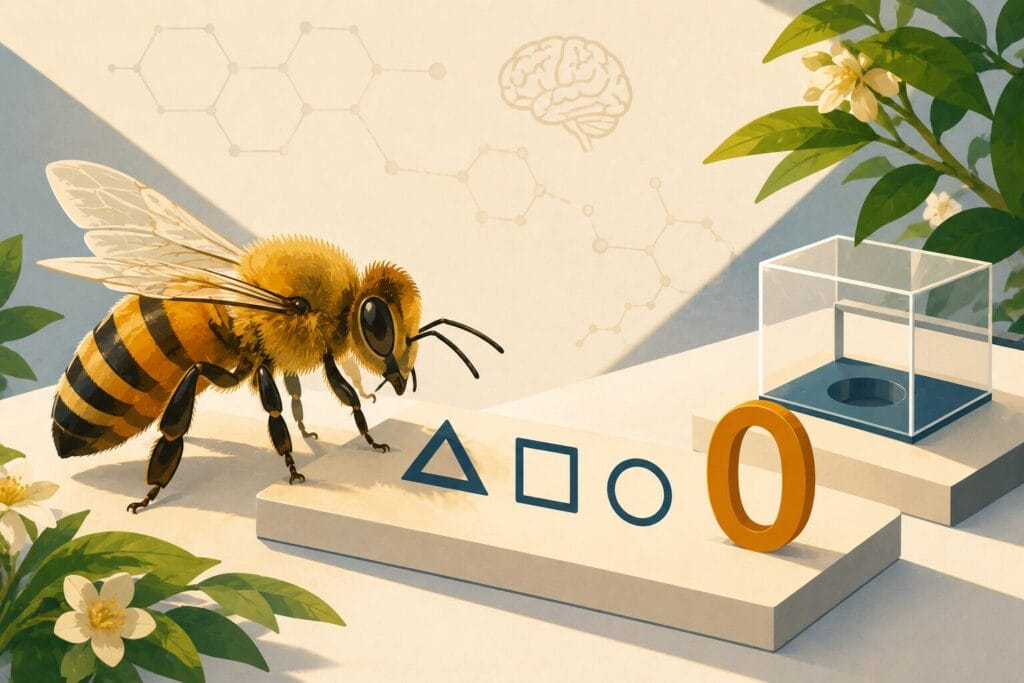
Scientists have demonstrated that honeybees can understand the concept of zero — a mathematical ability once thought to be limited to humans and a handful of highly intelligent vertebrates.
Despite having brains smaller than a grass seed, bees can solve surprisingly complex learning tasks and make decisions based on numerical information.
Insects Have Shaped Human Culture
Insects have played important roles in human history, mythology and culture for thousands of years.
In ancient Egypt, the scarab beetle symbolised rebirth and transformation. In Chinese culture, crickets have long been associated with luck and prosperity. Meanwhile, butterflies often represent change, growth and personal transformation in cultures around the world.
These symbolic meanings remind us that insects have inspired fascination and wonder throughout human history.
Rather than being viewed solely as pests, many cultures have recognised their beauty, resilience and importance.
Dispelling Common Myths About Insects
Fear often grows in the absence of accurate information.
Many people with entomophobia carry beliefs about insects that feel true but do not always reflect reality. Understanding the facts can help reduce unnecessary anxiety and replace fear with knowledge.
Myth: All Insects Are Dangerous
One of the most common misconceptions is that insects pose a significant threat to humans.
In reality, the vast majority of insect species are completely harmless to people. While some insects can sting, bite or spread disease, most have little interest in interacting with humans at all.
For many insects, avoiding large animals like us is actually the safest strategy.
Myth: Insects Want to Attack People
Insects do not wake up each morning looking for humans to terrorise.
Most insects are simply trying to find food, avoid predators, reproduce and survive.
When insects enter homes or approach people, they are usually responding to light, warmth, shelter, food sources or simple curiosity about their surroundings.

Their behaviour is driven by survival rather than aggression.
Myth: Insects Are Dirty and Unclean
Although certain insects are associated with waste or decay, many insects spend their lives pollinating flowers, recycling nutrients or maintaining healthy ecosystems.
Judging all insects by the behaviour of a small number of species is a little like judging all mammals by the behaviour of rats.
The insect world is far more diverse than many people realise.
Myth: Insects Serve No Purpose
Perhaps the most damaging myth of all is that insects are unnecessary.
Without insects, ecosystems around the world would begin to collapse.
Plants, birds, mammals, reptiles and amphibians all depend on insects either directly or indirectly.
Far from being pointless, insects help support life on Earth in countless ways.
How Insects Help Humans and the Environment
One reason Creature Courage places such a strong emphasis on education is that understanding often reduces fear.
When we learn how important insects truly are, it becomes easier to view them with greater respect and appreciation.
Insects Pollinate Around Three-Quarters of Major Food Crops
Many flowering plants rely on insects for pollination. Additionally, many of the foods we enjoy depend directly on insect pollinators.
Apples, strawberries, tomatoes, almonds, cucumbers and countless other crops benefit from insect pollination.
Bees are perhaps the most famous example, but wasps, butterflies, moths, flies and beetles also help transfer pollen between plants.
Without pollinating insects, food production would be dramatically reduced.
Supporting Entire Food Chains
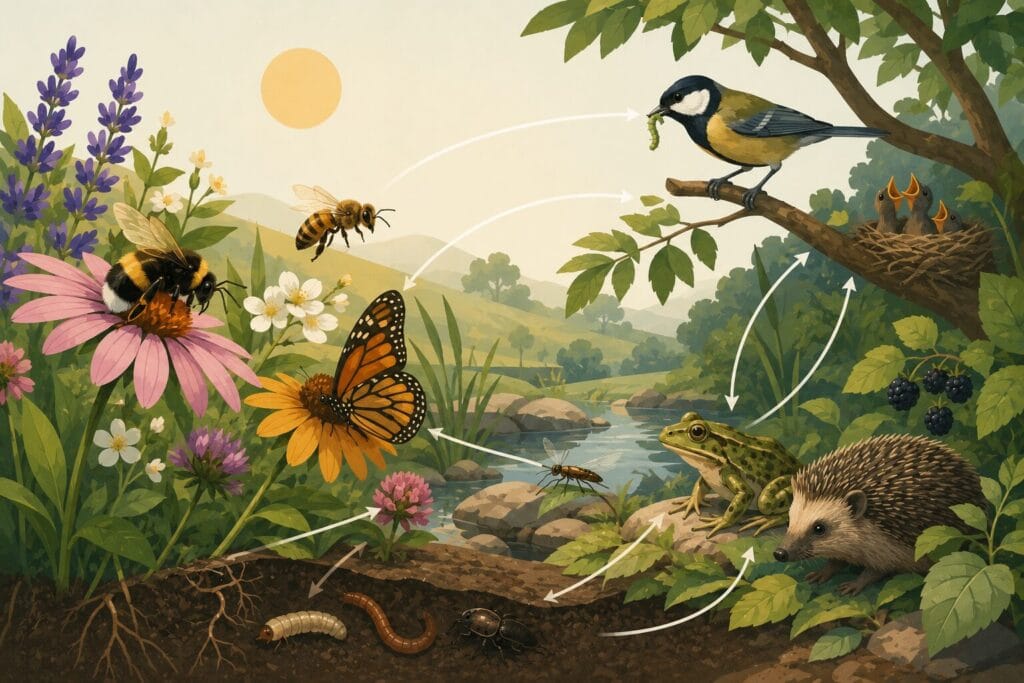
Insects form the foundation of countless food webs.
Birds, amphibians, reptiles, mammals and fish all depend on insects as a food source.
Even animals that many people love and admire, such as robins, hedgehogs and frogs, rely heavily on healthy insect populations.
Without insects, many other species would suffer.
Nature's Recycling Team
Many insects help break down dead plants, fallen leaves and organic waste.
By recycling nutrients back into the soil, they help maintain healthy ecosystems and support future plant growth.
This often goes unnoticed, yet it is one of the most important jobs in nature.
Helping Scientific and Medical Research
Insects have also contributed significantly to scientific understanding.
Researchers study insects to learn more about genetics, behaviour, communication, evolution and ecology.
Their contributions continue to improve our understanding of the natural world and sometimes even inspire technological innovations.
Small Creatures With a Big Impact
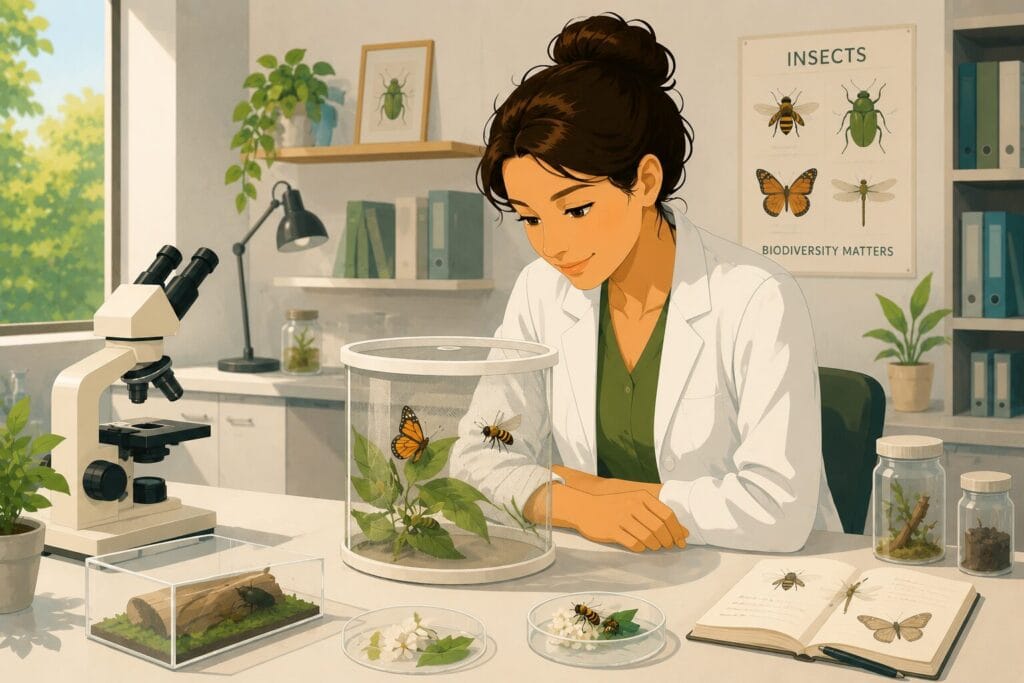
Although insects are small, their influence is enormous.
They help pollinate crops, support wildlife, recycle nutrients and maintain healthy ecosystems.
The world would look very different without them. In fact, life on the planet wouldn't be sustained without them.
And while they may sometimes trigger fear, they are also among the most important animals on our planet.
How Humans and Insects Can Peacefully Coexist
Most encounters between humans and insects do not need to end in fear, panic or harm.
In many cases, simple understanding and practical adjustments allow us to coexist peacefully.
Understanding Their Behaviour
Many insects enter homes accidentally.
Flies may follow light sources. Beetles may wander indoors while searching for shelter. Moths are often attracted to artificial lighting.
Understanding why insects appear can make their behaviour feel less mysterious and less threatening.
Preventing Problems Humanely
Simple measures such as keeping food sealed, repairing window screens and reducing standing water can help discourage unwanted insect visitors.
These approaches are often more effective and environmentally friendly than reacting out of fear.
Respecting Wildlife
Like all animals, insects are simply trying to survive.
They are not villains, monsters or enemies.
By approaching them with curiosity rather than panic, many people find that their fear gradually begins to soften.
You do not need to love insects.
However, learning to share the world with them can be an important step towards greater confidence, compassion and freedom.

How to Overcome Your Fear of Insects
If you have lived with entomophobia for a long time, it can be easy to assume that the fear is simply part of who you are.
Fortunately, that is not the case.
Phobias are learned responses, which means they can also be unlearned. While overcoming a fear of insects may feel daunting at first, countless people have successfully transformed their relationship with insects and gone on to enjoy a much greater sense of freedom.
Importantly, overcoming a fear does not mean forcing yourself into overwhelming situations.
Instead, it involves gradually teaching the brain that insects are far less threatening than it currently believes.
Understanding Comes First
At Creature Courage, we often find that education is one of the most powerful starting points.
Fear thrives on uncertainty.
The more we understand about insects, their behaviour and their role in the natural world, the less mysterious and threatening they often appear.
This is one reason why psychoeducation forms an important part of our approach.
Small Steps Create Big Changes
Many people believe they need to jump straight into handling insects to overcome their fear.
In reality, confidence is usually built gradually.
For one person, the first step may be looking at photographs. For another, it may involve watching insects from a comfortable distance.
Over time, these small experiences begin teaching the brain a new lesson:
"I can cope with this."
And that lesson can be transformative.
Courage Grows Through Experience
Reading about insects can be helpful.
Understanding them can be helpful.
However, lasting change usually occurs when knowledge is combined with real-world experience.
This is why experiential learning plays such an important role in overcoming animal phobias.
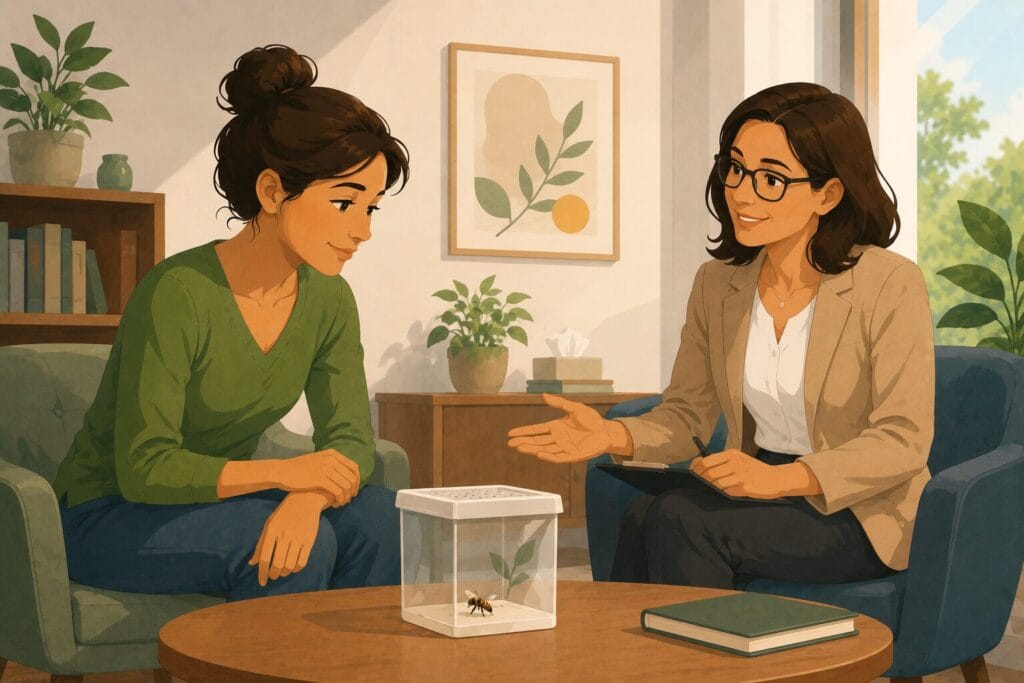
The goal is not simply to think differently.
The goal is to experience something different.
Therapeutic Techniques to Overcome a Fear of Insects
At Creature Courage, we use a holistic and highly personalised approach to helping people overcome their fear of Insects
We often combine several complementary approaches depending on the individual and their needs.
Some of the techniques that may be used include:
Animal Education
Understanding often reduces fear.
Education forms a central part of our Animal Phobia Therapy Programmes. We teach people about insects, their behaviour, their role in nature and the myths that surround them.
As fascination grows, fear often begins to shrink.
Exposure Therapy
Exposure therapy allows the brain to update its fear response through direct experience.
Through carefully structured Exposure Therapy for Animal Phobias, fearful assumptions can gradually be replaced with real-world evidence and confidence.
Cognitive Behavioural Therapy (CBT)
Cognitive Behavioural Therapy (CBT) helps people become more aware of the thoughts, beliefs and assumptions that may be maintaining the fear.
As part of our wider Animal Phobia Therapy Approach, CBT techniques can help develop a calmer and more balanced perspective.
Guided Imagination Exercises
The brain often responds to imagined experiences in similar ways to real ones.
Guided imagination exercises are frequently incorporated into our Animal Phobia Therapy Sessions to help transform how people mentally picture insects and prepare them for real-world encounters.
NLP Techniques (Neuro-Linguistic Programming)
NLP techniques can help change how experiences are processed and understood.
Within our Animal Phobia Therapy Programmes, NLP techniques can also be used to strengthen confidence, resourceful emotional states and feelings of courage.
Hypnotherapy
Hypnotherapy can promote deep relaxation while helping reinforce positive changes at a subconscious level.
As part of our holistic Animal Phobia Therapy Approach, many people find hypnotherapy particularly helpful for reducing anticipatory anxiety.
Art Therapy
Creative exercises can help strengthen learning and make therapeutic insights more memorable.
Art therapy is sometimes used within our Animal Phobia Therapy Sessions to help people build a new and more positive relationship with the animal.
Compassion-Based Approaches
One of the most powerful shifts occurs when fear begins to give way to understanding.
By learning about the challenges insects face and the important roles they play in nature, many people begin to see them in a completely different light.
This philosophy forms an important part of why our One-Day Phobia Therapy Method is so effective.
Rather than viewing the animal as something to fear, people often begin to recognise it as another living creature trying to survive and thrive.
Creature Courage: Specialists in Animal Phobias

At Creature Courage, we specialise in helping people overcome fears of insects, spiders and other animals through a combination of education, experiential learning and evidence-informed therapeutic techniques.
Rather than simply helping people tolerate insects, our goal is to help them understand them.
This distinction matters.
Understanding often creates confidence, while confidence helps reduce fear.
Most importantly, we focus on helping people experience success for themselves while doing the therapy.
Why Our Approach Is Different
Many traditional approaches rely heavily on discussion.
While discussion has value, genuine transformation often happens when people experience their fear differently in real time.
This is one reason why our intensive workshops place such a strong emphasis on practical experience and nervous system training.
Real People. Real Results.
Over the years, Creature Courage has helped thousands of people transform their relationship with feared animals.
Many arrive convinced that they will never change.
Many leave, surprising themselves.
You can read some of their experiences on our Client Testimonials page
Get Help with Your Fear of Insects
You do not have to spend the rest of your life feeling controlled by insects.
Fear can feel powerful.
However, it is important to remember that fear is not always an accurate reflection of reality.
With the right support, education and experiences, it is entirely possible to build confidence and develop a healthier relationship with insects.
You do not need to become an insect enthusiast.
You simply deserve the freedom to enjoy your life without unnecessary fear holding you back.
If you are ready to take the next step, we would love to help. You can get in touch with us directly through our Contact Page.
Your journey from fear to courage could begin today.
Frequently Asked Questions About Entomophobia
Can I really overcome my fear of insects?
Yes.
Many people who once believed their fear was permanent have successfully reduced or overcome their entomophobia. While every person's journey is different, phobias are highly treatable.
Do I have to touch an insect to overcome my fear?
Not necessarily.
Effective phobia treatment is gradual and tailored to the individual. Progress is built step by step, and no one should be forced into situations they are not ready for.
Why do I react so strongly to insects?
Your reaction is largely driven by the brain's threat-detection systems.
When the brain believes something is dangerous, it can trigger a powerful fight, flight or freeze response, even when the actual risk is low.
How long does it take to overcome entomophobia?
This varies from person to person.
Some individuals experience significant changes very quickly, while others benefit from a more gradual process. Factors such as the severity of the fear, previous experiences and willingness to engage with treatment can all play a role.
Is my fear of insects normal?
Absolutely.
Fear of insects is one of the most common animal-related fears. While the intensity of the fear may vary, many people experience anxiety around insects at some point in their lives.
The important thing to remember is that help is available, and change is possible.