Can One-Day Phobia Therapy Really Work?
Many people are surprised when they hear that one-day phobia therapy can sometimes change a fear dramatically in just a single day. Some even find it hard to believe. After all, phobias often develop over many years, so it seems logical to assume they would also take months or even years to treat.
However, modern psychology and neuroscience tell a different story. When the brain learns fear through emotional experience, it can also update that fear surprisingly quickly under the right conditions. This is one of the reasons one-day phobia therapy can create powerful changes much faster than people expect.
Understanding why this happens requires looking at how the brain processes fear. In this blog, we will explore how, scientifically, a phobia can be quickly changed in just one day.
How Phobias Form in the Brain
Phobias are not simply strong dislikes. Instead, they are powerful fear responses created by the brain’s survival system.
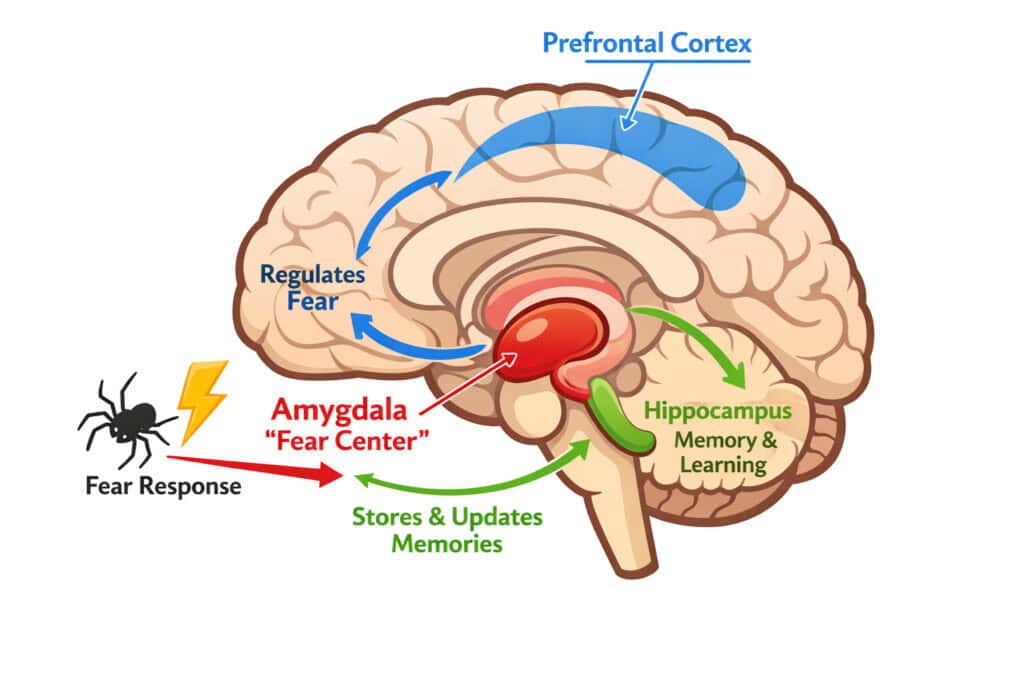
A key structure involved in fear processing is the amygdala, a small almond-shaped region deep in the brain. The amygdala constantly scans the environment for potential threats. When it believes something is dangerous, it activates the body’s fight-or-flight response.
Importantly, the amygdala learns through emotional experience rather than logical reasoning.
This is why someone with a spider phobia may fully understand that most spiders are harmless, yet still feel overwhelming fear when they encounter one. The rational parts of the brain recognise that the spider is safe. However, the survival system has learned something very different.
Once the brain associates a stimulus with danger, the fear response can activate extremely quickly.
Why Exposure Therapy Works
Exposure therapy works because it allows the brain to update its threat prediction.
During carefully guided exposure, a person encounters the feared situation in a safe and controlled environment. Instead of danger occurring, the brain experiences calm, control, and safety.
Each exposure creates a new learning experience that competes with the original fear memory. Over time, the brain begins to realise that the situation is not actually threatening.
Psychologists call this process fear extinction learning. This learning process forms the foundation of one-day phobia therapy, where repeated safe exposure allows the brain to update its threat response quickly.
Research consistently shows that exposure therapy is one of the most effective treatments for specific phobias. Studies demonstrate strong improvement rates when people engage in structured exposure to the feared stimulus.
A review of fear extinction research explains how exposure therapy allows new safety memories to form in the brain and helps regulate the amygdala’s fear response.
You can read more about this research here:
Why One-Day Phobia Therapy Can Work So Quickly
Many people assume exposure therapy must happen slowly over many weeks. While gradual therapy can certainly be helpful, research shows that intensive exposure sessions can also be extremely effective for treating specific phobias.
Psychologists sometimes refer to this approach as One-Session Treatment (OST). This method involves a longer, carefully structured therapy session in which the client experiences repeated exposure to the feared stimulus. Because of this, one-day phobia therapy focuses on creating many safe learning experiences in a single structured session.
In one controlled study examining one-session treatment for specific phobias, more than half of the participants no longer met the diagnostic criteria for their phobia after treatment. This was significantly higher than the improvement rates seen in control groups.
This research suggests that, in some cases, traditional gradual exposure may include unnecessary steps that prolong the discomfort of the process. Intensive sessions allow the brain to experience repeated learning much more efficiently.
As a specialist in exposure therapy with a 99% documented success rate, this is something I have witnessed repeatedly in my own work. When exposure is delivered correctly and in the right environment, the brain can update its fear response far more quickly than most people expect.
So why can change sometimes happen so rapidly?
The answer lies in how the brain learns fear.
Rapid Emotional Learning in the Brain
A full-day therapy session allows the brain to experience many repetitions of safe exposure within a short period of time.
Each positive experience builds on the previous one. As the brain repeatedly encounters the feared stimulus without harm, the fear response begins to weaken.
This creates what psychologists describe as rapid emotional learning.
Fear memories are stored in neural circuits involving the amygdala, hippocampus, and prefrontal cortex. These brain structures work together to detect threats and store emotional memories about danger.
When someone repeatedly encounters the feared stimulus in a safe environment, the brain begins to create new learning that competes with the old fear memory.
This process is known as fear extinction learning.
Fear extinction does not erase the original fear memory. Instead, the brain develops a new memory that the situation is safe. Over time, this new learning can override the old fear response.
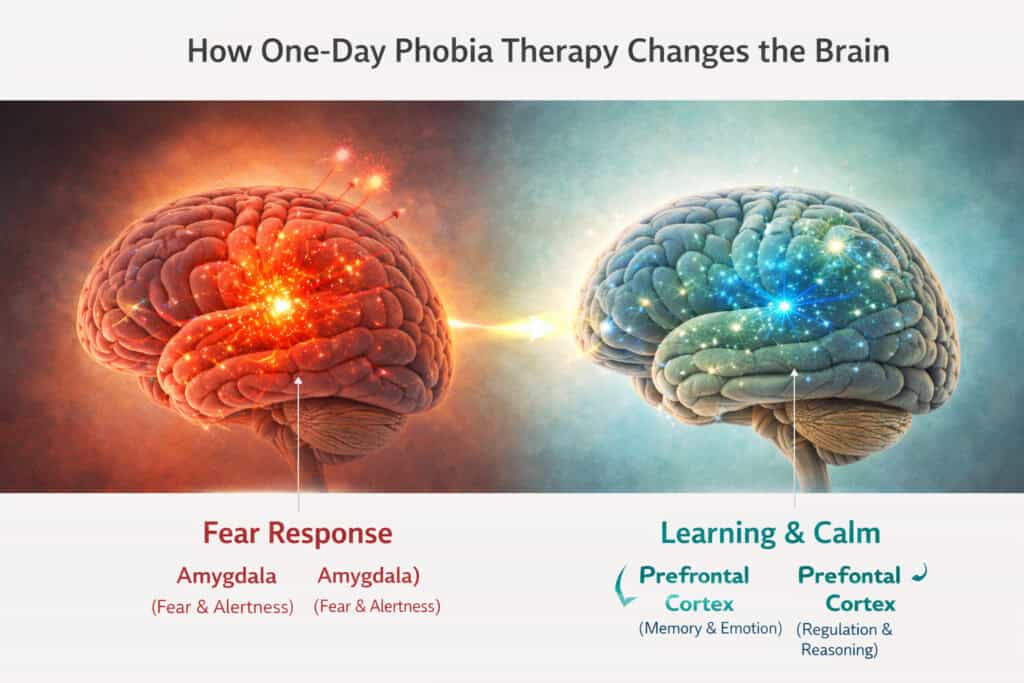
Neuroscience research shows that this process involves increased communication between the prefrontal cortex and the amygdala. As a result, the rational parts of the brain can regulate the fear response more effectively.
Brain imaging studies have even shown measurable changes in fear-related brain activity after successful exposure therapy.
Because the brain receives multiple learning experiences in a short time frame, the fear response can shift surprisingly quickly.
When the Main Fear Response Breaks
In my own experience working in exposure therapy for over a decade, I have repeatedly seen how dramatically a phobia can be reduced in a single day.
During intensive exposure sessions, clients often become so desensitised to their trigger that the core fear response essentially collapses. Once that happens, the most difficult part of the phobia has already been overcome.
From that point forward, the remaining progress simply involves repeating the exposure experiences independently so the brain continues reinforcing the new learning.
For many clients, this final stage feels far less intense. The fear is no longer dominating their reactions, and the exposure becomes more about reinforcing confidence rather than confronting overwhelming anxiety.

The Momentum Effect in Fear Learning
Another advantage of intensive therapy sessions is what some psychologists describe as a momentum effect.
In shorter sessions spread across many weeks, the brain has long gaps between learning experiences. During those gaps, avoidance behaviours can return and reinforce the fear.
However, during a longer session, the brain remains continuously engaged with the learning process.
Each successful exposure builds confidence and reduces uncertainty about the feared situation. As this happens, the brain begins to shift its expectations more quickly.
Instead of predicting danger, it begins predicting safety and control.
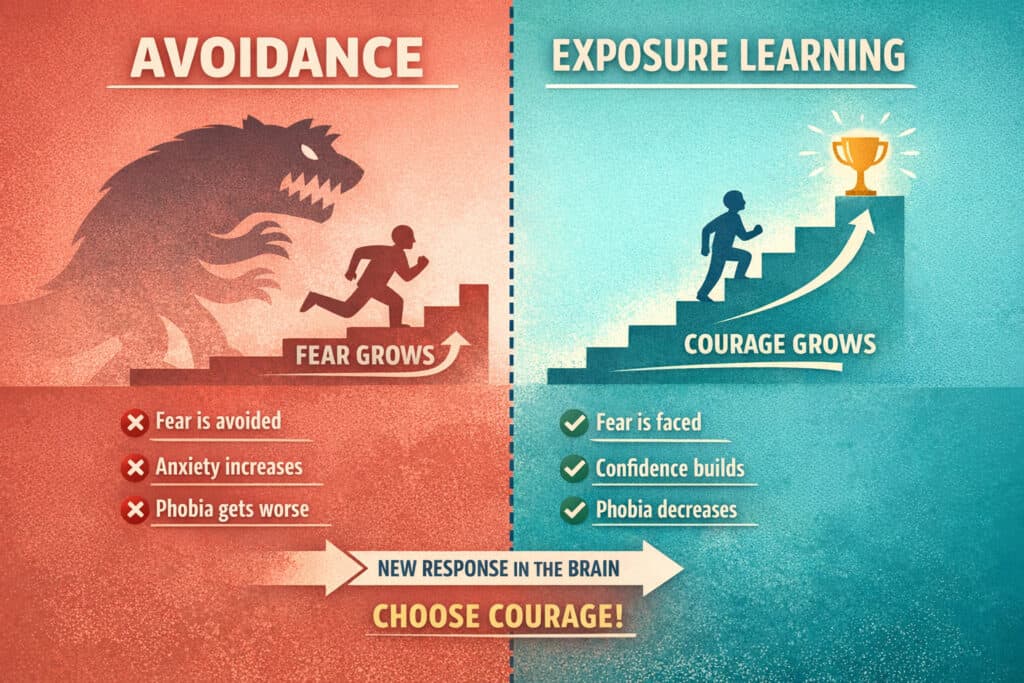
Why Avoidance Makes Phobias Last for Years
This rapid learning process also helps explain why phobias can persist for so long.
When people avoid the feared situation, the brain never receives the information it needs to update its predictions. As a result, the amygdala continues to interpret the stimulus as dangerous because it has never experienced evidence to the contrary.
Over time, this avoidance can gradually eat away at a person’s freedom and quality of life.
This is precisely why exposure therapy is considered one of the most effective psychological treatments for specific phobias.
By replacing avoidance with carefully guided experience, the brain finally receives the information it needs to recalibrate the fear response.
Addressing the Fear of Losing Control
Animal phobias are often linked to a deeper concern about losing control. Understanding this is key to successful exposure therapy.
People may worry that the animal could move unpredictably. Alternatively, they may fear that they will panic if the animal gets too close. These concerns create a powerful sense of vulnerability.
Exposure therapy helps rebuild a sense of calm control step by step.
As individuals safely interact with the feared animal, they discover that they can remain calm and manage the situation. Consequently, this gradual restoration of control helps the fear response begin to fade.
Why Structure Matters in One-Day Phobia Therapy
Although exposure therapy is highly effective, it works best when delivered in a knowledgeable, structured, and supportive way.
The process must be carefully designed so that exposure occurs gradually and safely. Each step builds confidence and allows the brain to update its threat prediction.
Without proper guidance, exposure experiences can sometimes become overwhelming rather than empowering. Subtle moments matter during the process. Small signs of avoidance, negative thinking, or rising panic must be recognised and managed in real time.
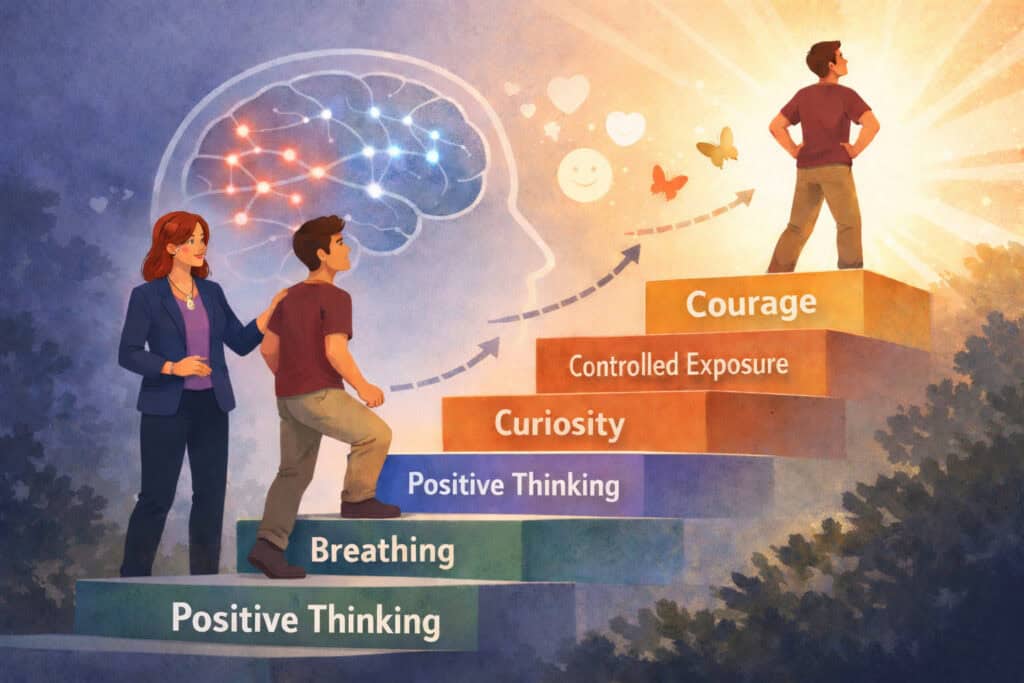
Clients also benefit from learning how to regulate their breathing, posture, and mindset throughout the experience.
For more than a decade, Creature Courage has specialised in exposure-based animal phobia therapy, helping clients safely retrain their fear responses.
When exposure therapy is delivered correctly, it can become a life-changing experience rather than a frightening setback. This careful structure is a key reason why our workshops have achieved a 99% documented success rate.
Many clients are genuinely surprised by how quickly their fear can change once the brain experiences the situation differently.
Why Preparation Is Important in One-Day Phobia Therapy
Successful intensive therapy does not begin with exposure alone.
For intensive exposure therapy to be successful, there needs to be emotional preparation. Clients learn how to manage their fear and anxiety effectively, both mentally and physically. In addition, psychological grounding tools help clients remain calm and focused.
This preparation allows people to feel more confident and in control of their emotions during the exposure process. Preparation is therefore an important part of successful one-day phobia therapy, ensuring clients feel calm, informed, and ready for exposure.
In animal phobias, education about the animal itself can also play a powerful role. Learning about the behaviour, biology, and ecological importance of the animal helps reframe negative assumptions.
Instead of seeing the animal as a frightening threat, people begin to see it as a fascinating living creature that deserves understanding and compassion.
By the time exposure begins, the brain is already starting to reinterpret the situation.
This combination of psychology, education, emotional preparation, and structured exposure forms the foundation of the Creature Courage one-day phobia workshops.

From Fear to Fascination
One of the most remarkable aspects of phobia therapy is that fear often transforms into curiosity.
Fear and fascination are closely connected emotional responses within the brain. Once the intense survival response begins to calm, curiosity can emerge surprisingly quickly.
This is another reason education about the animal plays an important role during therapy.
As the fear response settles, people begin to see the animal more clearly. Instead of appearing threatening, it may start to look interesting, unique, or even beautiful.
This shift from fear to fascination is often one of the clearest signs that the brain has updated its fear response.
A New Relationship With Fear
Overcoming a phobia is not simply about tolerating the feared animal.
Instead, it involves changing how the brain interprets the situation.
When people understand how fear works and experience safe exposure, they often gain tools that help them manage anxiety in other areas of life as well.
For many individuals, overcoming a phobia becomes a powerful turning point that builds confidence and resilience.
There is no reason to continue suffering with a debilitating phobia when modern psychology shows that the brain is capable of changing far more quickly than most people realise. This is why one-day phobia therapy can be such a powerful turning point for many people living with animal phobias. Learn more about our one-day phobia therapy workshops here.
If you would like to learn more about how the Creature Courage one-day phobia workshops work, feel free to get in touch. We would be happy to explain the process in more detail.

FAQ
Can a phobia really be cured in one day?
Many people ask whether a phobia can truly be cured in a single day. While every individual is different, research shows that intensive exposure therapy can produce dramatic improvements within one carefully structured session.
Psychologists sometimes refer to this method as One-Session Treatment (OST). During these longer sessions, clients experience repeated exposure to the feared situation in a safe and controlled environment. As the brain repeatedly learns that the situation is not dangerous, the fear response can weaken surprisingly quickly.
In many cases, this allows people to leave therapy feeling significantly calmer around their trigger. Although continued exposure helps reinforce the new learning, the core fear response can often be broken within a single day.
Why does exposure therapy work so well?
Exposure therapy works because it allows the brain to learn through direct experience that the feared situation is not dangerous. This creates new safety memories that gradually override the original fear response.
Is exposure therapy scientifically proven?
Yes. Exposure therapy is widely recognised as one of the most effective treatments for specific phobias and anxiety disorders. Numerous clinical studies have demonstrated its effectiveness.
How Long Does It Take to Overcome a Phobia?
The time it takes to overcome a phobia can vary from person to person. However, research shows that specific phobias often respond very quickly to exposure-based therapy. In some cases, significant improvement can occur within a single intensive session.
Traditional therapy approaches may spread exposure over multiple weeks. However, intensive exposure sessions allow the brain to experience many learning repetitions within a short period of time. As a result, the fear response can weaken much faster than people expect.
For many individuals, the most important breakthrough happens when the brain first learns that the feared situation is safe.
Scientific References
Craske, M. G., et al. (2014). Optimizing inhibitory learning during exposure therapy. Behaviour Research and Therapy.
https://pmc.ncbi.nlm.nih.gov/articles/PMC3678031/
Öst, L. G. (1989). One-Session Treatment for specific phobias. Behaviour Research and Therapy.
https://pmc.ncbi.nlm.nih.gov/articles/PMC10087411/
Schiller, D., et al. (2013). Extinction during reconsolidation of fear memories. Proceedings of the National Academy of Sciences.
https://www.pnas.org/doi/10.1073/pnas.1205242109