
Introduction
This article explores how imagination exercises can help you overcome an animal phobia.
When most people think about overcoming a phobia, they imagine facing the fear directly.
But what if part of that process could begin safely inside your own mind?
Imagination exercises are a powerful psychological tool that allows you to start retraining your brain before real-world exposure even begins. They help reduce fear, build familiarity, and create new emotional associations with the feared animal.
This article will explain what imagination exercises are, how they work in treating animal phobias, what the science says, and how we use them at Creature Courage to help people transform fear into calm, curiosity, and even compassion.
What Are Imagination Exercises?
Imagination exercises are structured mental techniques where you intentionally visualise a situation, object, or experience in a controlled and guided way.
They are often similar to short, guided meditations, where you are led step-by-step through a specific mental experience rather than simply letting your mind wander.
In therapy, they are used to:
• Rehearse situations safely
• Change emotional responses
• Build familiarity with feared triggers
• Reduce anxiety before real-life exposure
Rather than avoiding the feared animal, you begin to engage with it mentally, but in a way that feels manageable and safe.
This is not random daydreaming.
It is a purposeful and guided process designed to influence how your brain responds to fear.
How Imagination Exercises Work in Therapy
Imagination exercises work because the brain does not fully distinguish between real and vividly imagined experiences.

When you imagine something clearly:
• The brain activates similar neural pathways
• The emotional centres (including the amygdala) can respond
• New associations can begin to form
This means you can begin to retrain your fear response without immediate real-world exposure.
Over time, this helps:
• Reduce the intensity of fear
• Increase tolerance to the idea of the animal
• Prepare the brain for real interaction
It acts as a bridge between avoidance and real-life exposure.
To understand how this connects to real-world change, you can explore our guide on
👉 Exposure Therapy for Animal Phobias
Examples of Imagination Exercises
Here are some common types of imagination exercises used in animal phobia treatment:
Visualising the Animal Calmly
You imagine the animal in a neutral or peaceful setting.
For example:
• A spider sitting still in a quiet corner
• A dog lying calmly on the ground
This helps reduce the brain’s expectation of danger.
Gradual Scenario Building
You slowly build up the imagined scenario over time:
• First imagining the animal at a distance
• Then closer
• Then interacting safely
This mirrors the structure of real exposure therapy and helps the brain adjust step by step.
Playful or “Silly” Reframing
You imagine the animal in a more light-hearted, exaggerated, or even humorous way.
For example:
• A pigeon wearing a tiny hat and waddling in an exaggerated, cartoon-like way
• A cockroach doing a small, playful dance
This helps break rigid fear patterns by introducing:
• Humour
• Lightness
• A sense of control
Positive Reframing Imagery
You imagine the animal behaving in a friendly or non-threatening way.
For example:
• A dog wagging its tail
• A spider moving slowly and harmlessly
This helps challenge catastrophic thinking patterns.
What Does the Science Say?
Mental imagery is widely studied in psychology and neuroscience, and there is strong evidence that it can influence how the brain processes fear.
Research shows that imagined experiences can activate many of the same brain regions as real experiences, particularly those involved in emotion and threat detection.
For example, studies in neuroscience have found that visual imagery engages areas such as the visual cortex and the amygdala, meaning the brain can respond emotionally even when the situation is not physically present.
A review published in Neuroscience & Biobehavioral Reviews found that mental imagery plays a key role in emotional processing and can influence attention and emotional regulation.
You can explore related research here:
👉 Mental imagery and emotional processing research overview
Mental rehearsal is also widely used in areas such as sports psychology and performance training.
This is why imagery-based techniques are commonly used to:
• Improve performance
• Reduce anxiety
• Build confidence
In the context of phobias, this means the brain can begin to “practice” new, calmer responses before real-life interaction takes place.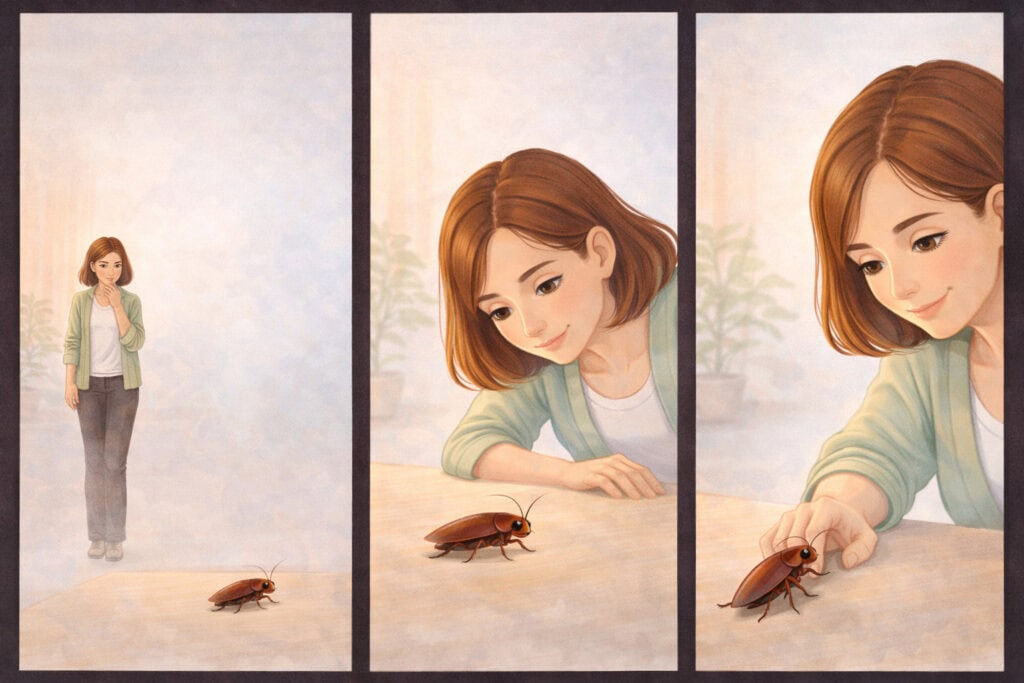
Common Misconceptions About Imagination Exercises
“It’s just imagination, so it doesn’t really work.”
In reality, imagination can strongly influence emotional and physiological responses.
“It replaces exposure therapy.”
Imagination exercises are not a replacement for real-world exposure.
They are a preparation tool, not the final step.
“You have to be good at visualising.”
You do not need vivid or perfect mental imagery.
Even simple visualisation can still be effective.
Where It Fits in Treating Animal Phobias
Imagination exercises are typically used before and alongside exposure therapy.
They help:
• Reduce initial resistance
• Build confidence
• Lower baseline anxiety
However, they are not enough on their own.
Animal phobias are driven by deeper, automatic fear responses controlled by the amygdala.
While imagination can influence this system, the brain learns most effectively through real, slightly unpredictable experiences.
It needs to be shown, not told.
Research into exposure therapy, including work by Michelle Craske, highlights the importance of inhibitory learning, where the brain updates fear through direct experience.
You can explore this here:
👉 Inhibitory learning and exposure therapy research
Imagination helps you get there — but it does not replace the journey.
How We Use Imagination Exercises at Creature Courage
At Creature Courage, imagination exercises are used in a more creative and emotionally engaging way.
We use them not just to reduce fear, but to transform how you see the animal.
The Playful Reframing Exercise
We also use imagination exercises to make the animal feel less threatening by changing how it is represented in your mind.
In this exercise, you:
• Shift the image of the animal away from something serious or threatening
• Mentally exaggerate or soften its features
• Introduce a sense of lightness, humour, or harmlessness
Rather than focusing on specific scenarios, the goal is to change the emotional tone of the image itself.
This helps the brain become more flexible in how it responds, allowing fear to reduce more naturally.
The Empathy Transformation Exercise
You are guided through a meditation where you imagine:
• Becoming the animal for a day
• Experiencing the world from its perspective
• Facing its challenges and vulnerabilities
This helps shift your perception from:
Fear → Understanding → Compassion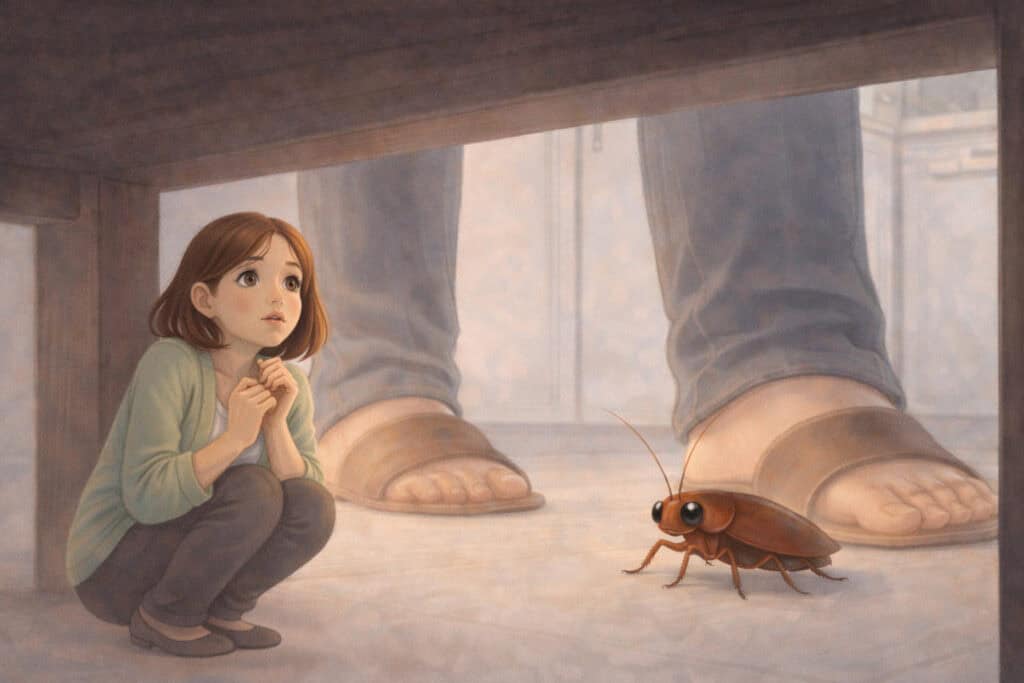
Using Imagination in Real-Time Exposure
These exercises are carried forward into real-life exposure sessions.
As you begin interacting with the animal, you can:
• Recall the imagery
• Shift your emotional response in real time
• Reduce fear as it arises
How This Connects to Other Techniques
These exercises work alongside:
• CBT for Animal Phobias
• NLP Techniques for Phobias
• Hypnotherapy for Animal Phobias
• Art Therapy for Animal Phobias
Together, they help transform the animal from something threatening into something manageable.
How Imagination Exercises Fit Into a Broader Approach
A complete approach includes:
• Education
• Cognitive techniques
• Emotional regulation
• Imagination exercises
• Gradual exposure
Together, these retrain both:
• The thinking brain
• The automatic fear response
You can explore this further through our
👉 Freedom in Courage coaching approach

Conclusion
Imagination exercises are a powerful and often overlooked tool in treating animal phobias.
They allow you to begin facing your fear in a safe and controlled way, helping to reduce anxiety and build confidence before real-world exposure.
While they are not a complete solution on their own, they play an important role in preparing the brain for lasting change.
When combined with the right techniques, they can help transform fear into something far more manageable — and sometimes even something positive.
If you are ready to go beyond understanding your fear and start changing it in a real, practical way, Creature Courage offers structured, supportive sessions designed to help you face your fear step by step.
FAQ About Imagination Exercises
Do imagination exercises really help with phobias?
Yes. They can reduce fear and prepare the brain for real exposure.
Can they cure a phobia on their own?
No. They work best alongside exposure therapy.
What if I struggle to visualise?
That’s completely normal. Simple imagery still works.
Are they safe?
Yes. They are a gentle and controlled starting point.
How quickly do they work?
Some people notice early changes, but lasting results come with full therapy.