

Unforgettable Experiences Shape Our Memories
Think about an experience from the past few years that you still talk about today.
It probably wasn’t something routine or predictable. Instead, it was likely a moment that felt slightly unusual, surprising, or even a little uncomfortable at first.
Perhaps you attended an immersive theatre event where the actors moved through the audience. Maybe you tried an activity you had never considered before. Or perhaps you found yourself unexpectedly interacting with something that initially made you hesitate.
Experiences like these often stay with us for years, especially when they involve interactive or experiential moments that break routine.
Psychologists have long observed that the experiences people remember most clearly often begin with a brief moment of uncertainty. Something unexpected happens. Attention sharpens. Curiosity appears.
In that moment, the brain becomes far more engaged than it would during an ordinary, predictable activity.
This is one reason unusual experiences are so powerful. They activate the brain’s natural curiosity systems and create memories that feel vivid and meaningful long after the event itself has ended.
Why the Brain Pays Attention to the Unexpected
The human brain is constantly filtering the world around us. Most daily experiences are familiar, so the brain processes them efficiently and moves on.
However, when something unusual happens, the brain immediately becomes more alert.
Novel experiences activate systems involved in learning and memory. Researchers have shown that unfamiliar or surprising situations can increase activity in the hippocampus, a region of the brain that helps store long-term memories (Lisman & Grace, 2005).
This system helps the brain decide which experiences are worth storing for the future.
Routine events are often filtered out because the brain has already learned from them. However, when something unexpected occurs, the brain treats the moment as important information.
That is why unusual experiences often become the memories that stand out years later.
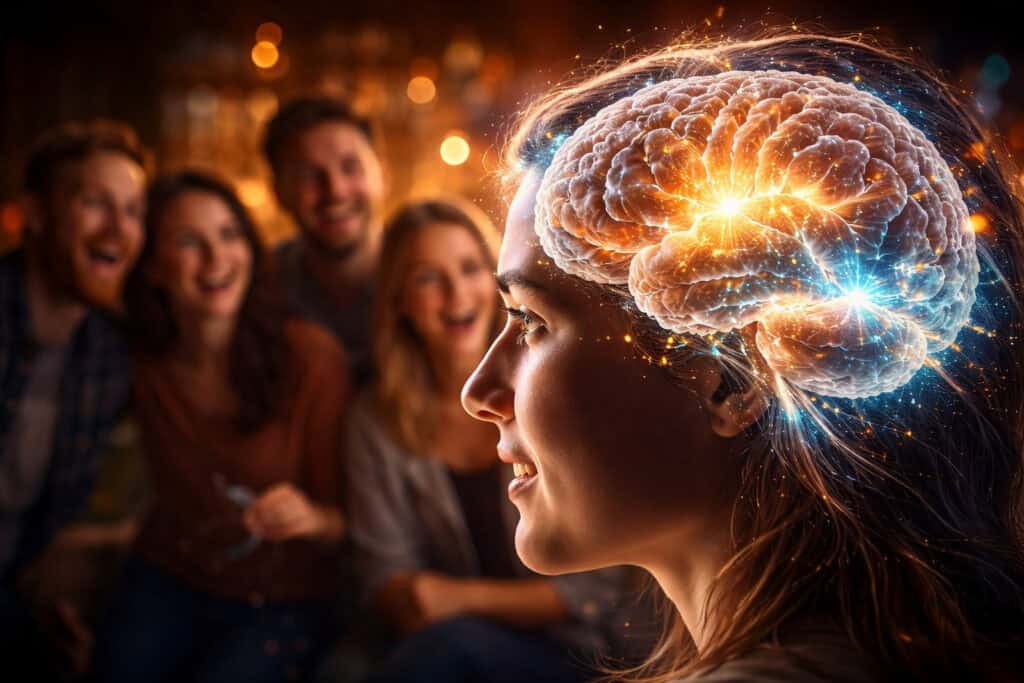
When we encounter something unexpected, the brain becomes more alert. Novel experiences activate learning and memory systems that help turn unusual moments into lasting memories.
The Psychological Link Between Fear and Curiosity
An interesting aspect of human psychology is that fear and curiosity are closely related.
Both emotions are linked to brain systems that help us evaluate unfamiliar situations. The amygdala, a small structure deep within the brain, plays a key role in detecting emotionally significant events and potential threats (LeDoux, 2000).
When we encounter something unexpected, the brain quickly evaluates the situation.
At a very basic level, it asks a simple question:
Is this dangerous, or is it interesting?
If the situation feels manageable and curiosity begins to grow, the initial feeling of hesitation can quickly transform into fascination.
This is why people sometimes find themselves unexpectedly enjoying experiences that first made them unsure.
A person might initially say they would never interact with a particular animal or take part in a certain activity. Yet when they see others doing it safely, curiosity gradually replaces hesitation.
The moment of uncertainty becomes part of the excitement.
From a psychological perspective, this balance between caution and curiosity reflects an ancient survival system that helped humans explore the world while staying alert to risk.
Informally, people sometimes refer to this as the “caveman brain”.
Experiences that engage this system tend to feel vivid, emotional, and memorable.
Why Moments of Courage Become Stories
Another reason unusual experiences stay with us is that they often contain a small emotional story.
Ordinary events rarely become stories we retell. However, moments that involve uncertainty and discovery naturally create a narrative.
Someone hesitates. Curiosity grows. The moment unfolds. The experience ends with relief, laughter, or pride.
Psychologists sometimes describe this pattern as emotional contrast. When the brain moves from uncertainty to positive resolution, the experience becomes more memorable, particularly when emotion is involved in memory formation (Kensinger, 2009).
This is why people frequently share stories about moments when they stepped slightly outside their comfort zone.
Someone might say:
“I can’t believe I ended up holding a giant milipede.”
Or:
“At first I said absolutely not, but then everyone else tried it, and I didn’t want to be the only one who didn’t.”
These moments capture a small personal transformation. A person begins with hesitation and ends with curiosity or excitement.
Because the experience contains a clear emotional arc, it becomes something worth telling others about.
From a psychological perspective, these short journeys from uncertainty to discovery are exactly the kinds of experiences the brain is designed to remember.

Why Shared Experiences Strengthen Group Bonds
Experiences often become even more powerful when they happen within a group.
When people try something unusual together, they tend to support and encourage each other. Laughter, surprise, and shared reactions create strong emotional connections.
Social psychologists have long recognised that shared challenges can strengthen group cohesion. When people face something unfamiliar together, they often feel a greater sense of collective achievement afterwards.
One person’s curiosity can quickly influence others. As individuals step forward to try something new, the atmosphere becomes more relaxed and playful.
By the end of the experience, the group often shares a moment of collective pride.
These shared moments frequently become the highlights of an event. Long after the experience itself has finished, people still remember the moment they encouraged each other to take part.
Why Passive Experiences Are Forgotten Faster
Many traditional events rely on passive formats. Audiences sit, watch, and listen.
While these experiences can still be informative or entertaining, they often create fewer lasting memories because the audience remains largely observational.
Experiential events work differently.
Instead of simply watching something happen, participants become part of the experience itself. They interact, react, and influence what happens in the moment.
This active participation engages multiple systems in the brain at once — attention, emotion, curiosity, and social interaction.
When these systems activate together, memories tend to become stronger and more vivid.
That is one reason experiential events are becoming increasingly popular within creative industries, live entertainment, and immersive event design in cities like London.
When people participate directly, the experience becomes personal rather than passive.

Experiential Psychology Workshops in London
Experiential psychology workshops are designed around these natural psychological processes.
Instead of simply discussing fear or curiosity in theory, participants explore these emotions directly through guided experiences.
At Creature Courage, experiential workshops introduce participants to the fascinating psychology behind fear, curiosity, and courage.
Participants first learn how the brain reacts to unfamiliar situations and unusual creatures. They then have the opportunity to experience a small moment of courage themselves.
During these events, participants may encounter creatures such as giant African millipedes, tarantulas, stick insects, or Madagascan hissing cockroaches.
For many people, these encounters begin with curiosity mixed with hesitation. However, as the experience unfolds, hesitation often turns into fascination and laughter.
The result is a moment that feels surprising, memorable, and genuinely unique.
For creative teams, event organisers, and entertainment professionals, experiences like these often become one of the most talked-about moments of the entire event.
You can learn more about these Experiential Event Workshops in London here.

Frequently Asked Questions
Why do unusual experiences create stronger memories?
Unusual experiences activate brain systems involved in attention, emotion, and learning. When something feels new or surprising, the brain prioritises the moment for memory formation, making it easier to recall later.
Why do experiences outside our comfort zone feel exciting?
Experiences that sit just outside our comfort zone trigger both curiosity and alertness. When the brain realises the situation is safe, curiosity often replaces hesitation, turning the moment into something enjoyable and memorable.
Why do shared experiences help people bond?
When groups experience something unfamiliar together, they often support and encourage one another. This shared emotional moment can strengthen social connections and create lasting memories.
Why are experiential events becoming more popular?
Experiential events allow people to participate directly rather than simply watching or listening. This active involvement engages curiosity, emotion, and social interaction, making the experience more memorable.
References
LeDoux, J. (2000). Emotion circuits in the brain. Annual Review of Neuroscience.
https://www.annualreviews.org/doi/10.1146/annurev.neuro.23.1.155
Lisman, J., & Grace, A. (2005). The hippocampal-VTA loop: controlling the entry of information into long-term memory.
https://www.sciencedirect.com/science/article/pii/S0896627305002155
Kensinger, E. (2009). Remembering the details: Effects of emotion. Emotion Review.
https://journals.sagepub.com/doi/10.1177/1754073909338303