Why Parents Should Address Anxiety Before Treating Their Child’s Phobia
When a child develops a fear of an animal, the natural instinct is to help them overcome it as quickly as possible.
That instinct comes from care, protection, and love.
However, there is something many people do not realise…
In many cases, the success of a child’s phobia treatment depends just as much on the parent as it does on the child.
The Hidden Reason Some Child Phobia Treatments Do Not Last
If a parent has the same animal phobia as their child, treating the child alone is unlikely to create lasting results.
This is not because the treatment does not work.
It is because the environment the child returns to continues to reinforce the fear.
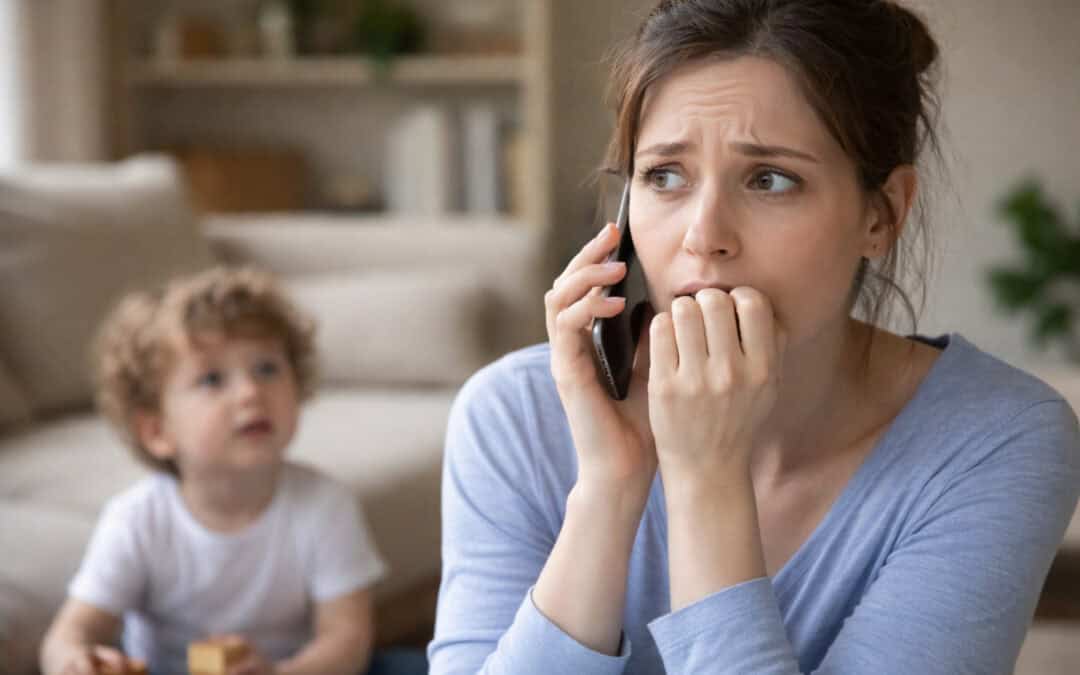
Children are constantly learning from the adults around them — not just through words, but through behaviour, body language, tone, and emotional responses.
This is strongly supported by Social Learning Theory, developed by Albert Bandura, which shows that children learn behaviours by observing others — especially parents.
If a child overcomes a fear in a session but then repeatedly sees fear at home, the brain simply relearns the association.
The result? The fear can quietly return.
This is something we explore in much more detail in our spider-specific guide:
👉 Why You Should Treat Your Own Spider Phobia Before Your Child
In that article, we break down the science behind how fear is passed from parent to child, particularly with spiders — one of the most commonly learned fears — and why even small reactions can have a lasting impact.
Although that guide focuses on spiders, the same principle applies to any animal phobia.
The brain does not separate fears as neatly as we think.
It learns patterns.
So if fear is modelled consistently, the child’s brain will continue to follow that pattern — even after successful treatment.
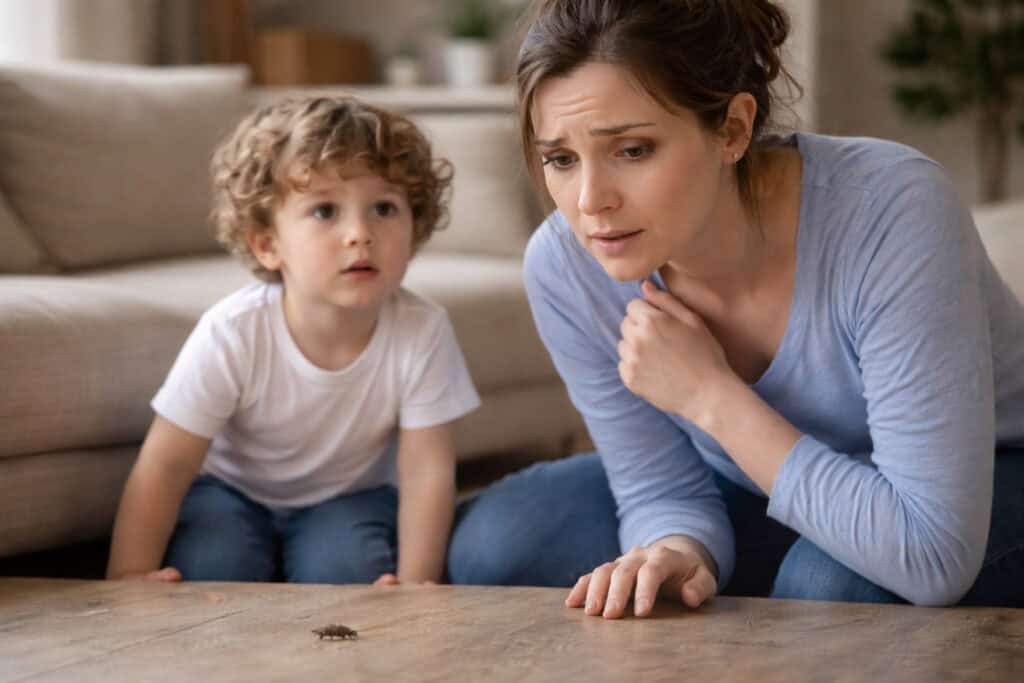
Children don’t just listen — they learn from what they see. Subtle anxious behaviours can shape how a child responds to the world.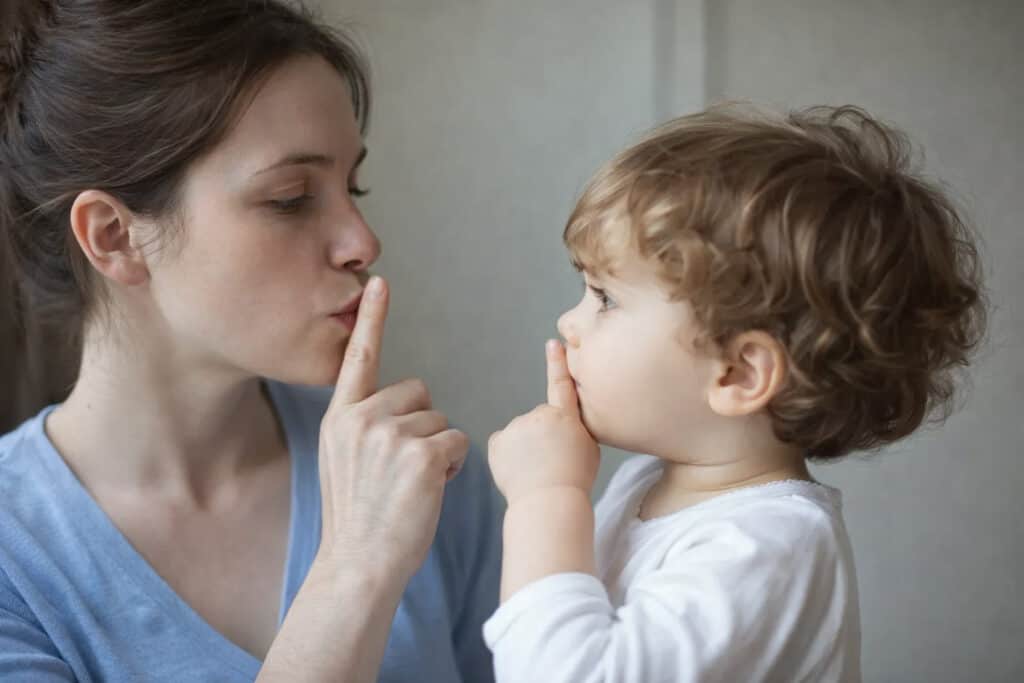
It’s Not Just the Same Phobia — It’s Anxiety Itself
Even if a parent does not share the same animal phobia, anxiety can still be passed on in more subtle ways.
Children are incredibly sensitive to:
- Hesitation
- Avoidance
- Over-checking for safety
- Tension in voice or posture
- Over-reassurance
Over time, this teaches the child something very important:
“The world is something to be cautious of.”
This keeps the child’s survival system switched on, making them more likely to develop fears and hold onto them.
Organisations like the NHS and American Psychological Association both recognise the role of parental influence in childhood anxiety patterns.
Understanding the “Caveman Brain”
To understand why this happens, it helps to understand how the brain works.
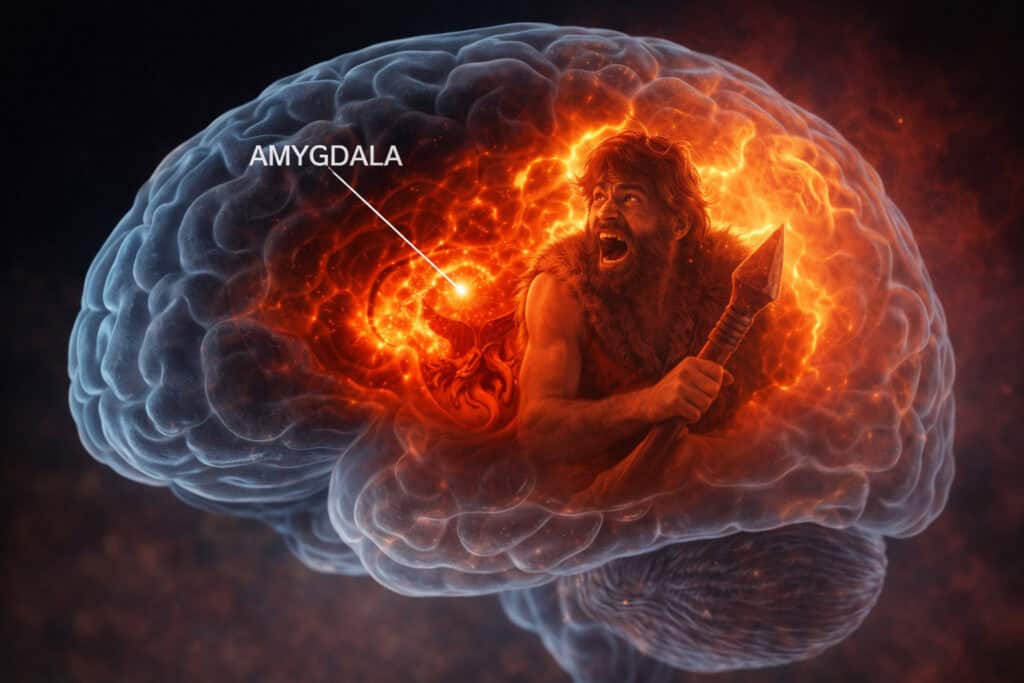
I often describe this part of the brain as the “caveman brain.”
This is the older, survival-focused part of the brain (often linked to the amygdala) that is responsible for detecting danger and keeping us safe.
It does not think logically.
It learns through experience, repetition, and emotional signals.
And most importantly…
It learns by watching others.
If your caveman brain reacts with fear, your child’s caveman brain is paying attention.
Small Fears vs Big Fears
Here is something important to consider:
If you cannot manage anxiety in small situations, it becomes much harder to manage it in bigger ones.
For example:
Smaller avoidance behaviours:
- Avoiding difficult conversations
- Putting off tasks that feel uncomfortable
- Seeking reassurance frequently
- Overthinking minor decisions
Bigger fears:
- Speaking in front of a group
- Confronting conflict
- Facing an animal phobia
The brain does not separate these as much as we think.
It learns a general rule:
“Avoid discomfort = stay safe.”
This is why the following idea matters so much:
If you can’t calm your caveman in the small moments, it becomes much harder to calm it in the big ones.
How Anxiety Gets Passed On (Without Realising)
For many families, this pattern does not begin with the child. And most parents do not intentionally pass anxiety to their children.
The fear is learned subtly and early on, through everyday moments:
- Stepping back quickly when seeing an animal
- Warning a child too strongly
- Showing visible tension
- A moment of hesitation.
- Avoiding certain situations altogether
These small moments may feel insignificant at the time, but to a child’s brain, they are powerful signals about what is safe and what is not.
From the child’s perspective, these are powerful learning moments.
👉 “If Mum or Dad reacts like that, this must be dangerous.”
Over time, this builds a learned pattern of fear and vigilance.
If you would like to explore a clear, real-world example of how this happens — particularly with one of the most common fears — you may find this helpful:
👉 How Spider Phobias Are Passed from Parent to Child
This article walks through how everyday reactions can shape a child’s fear response, often without parents even realising it, and why addressing these patterns early can make a significant difference.
Why Treating Parent Anxiety First Changes Everything
When parents learn to recognise and regulate their own anxiety:
- Their body language changes
- Their tone becomes calmer
- Their reactions become more measured
- Their environment becomes safer
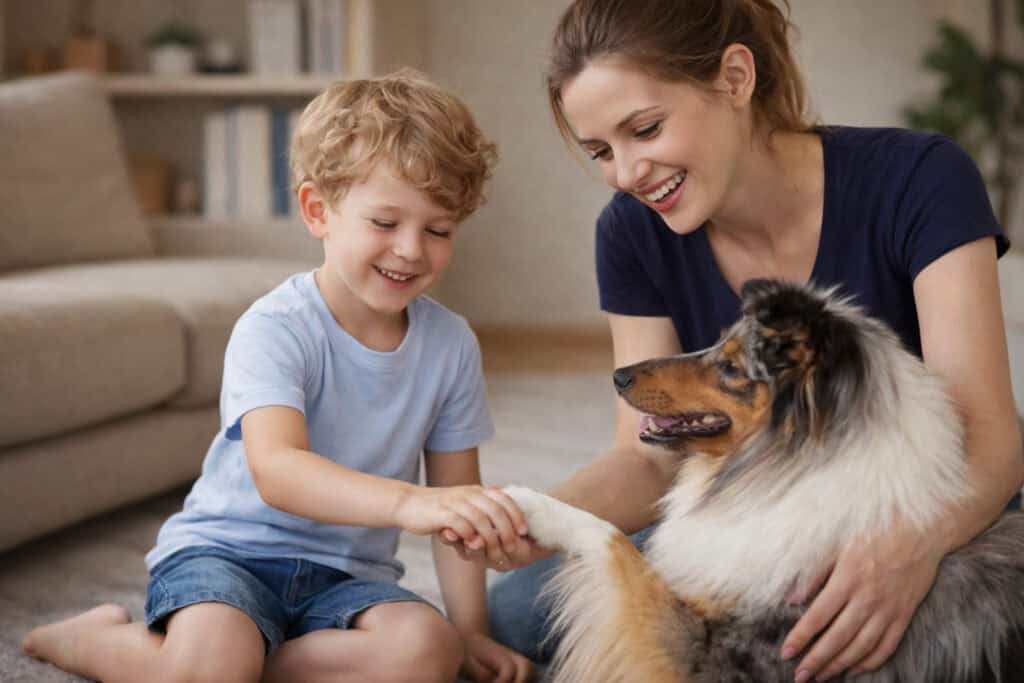
This creates a completely different learning environment for the child.
Instead of learning fear…
The child begins to learn how to be calm, confident, and courage.
This is what makes phobia treatment far more effective — and far more likely to last.
Building Courage Instead of Reinforcing Fear
When you develop awareness of your own anxiety patterns, something powerful happens.
You stop unintentionally reinforcing fear.
And instead, you begin modelling:
- Calm responses
- Healthy risk-taking
- Emotional regulation
- Confidence in uncertain situations
This does not just help your child overcome a phobia.
It helps them build a lifelong relationship with courage.
Our Anxiety Treatment for Parents
Our adult anxiety treatment is designed specifically for parents who want to support their child effectively.
It focuses on helping you:
- Recognise subtle anxiety patterns
- Understand how your brain responds to fear
- Build practical tools to regulate your responses
- Replace avoidance habits with confident action
Unlike children’s sessions, this version includes:
- More advanced psychological explanations
- Age-relevant examples
- Techniques such as guided hypnotherapy and anchoring
- Deeper cognitive and behavioural work
Flexible Delivery: Online or In Person
These sessions can be completed:
- Online (convenient and effective for most people)
- In person (recommended where possible for deeper impact)
Because these sessions do not involve live exposure work, they are highly effective in both formats.
Session Details
- Duration: Approximately 3 hours
- Investment: £195
- Format: 1-to-1 session
Before You Book Your Child’s Session…
If you are considering phobia treatment for your child, this is one of the most important steps you can take first.
Not because you are doing anything wrong.
But because small changes in your own responses can create huge positive changes in your child’s outcomes.
Ready to Support Your Child in the Best Possible Way?
You can read more about our approach here. If you would like to understand how this approach could help you and your child, you are very welcome to get in touch.
We always recommend a conversation first to make sure this is the right step for you. Click below to get in touch!
👉 Book a call to discuss your situation

FAQ SECTION
Do parents really influence a child’s phobia?
Yes. Research shows children learn fear through observation and environment, not just direct experience.
Should I treat my anxiety before my child’s phobia?
In many cases, yes. Addressing parental anxiety can significantly improve long-term outcomes for the child.
What if I don’t have the same phobia as my child?
Even general anxiety behaviours can influence a child’s nervous system and increase fear responses.
Can the parent session be done online?
Yes. Sessions are effective online or in person.
How long is the session?
Approximately 3 hours
You can read more on our dedicated FAQ page here.