
The Fear of Butterflies: Lepidopterophobia
The Fear of Butterflies: Understanding Lepidopterophobia
Butterflies are often seen as symbols of beauty, transformation, and nature’s delicate balance. Their colourful wings and gentle flight make them one of the most admired insects in the world.
However, for some people, the sight of a butterfly can trigger intense fear and anxiety. This condition is known as lepidopterophobia, the fear of butterflies and moths.
Although butterflies pose no real danger to humans, this phobia can feel overwhelming. People who experience it may avoid parks, gardens, or outdoor activities where butterflies might appear.
This guide explores what the fear of butterflies is, why it develops, and how it can be overcome. Most importantly, it shows that freedom from this fear is entirely possible with the right support and understanding.
Why People Fear Butterflies
Though often seen as irrational by others, this phobia can severely impact a person’s life. It is usually their fluttery movement that is at the root of the fear as well as their unpredictability. Despite their gentle nature, these insects' erratic flying patterns can induce panic in those affected.
A person with a phobia of butterflies probably knows consciously and rationally that these creatures cannot hurt them.
The fear is trigged by something in the sub-conscious, usually by something that happened in early childhood. It then becomes a conditioned habitual response.
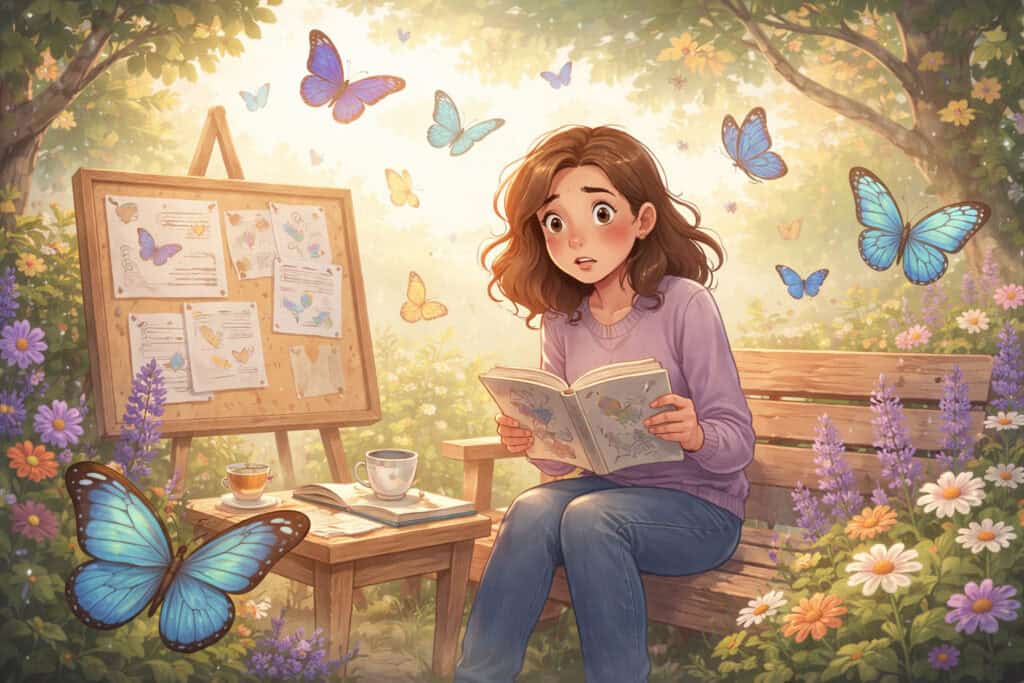
Understanding Butterfly Phobia
The fear of butterflies is called lepidopterophobia. The name comes from the scientific order Lepidoptera, which includes butterflies and moths, combined with the Greek word phobos, meaning fear.
People with lepidopterophobia may experience fear when:
Seeing a butterfly flying nearby
Viewing images or videos of butterflies
Thinking about butterflies unexpectedly landing on them
Being in places where butterflies are common
For many individuals, the fear is not logical. Butterflies do not bite or sting. Nevertheless, the mind may still interpret them as a threat.
Like many specific phobias, butterfly fear usually produces three types of symptoms.
Emotional Symptoms
Intense anxiety when butterflies appear
Panic or dread when outdoors in butterfly habitats
Persistent worry about unexpected encounters
Physical Symptoms
Rapid heartbeat
Sweating or shaking
Shortness of breath
Nausea or dizziness
Behavioural Symptoms
Avoiding gardens, parks, or nature trails
Avoiding outdoor events during spring and summer
Leaving an area immediately if butterflies appear
In severe cases, individuals may even avoid travelling or holidays where butterflies are common.
The Impact of Lepidopterophobia
The fear of butterflies can significantly affect everyday life. Although butterflies are harmless, the emotional response can feel very real.
People with this phobia may:
Avoid outdoor activities
Decline invitations to parks or countryside trips
Feel embarrassed about their fear
Experience stress when friends or family do not understand the phobia
Imagine being unable to enjoy a peaceful walk through a garden simply because a butterfly might flutter nearby. For someone with lepidopterophobia, even that gentle wingbeat can trigger intense anxiety.
Over time, this avoidance can limit experiences and reduce overall wellbeing.
Fortunately, phobias are highly treatable. Many people overcome them far faster than they expect.
What Causes the Fear of Butterflies?
Understanding the causes of butterfly phobia is an important step toward overcoming it.
Several factors can contribute to the development of lepidopterophobia.
Traumatic Experiences: A childhood memory can sometimes trigger the fear. For example, a butterfly unexpectedly landing on someone may cause panic, particularly in children.
Learned Behaviour: Children often copy the reactions of adults. If a parent reacts fearfully around insects, a child may learn to interpret butterflies as threatening.
Unpredictable Movement: Butterflies move in unpredictable patterns. Their sudden fluttering can feel startling to some people. As a result, the brain may interpret the movement as something chaotic or uncontrollable.
Cultural Influences: Media portrayals and cultural beliefs sometimes depict insects negatively. Over time, these messages may reinforce fear.
Anxiety Sensitivity: Individuals with generalised anxiety may be more likely to develop specific phobias. In these cases, the butterfly simply becomes the focus of a broader anxiety response.

Seeing Through Common Butterfly Myths
Misunderstandings can strengthen fear. Therefore, learning the facts about butterflies can help reduce anxiety.
Here are some common myths about butterflies.
Myth: Butterflies attack people.
Truth: Butterflies are completely harmless to humans. They feed on nectar and have no defensive behaviours toward people.
Myth: Butterflies carry dangerous diseases.
Truth: Butterflies do not transmit diseases to humans.
Myth: Butterflies purposely land on people.
Truth: Butterflies sometimes land on humans because they are attracted to salt in sweat. However, they do not recognise humans as hosts or threats.
Understanding these facts can help reframe the fear response. Instead of seeing butterflies as unpredictable threats, they can be viewed as harmless parts of nature.
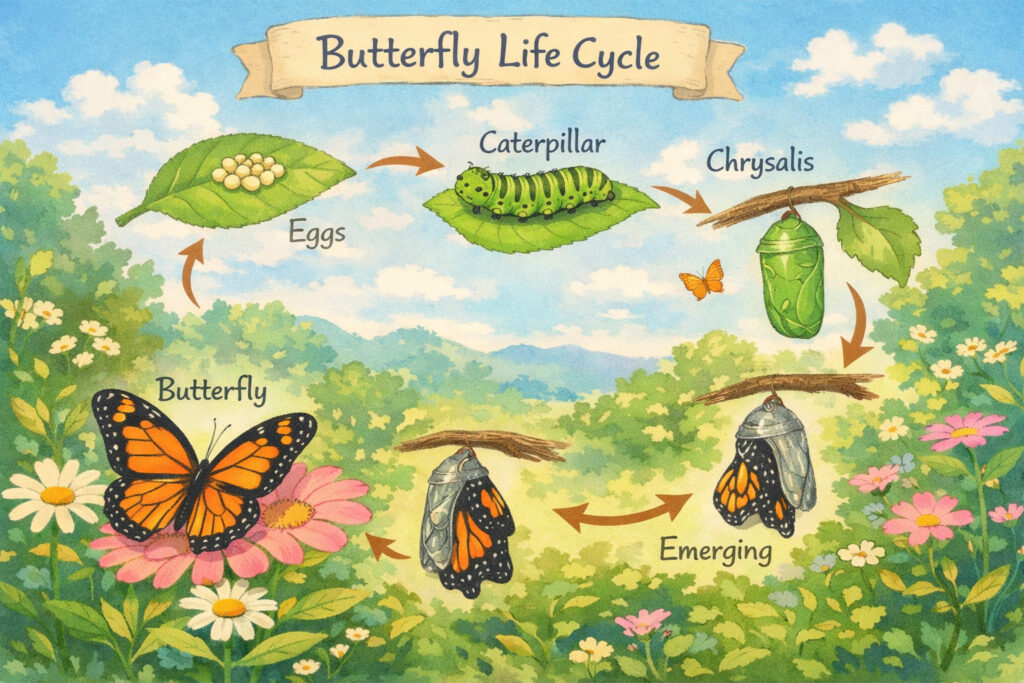
The Life Cycle of Butterflies
The life cycle of butterflies is both fascinating and complex. It is one of nature’s most remarkable transformations. Butterflies undergo a process called complete metamorphosis, which consists of four distinct stages: egg, larva (caterpillar), pupa (chrysalis), and adult.
Each stage plays a vital role in development. First, the butterfly begins life as a tiny egg, often laid on the underside of leaves. After a short period, the egg hatches into a caterpillar. At this stage, the primary goal is growth.
The caterpillar stage is crucial. During this phase, the insect consumes large amounts of food to store energy. As it grows, it sheds its skin multiple times in a process known as moulting. This allows it to increase in size rapidly.
Next comes the pupal stage, also known as the chrysalis. This stage is one of the most extraordinary aspects of butterfly development. Inside the chrysalis, the caterpillar undergoes a complete transformation. Its body reorganises itself into an entirely new form. Although it appears still on the outside, intense biological activity is taking place within.
Eventually, the adult butterfly emerges. At first, its wings are soft and folded. However, after pumping fluid into them, the wings expand and harden. Soon after, the butterfly takes flight.
The adult stage is primarily focused on reproduction. Butterflies seek mates and continue the cycle by laying eggs. In addition, they feed on nectar, which also allows them to contribute to pollination.
Overall, this life cycle is a true marvel of nature. It has inspired scientists, artists, and educators alike. Furthermore, it offers powerful lessons about growth, adaptation, and transformation.
For a deeper dive into their life cycle, you can read BBC Earth’s detailed guide.

Building Fascination Instead of Fear
Replacing fear with curiosity can dramatically shift your perspective. Butterflies are among the most fascinating creatures in the natural world.
Here are some surprising facts that may change how you see them.
Butterflies taste with their feet: Butterflies have taste sensors on their feet. When landing on a plant, they instantly determine whether it is suitable for laying eggs.
There are over 17,000 butterfly species: Scientists estimate that more than 17,000 butterfly species exist worldwide.
Butterflies can see ultraviolet colours: Their vision extends beyond the human spectrum. As a result, flowers appear far more vibrant to them than to us.
Some butterflies migrate thousands of miles: The monarch butterfly travels up to 3,000 miles during migration.
Remembering Locations: Studies suggest butterflies can learn and remember where food sources are located.
Their wings are covered in tiny scales: These microscopic scales create the beautiful colours and patterns seen on butterfly wings.
Important ecological role: They help pollinate flowers while feeding on nectar.
Life as a Caterpillar: Their life cycle includes one of nature’s most remarkable transformations: metamorphosis.
Helping to monitor ecosystems: Because they respond quickly to environmental change, butterflies act as indicators of ecological health.
Learning about these fascinating insects can gradually replace anxiety with appreciation.

The Positive Impact of Butterflies
Butterflies are vital to our ecosystem. They pollinate flowers, contributing to the reproduction of many plant species. Additionally, they serve as a food source for other animals, thus playing a critical role in the food chain.
Butterflies, with their vibrant colours and patterns, are also important in scientific research, helping us understand genetics and environmental changes. For instance, their sensitivity to climate changes makes them valuable indicators for studying the effects of global warming. To learn more about their ecological role, visit WWF’s butterfly conservation page.
The Benefits of Overcoming Lepidopterophobia
Overcoming this phobia opens up a world of possibilities. Imagine enjoying a walk in the park without anxiety, appreciating the beauty of butterflies, or engaging in outdoor hobbies. The freedom from fear can significantly enhance one’s quality of life.
It allows individuals to participate in activities they previously avoided, fostering a more active and fulfilling lifestyle. Moreover, overcoming such a phobia can boost confidence and reduce general anxiety, leading to improved mental health. For inspiration on overcoming fears, you can read success stories on Very well Mind.
Taking Your First Steps to Overcoming Lepidopterophobia
If you struggle with the fear of butterflies, there are several practical steps you can take today.
Self-Assessment
Consider how strongly butterflies affect your daily life. Mild discomfort is common, but persistent avoidance may indicate a phobia.
Education
Read about butterfly behaviour and ecology. Understanding that butterflies pose no threat can help ease anxiety.
Practice Relaxation
Deep breathing and mindfulness exercises can calm the nervous system during anxious moments.
Gradual Exposure
Begin by looking at images of butterflies. Then progress to videos or nature documentaries before eventually observing butterflies outdoors.
Seek Support
Sharing your experience with friends, support groups, or therapists can make the process easier.
Professional Guidance
Specialist support, such as therapy from animal phobia experts like Creature Courage, can accelerate recovery and provide structured guidance.
Many people overcome animal phobias quickly once they begin the right treatment approach.

Conclusion
Lepidopterophobia is more common than one might think, but it can be overcome. Understanding the reasons behind these fears, recognising the importance of butterflies, and seeking effective treatment can transform one's life.
With Creature Courage, you can conquer your fears and embrace the beauty and wonder of these fascinating insects. Reach out today and take the first step towards a life free from fear and anxiety.
FAQ: Common Questions About Butterfly Phobia
How rare is lepidopterophobia?
Specific insect phobias affect around 3–4% of the population. However, mild butterfly anxiety is much more common.
What is lepidopterophobia?
Lepidopterophobia is the persistent fear of butterflies or moths. The fear can trigger anxiety, avoidance, and panic symptoms.
How can I overcome my fear of butterflies?
Most people benefit from education, CBT therapy, exposure therapy, and relaxation techniques. Professional support can accelerate recovery.
Can children develop a fear of butterflies?
Yes. Children sometimes develop fears through frightening experiences or by observing fearful reactions in adults.
Is butterfly phobia treatable?
Absolutely. Animal phobias are among the most treatable anxiety conditions, especially when addressed with the right therapy approach.