
Introduction
If you have ever struggled with a fear of animals, you may have heard of exposure therapy — often described as one of the most effective treatments for phobias.
This article will clearly explain what exposure therapy is, how it works in treating animal phobias, what the science says, and how it is used in real-world settings to create lasting change.
While the concept may sound simple, exposure therapy is far more structured and supportive than many people expect.
What Is Exposure Therapy?
Exposure therapy is a psychological technique that helps people reduce fear by gradually and safely facing what they are afraid of.
Rather than avoiding the feared animal, the person is gently guided to experience it in a controlled way.
At first, this can feel uncomfortable. However, by staying with the experience instead of escaping it, the body naturally begins to settle. This shift is important, as it shows the brain that discomfort is temporary and can pass without danger.
Avoidance keeps fear stuck — experience allows it to change.
Over time, this allows the brain to learn something new:
- The situation is not as dangerous as expected
- Anxiety can rise and fall naturally
- The person is capable of coping
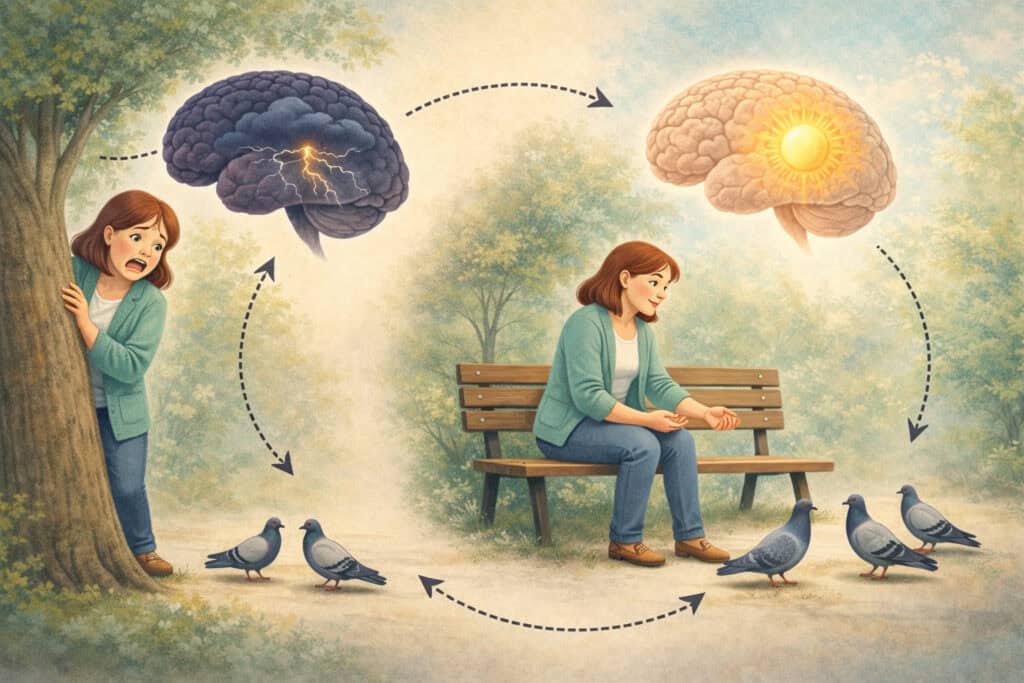
This process is often described as “updating the brain’s fear response.”
Instead of reacting automatically with panic, the brain begins to recognise safety.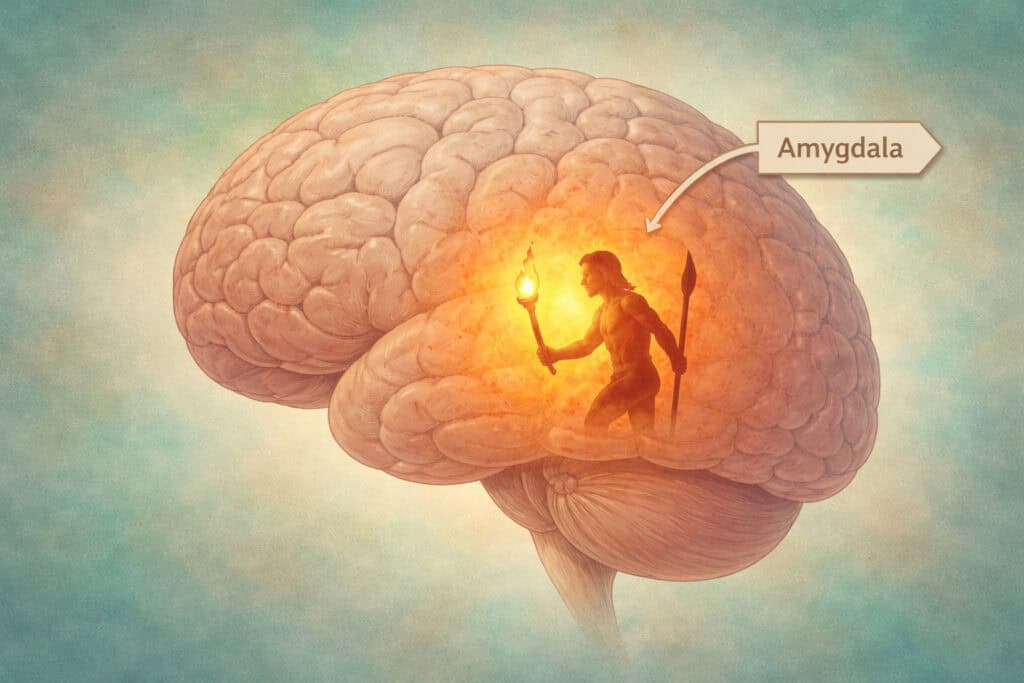
How It Works in Therapy
Exposure therapy works by targeting the brain’s automatic fear system — often referred to as the “caveman brain.”
This system is largely driven by a part of the brain called the amygdala, which sits within the limbic system. Its role is to detect danger and trigger fast survival responses such as fight, flight, or freeze.
The key challenge is this:
The amygdala is not strongly connected to the rational, thinking part of the brain (the prefrontal cortex).
This means you can logically know an animal is safe, but your body can still react as if it is dangerous.
According to Harvard Health: The Amygdala and Fear Response, the amygdala processes emotional reactions much faster than conscious thought, which is why fear can feel automatic and difficult to control.
Why Fear Cannot Be Solved by Logic Alone
Because of this, the fear system does not learn well through explanation alone.
It learns through experience.
When someone avoids an animal:
- The brain never gets new evidence that the animal is not a threat
- The fear remains strong
- The situation continues to feel dangerous
Exposure changes this pattern.
By safely facing the feared animal, the brain is given a new experience:
👉 “I expected danger… but I was actually safe.”
Studies in behavioural psychology also show that:
- Avoidance strengthens fear over time
- Repeated exposure reduces fear responses
- Emotional learning happens through experience, not just thinking

This is supported by research on fear extinction and inhibitory learning, which shows that new, safe experiences can weaken fear responses when someone remains in the situation long enough.
In a well-structured session, the process typically includes:
- Starting with low-intensity exposure (e.g., talking about the animal or viewing images)
- Gradually increasing the level of interaction
- Practising calm breathing and grounding techniques
- Repeating the experience until anxiety reduces naturally
This creates a powerful learning experience:
“I felt fear… and nothing bad happened.”
That emotional learning — not just logical understanding — is what drives long-term change.
Examples of Exposure Therapy
Exposure therapy can look very different depending on the person and the animal involved. Where one person starts may be very different from another.
For example, someone who is extremely afraid of spiders may need to begin by simply looking at pictures. In contrast, someone with a milder fear might start by observing a live spider in a secure container.
What remains consistent across all exposure therapy is that it is a step-by-step process. Once a person can calmly manage one level, they can gradually move on to the next.
Here are a few simple examples:
Fear of spiders
- Looking at cartoon images
- Viewing real photos
- Watching a spider in a container
- Coming closer and holding the container
- Eventually, interacting safely with the spider
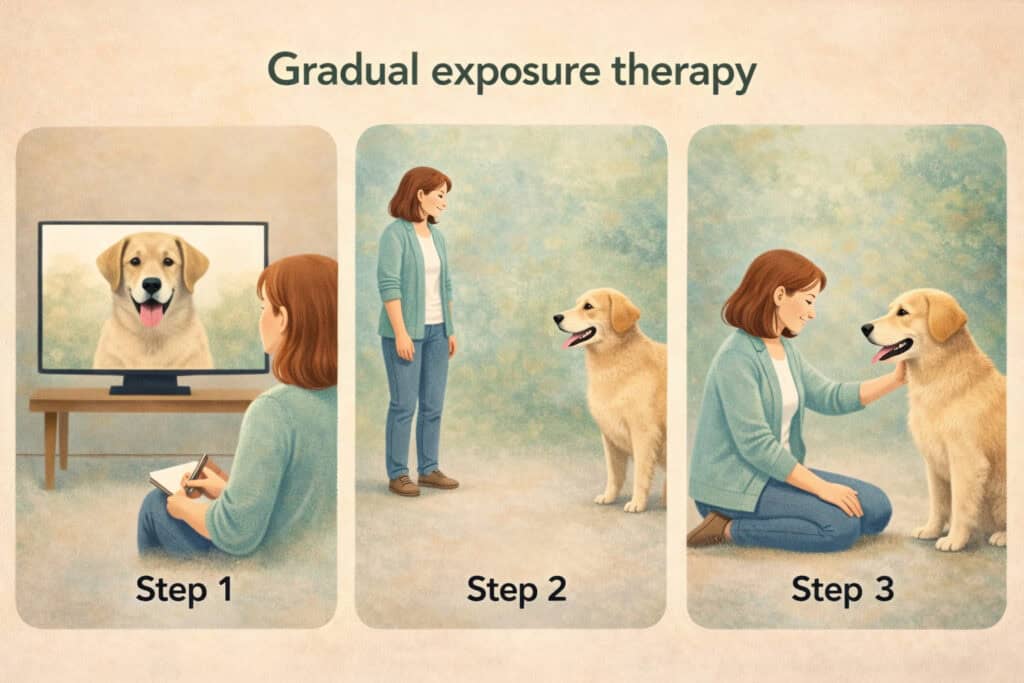
Fear of dogs
- Watching videos of calm dogs
- Observing a real dog on a lead at a distance
- Gradually coming closer with guidance
- Gentle interaction while the dog is on the lead
- Progressing to playing with the dog off the lead
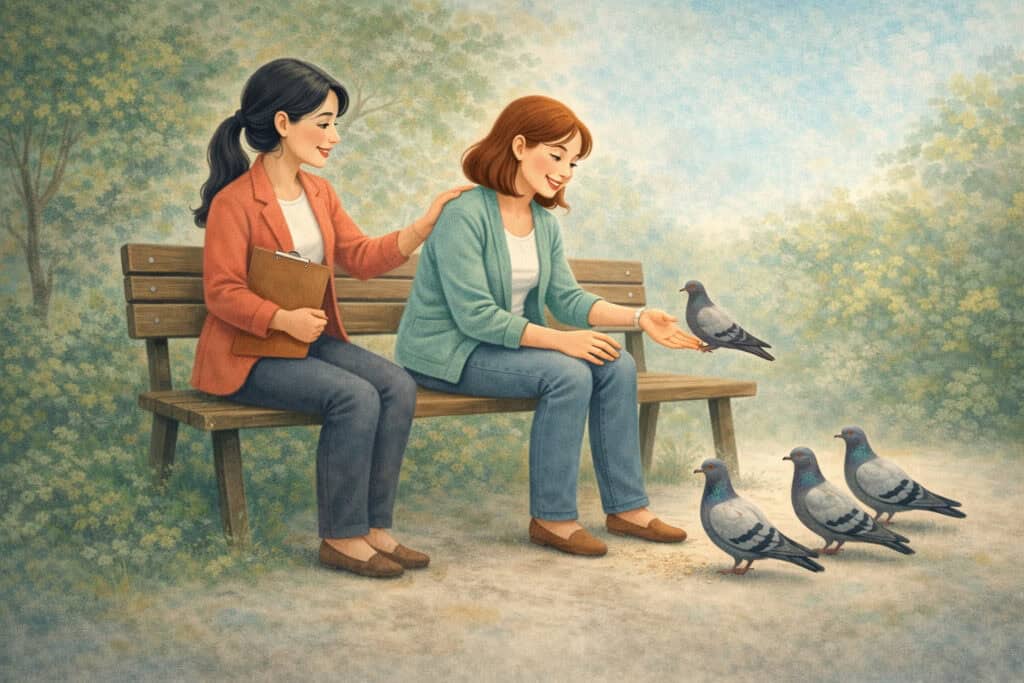
Fear of birds
- Learning about birds first
- Seeing a bird in a cage or another controlled environment
- Gradually increasing proximity
- Walking in a park with birds nearby
The key principle is always the same:
👉 Gradual, supported, and repeatable exposure
What Does the Science Say?
Exposure therapy is one of the most researched and evidence-based treatments for phobias.
Research consistently shows that it works by helping the brain form new associations with the feared stimulus.
According to the NHS guidance on phobias, exposure-based approaches are a central part of effective phobia treatment.
It is also supported by modern research into inhibitory learning, which shows that fear is not erased, but updated through new, safe experiences.
This is why simply understanding a fear is often not enough.
The brain needs real-world evidence.
Common Misconceptions
Despite its effectiveness, exposure therapy is often misunderstood.
“It means being thrown in at the deep end.”
This is one of the biggest myths. Proper exposure therapy is gradual and controlled, not overwhelming.
“You are forced to do things you are not ready for.”
In reality, good therapy is collaborative and paced carefully.
“It is dangerous or traumatic.”
When done correctly, exposure therapy is designed to feel challenging but safe.
“It works instantly for everyone.”
While some people improve quickly, others require more time and repetition.
Understanding these misconceptions is important, as fear of the process itself can stop people from seeking help.
Where It Fits in Treating Animal Phobias
Exposure therapy is often considered the core component of treating animal phobias, as the brain will struggle to overcome fear without real-world experience.
It directly targets the part of the brain where fear is stored and triggered.
However, exposure works best when supported by other elements, such as:
- Understanding the animal’s behaviour
- Learning how fear operates in the brain — and how it can be changed
- Building emotional regulation skills
- Learning how to challenge negative thinking
- Reframing how the animal is perceived
Without these supporting factors, exposure alone can sometimes feel overwhelming or incomplete.
In some cases, if exposure is not introduced or guided correctly, it can reinforce fear rather than reduce it. This is why skilled guidance and a structured approach are so important.
How It Fits Into a Broader Approach
Exposure therapy is powerful, but it is most effective when combined with other techniques.
A broader approach may include:
- Cognitive strategies (such as those used in CBT)
- Imagination and visualisation exercises
- Relaxation and grounding techniques
- Education to build fascination and reduce fear
Each element supports the others.
For example:
- Education reduces uncertainty
- Exposure provides real-world proof
- Emotional regulation makes the process manageable
Together, these create a more complete and lasting transformation.
How We Use It at Creature Courage
At Creature Courage, we specialise in exposure therapy and use it as part of a structured, real-time experiential process.
While the exposure itself is always taken step by step, most clients are able to move through this process within a few hours, rather than across weeks of traditional therapy.
We have found that a longer, more concentrated period of exposure completed in one session is often more effective than smaller exposures spread out over long gaps of time.
Even a week between sessions can reduce the continuity of what the brain has learned. Giving the brain enough time within one session to complete the full learning cycle tends to create stronger results.
For fear to be overcome, the nervous system needs enough time in the moment to fully activate — and then naturally settle back down.
That is where the real change happens.

Our approach focuses on:
- Safe, supported real-world interaction
- Working with calm, carefully selected animals
- Building confidence gradually, step by step
- Helping clients stay emotionally regulated during exposure
Another important aspect we address is the underlying feeling of being out of control, which is often at the root of many animal phobias.
Rather than keeping everything completely predictable, we gently and safely introduce small elements of uncertainty as confidence grows. This helps clients learn something powerful:
👉 Even when a situation feels less controlled, they are still safe and capable of handling it.
This is done gradually, with full support, so that confidence builds naturally — not through force, but through experience.
A Key Difference: Timing
One of the most important elements of our approach is when exposure happens.
Rather than avoiding fear or only approaching it cautiously over long periods, we work with the moment when the nervous system is actively engaged.
This means:
- The fear response is present and real
- The brain is fully paying attention
- The emotional system is ready to learn
At this point, the brain is most capable of updating its response.
When someone experiences fear and then sees that they are safe, the brain begins to replace old threat patterns with new, calmer associations.
This is why real-time, supported exposure can create such powerful shifts in a short period.
Sessions are always designed to be:
- Compassionate
- Controlled
- Adapted to each individual
This allows clients to move beyond simply understanding their fear — and begin to override automatic reactions and take back control of their emotional responses.
By the end of the session, the goal is for clients to feel calm enough to continue exposure independently.
They leave not only with:
- Practical experience
- Confidence in their ability to cope
- Clear tools to continue progress on their own
The aim is empowerment.
We want clients to build lasting habits of courage — without becoming dependent on ongoing therapy that can last for weeks or even months.

Conclusion
Exposure therapy is one of the most effective ways to overcome animal phobias because it works directly with how the brain learns fear.
By gradually facing the feared animal in a safe and supportive environment, the brain can update its response and reduce anxiety over time.
However, exposure is not about forcing or overwhelming someone.
When done properly, it is a guided, compassionate process that helps people rediscover a sense of control and confidence.
If you’re ready to move beyond fear and experience real change, Creature Courage is here to guide you.
You can learn more or get in touch via our contact page to take the first step safely and confidently.
FAQ
Is exposure therapy safe for animal phobias?
Yes. When guided by a trained professional, exposure therapy is structured to be safe, gradual, and supportive.
How long does exposure therapy take to work?
This varies. Some people experience rapid improvement, while others benefit from repeated sessions over time.
Do I have to touch the animal?
No — you are never forced to do anything you are not ready for.
Exposure therapy is always gradual and guided at your pace. Physical interaction is introduced carefully, only when it feels manageable and safe for you.
At the same time, meaningful breakthroughs usually come from being willing to face the fear more fully. This often includes, at the right moment, some level of real interaction with the animal.
Many clients find that once they reach this stage, their fear reduces much more quickly and significantly. This is a key part of why strong, lasting results are possible.
You are always in control — but the more you are ready to lean into the experience, the more powerful the outcome tends to be.
What if my fear feels too strong?
Therapy is adapted to your pace. Techniques are used to help you stay calm and in control throughout the process.
Is exposure therapy better than CBT?
Exposure therapy is often part of CBT. The most effective approaches usually combine both understanding and real-world experience.