Introduction
If you are afraid of a specific animal, your brain is not reacting to the animal itself—it is reacting to what it believes the animal is.
This article will explain how Animal Education Therapy works to change that belief.
You will learn:
- What Animal Education Therapy is
- How it helps transform fear into understanding
- Why fascination and compassion can reduce fear at a neurological level
- How this approach is used within real phobia treatment
For many people, fear is built on misunderstanding, uncertainty, and imagined threat. By replacing those with knowledge, curiosity, and empathy, the brain can begin to respond in a completely different way.
What Is Animal Education Therapy?
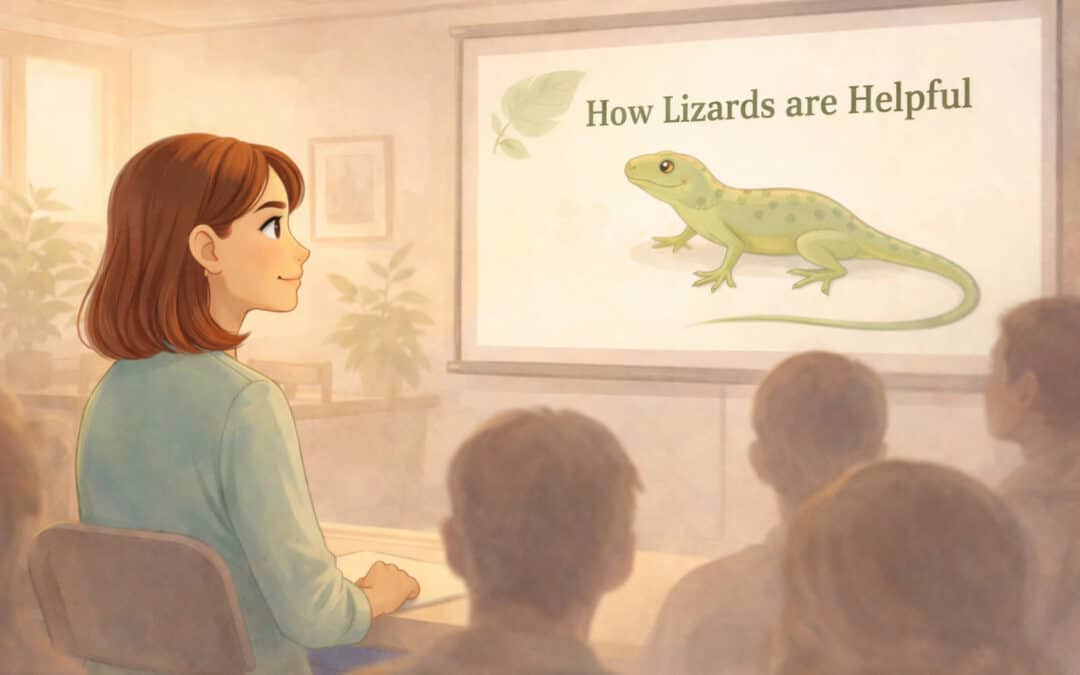
Animal Education Therapy is a neuroscience-informed psychological approach that helps reduce animal phobias by changing how the brain interprets the feared animal.
Instead of focusing only on reducing fear, it works by replacing fear with new emotional and cognitive responses, including:
- Understanding
- Fascination
- Compassion
At its core, this approach combines elements of:
- Psychoeducation (understanding the animal and your fear response)
- Cognitive reframing (changing how you interpret the animal)
- Attentional shift (moving from threat focus to curiosity and interest)
Rather than seeing the animal as dangerous, unpredictable, or “coming to get you,” the brain begins to recognise it as:
- Predictable
- Often harmless
- Sometimes fragile
- Part of a wider ecosystem
This shift is powerful because fear is not just about what you see—it is about what your brain expects.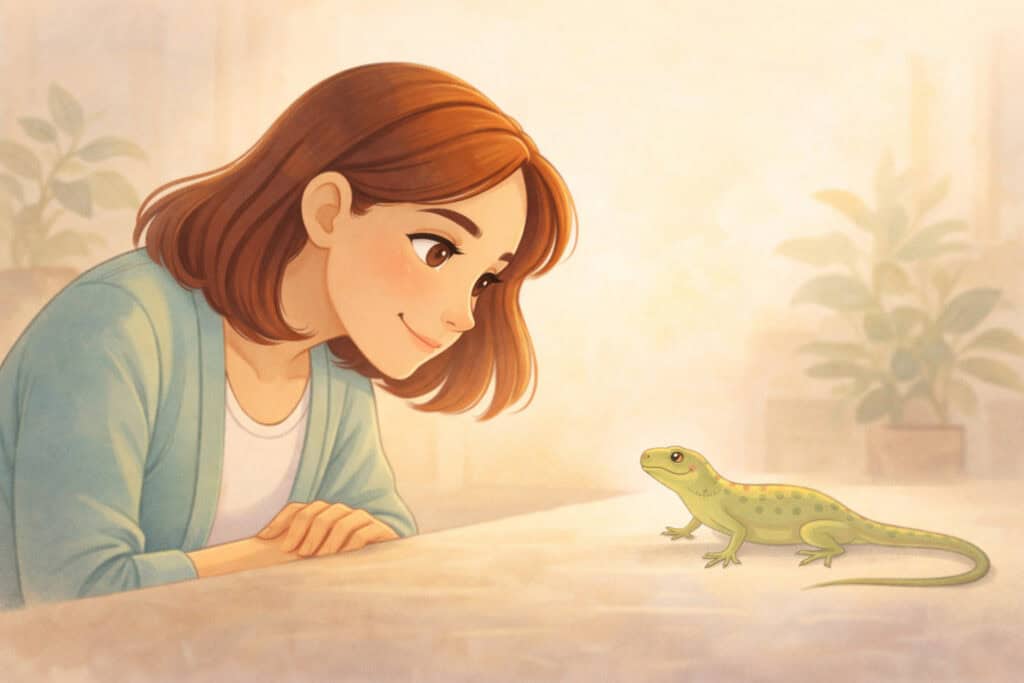
A key part of this process involves actively engaging your attention in a different way.
For many people, this is the first time they have ever:
- Truly looked at the animal
- Noticed how it moves
- Observed its behaviour closely
- Seen details they previously avoided
Instead of immediately looking away or going into panic, you begin to stay present long enough for a different response to emerge.
This is where fascination begins to play a critical role.
How It Works in Therapy
Step 1: Understanding Replaces Uncertainty
Fear thrives on the unknown.
When you do not understand an animal, your brain fills in the gaps with worst-case scenarios. Learning about the animal removes this uncertainty.
You begin to understand:
- How it behaves
- What it can and cannot do
- What actually poses risk (if anything)
This aligns with research showing that intolerance of uncertainty is a key driver of anxiety, and reducing uncertainty can significantly lower fear responses.
Step 2: Fascination Competes with Fear
Fascination is not just a feeling—it is a powerful attentional state.
When you become curious about something, your brain shifts focus away from threat detection and towards exploration.
Fear and fascination both rely on the brain’s salience network, which determines what is important and worthy of attention. Because of this, they cannot fully dominate your attention at the same time.
As fascination increases, it begins to compete with and reduce fear responses.
Instead of:
“This is dangerous”
Your brain begins to think:
“This is interesting”
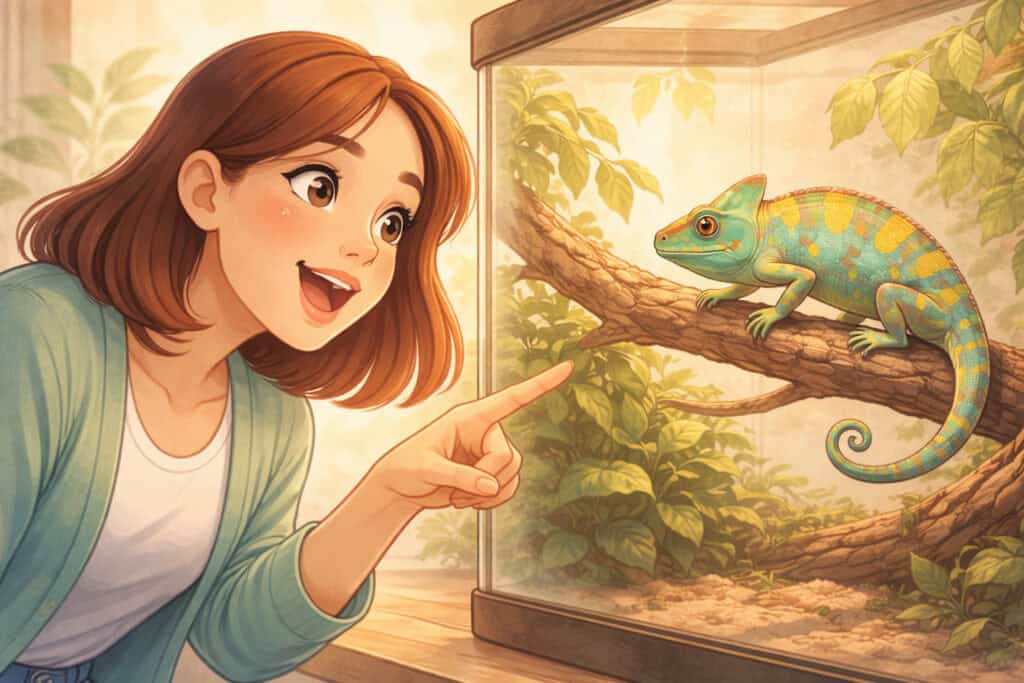
This is something you already experience in everyday life.
People are often drawn to things that feel slightly scary, such as:
- Watching a tense scene in a film
- Looking at something unusual or unfamiliar
- Feeling unable to look away from something that triggers both fear and curiosity
There is a pull toward the unknown.
Research in affective neuroscience shows that attention directly influences emotional intensity, meaning shifting attention can reduce fear responses.
In therapy, this natural response is used intentionally.
For many people, this is the first time they allow themselves to stay and look, rather than immediately avoid.
And when you stay long enough to notice:
- The movement
- The patterns
- The behaviour
The brain begins to shift out of pure threat mode.
Fascination opens the door to a new kind of relationship with the animal—one that is no longer driven purely by fear.
Step 3. Compassion Changes the Power Dynamic
Fear makes the animal feel powerful.
In a fearful state, the brain exaggerates threat. The animal can feel:
- Bigger than it is
- More dangerous than it is
- As if it is actively “coming for you”
This creates a one-sided power dynamic where you feel vulnerable, and the animal feels dominant.
Compassion reverses this.
When you begin to understand the animal more deeply—how it lives, how it survives, and how limited it actually is—the emotional response starts to shift.
Instead of seeing something threatening, you may begin to notice:
- How small it really is
- How delicate its body can be
- How vulnerable it is to its environment
- How it is simply trying to survive, not harm you
For many people, this is a surprising moment.

The same animal that once triggered panic can begin to feel:
- Harmless
- Fragile
- Even slightly endearing or “cute” in its own way
This is not forced.
It emerges naturally when the brain updates its understanding.
In many cases, people begin to feel a sense of responsibility rather than fear.
Instead of:
“I need to get away from this”
The feeling becomes:
“I don’t want to hurt it”
This is often the moment where fear begins to collapse—not because the animal has changed, but because your perception of it has.
This type of reframing aligns with principles used in cognitive therapy and approaches such as NLP, where changing the meaning of something changes the emotional response attached to it.
From a neuroscience perspective, compassion-based reappraisal has been shown to reduce activity in fear-related brain regions while increasing emotional regulation.
The perceived power of the animal drops.
And with it, the fear begins to lose its grip.
Examples of Animal Education Therapy
Spider Phobia
Instead of focusing on fear, you learn:
- How spiders actually behave
- That most are not aggressive
- Their role in controlling pests
You may begin to notice patterns, movement styles, or even unique characteristics.
Fear starts to soften as understanding grows.
Dog Phobia
Rather than assuming unpredictability, you learn:
- How dogs communicate through body language
- What relaxed vs stressed behaviour looks like
- How to safely interact with them
This replaces uncertainty with clarity and control.
Insect Phobia
Instead of viewing insects as chaotic or invasive, you learn:
- Their ecological importance
- Their limitations
- Their natural behaviours
Some people even begin to experience curiosity where fear once dominated.
What Does the Science Say?
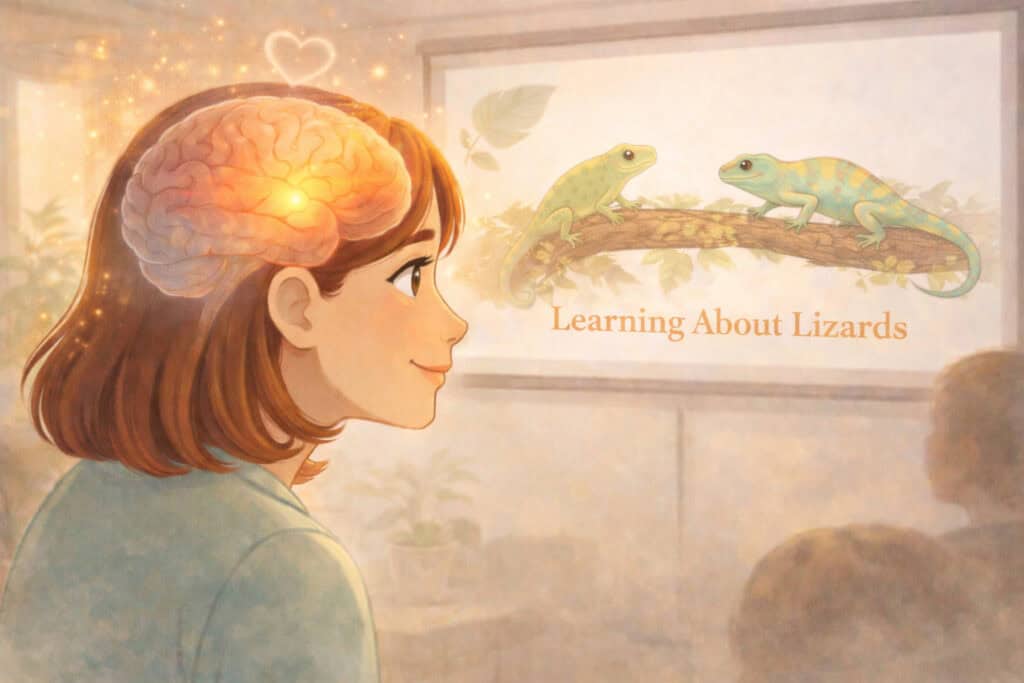
Animal Education Therapy aligns with several well-established principles in psychology and neuroscience that explain how fear can be reduced and reshaped.
Attention Shapes Emotional Response
The brain’s attentional systems influence how strongly we feel fear.
When attention is locked onto a threat, fear intensifies. When attention shifts toward curiosity or observation, emotional intensity can decrease.
This is supported by research showing that attention and emotion are tightly linked in the brain.
Cognitive Reappraisal Changes Fear Responses
Cognitive reappraisal involves changing how you interpret a situation.
A large meta-analysis found that reinterpreting a stimulus can significantly reduce emotional distress and alter brain activity related to fear.
Reducing Uncertainty Lowers Anxiety
Fear is often strongest when something feels unpredictable.
Research shows that intolerance of uncertainty plays a central role in anxiety disorders, meaning that increasing understanding can directly reduce fear.
Preparation Improves Exposure Outcomes
Modern exposure therapy research suggests that learning is more effective when fear is manageable rather than overwhelming.
Work by Craske et al. highlights how optimising emotional conditions improves exposure-based learning.
Education helps create these conditions by lowering initial fear and increasing a sense of control.
Common Misconceptions
“If I learn about it, I’ll still be afraid.”
Knowledge alone may not completely remove fear—but it changes the starting point.
“This is just positive thinking.”
This is not about ignoring fear. It is about changing how the brain interprets the animal.
“You have to love the animal.”
Not at all.
The goal is not to force yourself to love the animal. The aim is to:
- Understand it
- Feel safer and more in control around it
- Reduce fear to a manageable level
However, something interesting often happens along the way.
As understanding increases and fear begins to settle, many people find their emotional response shifts more than they expected.
It is not uncommon for people to experience:
- A sense of curiosity
- Moments of genuine appreciation
- Even feelings of compassion or connection
For some, this goes even further.
Animals that once triggered fear can begin to feel:
- Gentle
- Fascinating
- Surprisingly endearing in their own way
In some cases, people even go on to keep the very animal they once feared as a pet.
This is never the goal—but it highlights how dramatically perception, and therefore emotional response, can change.
Where It Fits in Treating Animal Phobias

Animal Education Therapy works best as part of a broader approach.
It pairs particularly well with:
It prepares the brain for real-world interaction by reducing fear intensity and increasing understanding.
How We Use It at Creature Courage
At Creature Courage, Animal Education Therapy is a central part of how we help people overcome animal phobias.
We use it to:
- Break down myths and misconceptions
- Build fascination through real understanding
- Develop compassion and perspective
- Prepare clients for safe, structured exposure
A key part of this process is not just learning about the animal, but learning how to be around it safely and confidently.
This includes understanding:
- How the animal moves
- How it behaves
- What the signals mean
- How to interact with it in a calm and controlled way
This knowledge creates a sense of predictability and control, which is essential for reducing fear.
Shifting the Mindset Around Feared Animals
However, one of the most important shifts we guide clients through is a change in mindset.
Some people initially come to us with fears of animals such as spiders and say things like:
“I just want enough courage to be able to kill it.”
While this is an honest reflection of how strong fear can feel, this mindset keeps the brain locked in a threat-based response.
If the goal is to eliminate the animal, the brain continues to treat it as something dangerous that must be dealt with.
This does not reduce fear—it reinforces it.
At Creature Courage, we take a different approach.
We guide clients toward:
- Curiosity instead of avoidance
- Understanding instead of assumption
- Respect instead of hostility
Because it is these states—not force or control—that allow the brain to update its fear response.
As perspective shifts, something important happens.
The animal is no longer seen as an enemy.
It becomes something that can be understood, approached, and interacted with safely.
This shift is what allows real change to take place.
And it is one of the reasons many clients are able to move from intense fear to calm, confident interaction within a relatively short period of time.
How Animal Phobia Fits Into a Broader Approach
A complete approach includes:
- Education
- Cognitive techniques
- Emotional regulation
- Gradual exposure
Together, these retrain both:
- The thinking brain
- The automatic fear response
Ultimately, learning about the feared animal is one of the most powerful ways to overcome an animal phobia and begin to feel safe again.
Over time, what once triggered fear can become something you simply notice, understand, and even appreciate.
For many people, this shift goes far beyond “coping.”
It becomes a genuine sense of calm and ease—where the animal’s presence no longer creates tension but instead feels neutral or even quietly positive.
And in some cases, this transformation can be so complete that you find yourself relaxed in environments where the animal is present… noticing it with curiosity, perhaps even smiling at it, without a trace of fear.
Conclusion
Fear of animals is rarely about the animal itself.
It is about what the brain believes the animal represents.
Animal Education Therapy changes that belief.
By replacing uncertainty with understanding, fear with fascination, and threat with compassion, the brain can begin to respond in a completely new way.
This shift creates the foundation for real, lasting change.
If you are ready to take the next step, you can get in touch with Creature Courage to discuss how we can support you.
You do not have to force yourself through fear alone.
With the right guidance, your response can change—often more quickly than you expect.
FAQ on Animal Education Therapy
What is Animal Education Therapy?
A psychological approach that reduces fear by changing how the brain interprets an animal.
Can learning about an animal really reduce fear?
Yes. It reduces uncertainty and helps the brain reinterpret the animal as less threatening.
Do I need to interact with the animal?
Not immediately. Education prepares you for interaction, which can come later.
Is this scientifically supported?
Yes. It aligns with research in attention, cognitive reappraisal, and exposure therapy.
Can this completely cure a phobia?
It is most effective when combined with exposure and other techniques.