
Could Tarantulas Be The Best Pet Ever?
Ok, so we all know spiders get bad press. The media seems to always paint spiders as the bad guys. Despite the myriad ways spiders help humans, they also make for some pretty cool pets. Impossible, you might say, even ridiculous! But it’s true.
There’s a reason I have nearly 80 tarantulas as pets—they have changed my whole life for the better! My love and passion for these fluffy eight-legged creatures also inspired me to start my own business. My goal is to help people overcome their fears of these fascinating and often misunderstood animals. So, counting down, here are my top 5 reasons why tarantulas make great pets!
1. Long Life Span
Female tarantulas can live exceptionally long lives. And I do mean a LONG time. Some species can live over 30 years! However, it’s essential to note that male tarantulas have much shorter lifespans, often living only a few years post-maturity. This difference is due to natural selection, which ensures that males and females mature at different rates, preventing inbreeding. Clever, eh? Therefore, many people seek out females as the preferred sex for a tarantula pet.
This longevity surpasses most common pets such as dogs, cats, hamsters, and fish. So, you can get emotionally invested in your new eight-legged friend, as she will be with you for the long run.
2. Gentle Nature
When choosing between a hamster and a tarantula, many people would assume the hamster is the better choice. However, you’re far less likely to get bitten by a calm species of tarantula than a hamster. That adorable little rodent may look innocent, but the Brazilian Black tarantula will actually be the safer pet choice. Many hamsters bite regularly, while many tarantula species are extremely placid and gentle
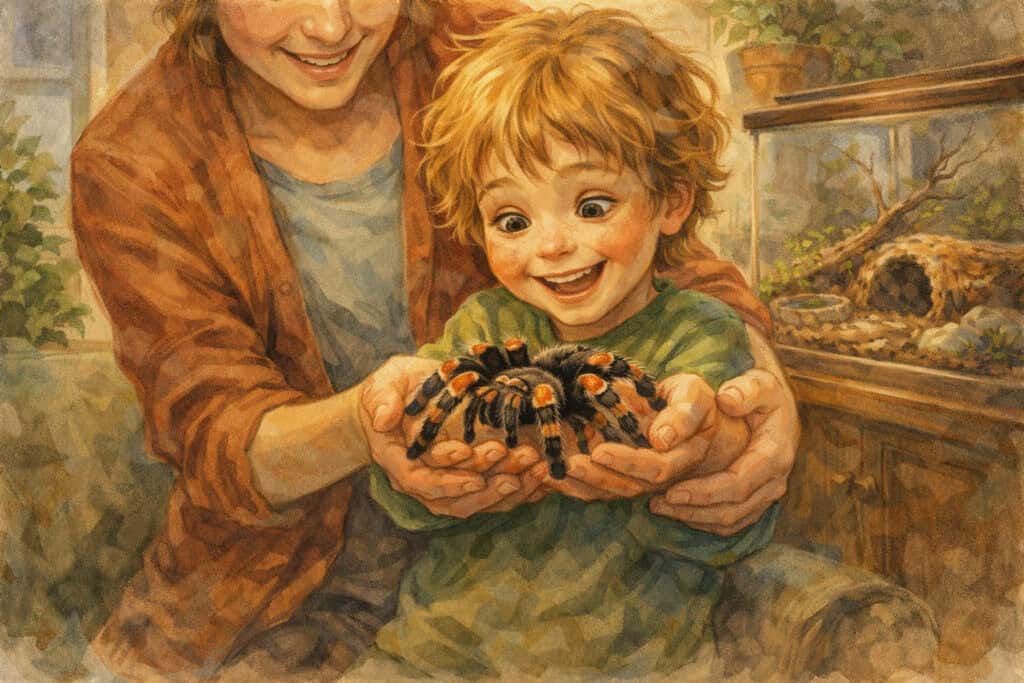
Tarantulas also do not usually move fast when handled carefully. This is unlike hamsters, who bolt the first chance they get. There are many species of tarantulas I would rather put in a child’s hand than a hamster. However, only with supervision as tarantulas are very delicate creatures! They are more at risk of getting hurt by us.
Therefore, it’s crucial to handle tarantulas infrequently and with care, as they are very fragile. A fall can be fatal, causing the abdomen to burst, so handling is not always the best idea. It’s also important to understand that each tarantula has its own personality. Regardless of species, they can have very varied temperaments. Some are feisty and impossible to hold, others are gentle and would never bite. Some are skittish and fast, while others are completely chilled out and very slow-moving. This individuality adds an interesting dimension to tarantula ownership, making it a captivating experience.
3. Low Maintenance
Tarantulas require minimal maintenance once their habitat is set up. You usually only need to clean a tarantula cage a few times a year. Another option is to create a live bioactive tank with live plants and a ‘clean up crew.’ These are small insects like woodlice or springtails that consume waste and leftover food, maintaining a clean environment naturally.
Full-grown tarantulas eat infrequently, about once or twice a month. They can also go for extended periods without food, especially before molting. (Molting is when they grow by shedding their skin.) Some have been known to fast for over two years! Most of the care is just changing the water to keep it fresh every few days.
The only downside of tarantula feeding is that they eat live insects. Some people are okay with this, others might struggle. You have to be prepared to feed them crickets and/or cockroaches. They also like locusts and mealworms. This means you also have to look after the live food between feedings. Fortunately, this is an easy task! Most of these prey insects are easily bought at pet stores and online shops and can be kept alive with veg, fruit and fishfood replaced every few days. I never find it too much of a hassle.
Some people ask if you have to feed them mice when they are bigger, but absolutely not! Feeding rodents to tarantulas is cruel, unnecessary, and illegal in the UK. It is also very risky for your tarantula, as rodents can fight back.

4. Collectability and Community
Tarantulas belong to the Kingdom Animalia, Phylum Arthropoda, Class Arachnida, Order Araneae, and Family Theraphosidae. The diversity among tarantula species makes them a highly collectible hobby. With over 800 documented species worldwide, tarantulas come in a variety of colours, shapes, and sizes. Like Pokémon, gotta catch ’em all!
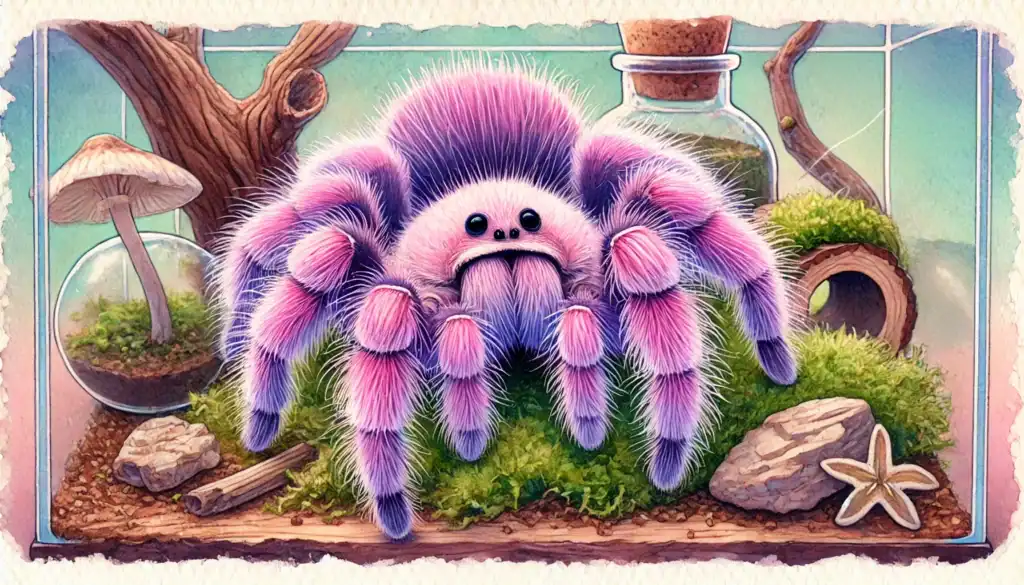
Most people don’t realise that tarantulas come in all sorts of colours, not just black and brown. My first tarantula, Chi Chi, was purple, green, and pink—and super fluffy! I also own blue and orange tarantulas, red, orange and black striped tarantulas, and even a purple one!
Because they are so low-maintenance, it becomes very easy to suddenly accumulate quite a few in a short space of time. Tarantula Facebook groups and online forums will also inspire you to collect even more. You soon get sucked in and want to show off your new fancy tarantula to all the others!
Additionally, depending on where you live, there can also be invertabrate shows where people go to buy and sell tarantulas amongst all sort of other invertabrates and invertabrate related merchandise. Here in the UK we have over 30 shows a year all over the UK! Some of the most popular are run by The Spider Shop, The British Tarantula Society and the South East Arachnid Show. Here is a link to a great website showing all the UK shows. The shows are a great opportunity to see many different types of tarantulas in person as well as make friends with other people who are part of the community and hobby. I have made lifelong friends by attending the tarantula shows, I can’t recommend them enough!
5. Tarantulas Are Simply Fascinating!
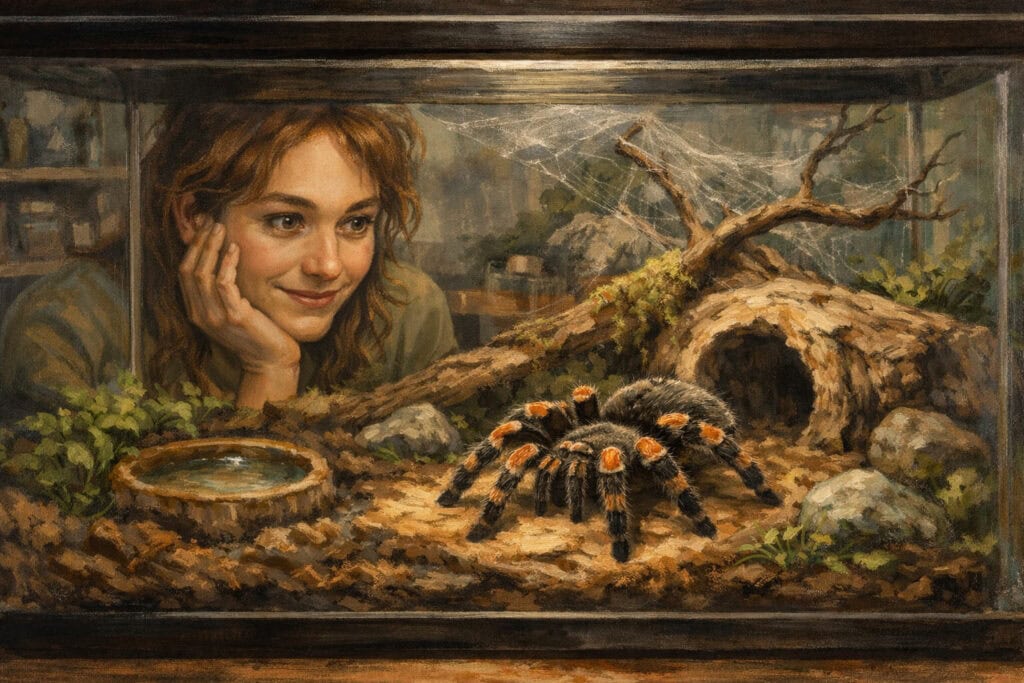
You might not expect it, but as soon as you own one, you will understand. Some people say tarantulas are boring and just sit in their tanks and do nothing, but nothing could be further from the truth. It’s like having a small piece of nature within your home, offering a unique and captivating pet experience. Because they are so different from other common pets, tarantulas create a unique form of fascination. Each species of tarantula has a different way of living.
Some are ferocious eaters, and it’s exciting to see a predator in action. Others build intricate webs with interlocking tunnels. When they moult, it’s like an alien giving birth as they wriggle out of their old skin. Kind of gross, but impossible to look away from. It’s nature’s miracle! It’s so much fun to watch them grow and develop if you get them from babies, especially finding out if it’s a boy or a girl. You can learn how to sex them with a microscope!
Caring for tarantulas can also be therapeutic. The routine of tending to them, providing food and water, and observing their behaviour can create a calming, Zen-like experience. For me, this process has provided immense relaxation and a sense of peace, helping me through challenging times. I become shut off from all my other worries and forget all the bad things in the world. I become completely focused on them, and it helps me feel very peaceful. My tarantulas have gotten me through some difficult times!
Conclusion
So, there you have it, my top 5 reasons why tarantulas make great pets! Though they are not pets that will play fetch or play with a string, there are several benefits and points of interest in owning a tarantula. It’s certainly easy to add a tarantula to your existing pets with little hassle. You get years with an unusual and interesting pet that is sure to add stress release and fascination to your life. You might just get addicted and end up with 80 tarantulas like me.
I am passionate about turning fear into fascination. I want to help others find a new way at looking at tarantulas and other spiders in a new positive light. My love of tarantulas played a big role in me creating my animal phobia business, Creature Courage. If you are tired of your spider phobia, check out our Spider Courage Experience to find out how we can get you over your fear of spiders in just a day!
And who knows what might happen. Many of my clients have changed from spider haters to spider lovers. Discover the unexpected joy and intrigue of tarantula ownership—you might just find yourself with a new, eight-legged friend!