
The Fear of Wolves: Understanding and Overcoming Lupophobia

Wolves have long been surrounded by fear, mystery, and powerful symbolism. Though many of us do not have real world encounters with wolves, this doesn't mean they can't still be scary. For some people this fear becomes far more intense than simple caution. It can manifest as a full blown phobia.
This article explores the fear of wolves including how it develops. Additionally it aims to build fascination and a new new perspective about why wolves are so misunderstood as pests instead of an essenstial part of the ecosystem. Lastly, this article will explore how animal phobia therapy can help you overcome this fear.
What Is the Fear of Wolves Called?
The fear of wolves is known as lupophobia. It is a specific animal phobia involving an intense fear, panic response, or overwhelming anxiety connected to wolves.
The fear of wolves is more than mere evolutionary instinct. Many people with a wolf phobia might also have a dog phobia.
For some people, the fear of wolves may be triggered by:
- Seeing wolves in documentaries or films
- Hearing wolf howls
- Visiting zoos or wildlife parks
- Walking in forests or wilderness areas
- Fear of being attacked
- Fear triggered by wolf-like dogs such as huskies or malamutes.
While wolves deserve respect as large wild predators, lupophobia goes far beyond rational caution. The nervous system begins reacting as though danger is immediate, even when there is no real threat present.
Symptoms of the Fear of Wolves
People with lupophobia may experience both psychological and physical symptoms.
Common symptoms include:
- Rapid heartbeat
- Sweating or shaking
- Panic attacks
- Feeling frozen or unable to think clearly
- Nausea or dizziness
- Avoidance of forests, documentaries, or wildlife content
- Intrusive thoughts about wolf attacks
- Hypervigilance around large dogs
- Nightmares involving wolves
- Intense anxiety even when viewing pictures of wolves
Some individuals also experience embarrassment or frustration because they logically know wolves are unlikely to harm them, yet their body still reacts automatically.

How the Fear of Wolves Is Formed
Animal phobias are often created through a mixture of biology, learning, imagination, and emotional experiences. Often an animal phobia like lupophobia is formed in childhood. A child might have seen a scary film with a wolf, saw a parent reacting to a wolf in a fearful way, or even had a negative experience with a wolf like dog.
The Caveman Brain and Survival Instincts
Humans evolved with a highly sensitive threat-detection system designed to help our ancestors survive dangerous environments. The amygdala — the brain’s alarm system — rapidly scans for potential threats and prepares the body for survival.
Large predators naturally trigger this ancient system.
Even though most people will never encounter a wild wolf, the brain may still respond strongly to:
- Sharp teeth
- Predatory eyes
- Growling or howling sounds
- Fast movement
- Pack behaviour
- Stories involving attacks
The nervous system does not always distinguish between realistic danger and imagined danger. Additionally, if the child has parents that exhibit general nervous and anxious behaviour, the child is more likely to develop a phobia. When we learn to constantly be on alert for danger, our brain might see danger where there is not.
Media and Cultural Influences
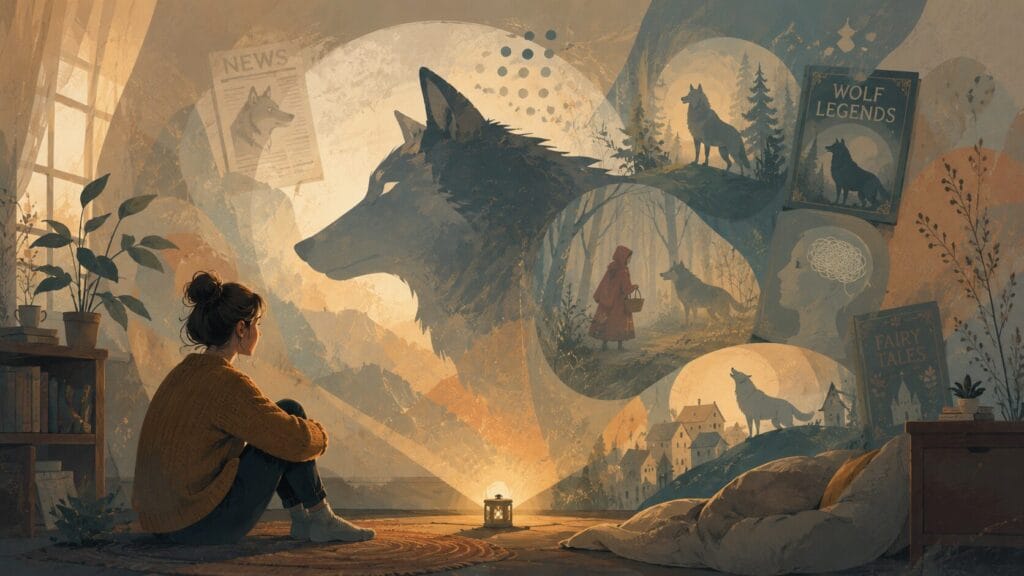
Many fears of wolves are strengthened through stories and media portrayals rather than real-life experience.
Examples include:
- “Little Red Riding Hood”
- “The Three Little Pigs”
- Werewolf mythology
- Horror films
- Sensationalised news stories
- Survival television shows
Wolves are often portrayed as evil, aggressive, or bloodthirsty, despite this being wildly inaccurate in most real-world situations.
Repeated exposure to fearful imagery can train the brain to associate wolves with danger before someone has ever learned the truth about them.
Why It Is Important to Address the Fear of Wolves
A fear of wolves can sometimes seem easy to avoid because wolves are uncommon in many parts of the world. However, untreated phobias often reinforce the brain’s fear-learning systems.
Over time, avoidance can:
- Increase anxiety sensitivity
- Strengthen the fear response
- Generalise into fears of dogs or wilderness
- Reduce confidence
- Limit travel and outdoor experiences
- Increase overall anxiety levels
Learning to retrain the nervous system can have benefits far beyond the original fear itself.
Many people discover that overcoming an animal phobia improves confidence across other areas of life too.
Fascinating Facts About Wolves
One of the most powerful ways to reduce fear is through understanding and fascination.
Wolves are incredibly intelligent, social, and emotionally complex animals.
Wolves Are Family-Oriented
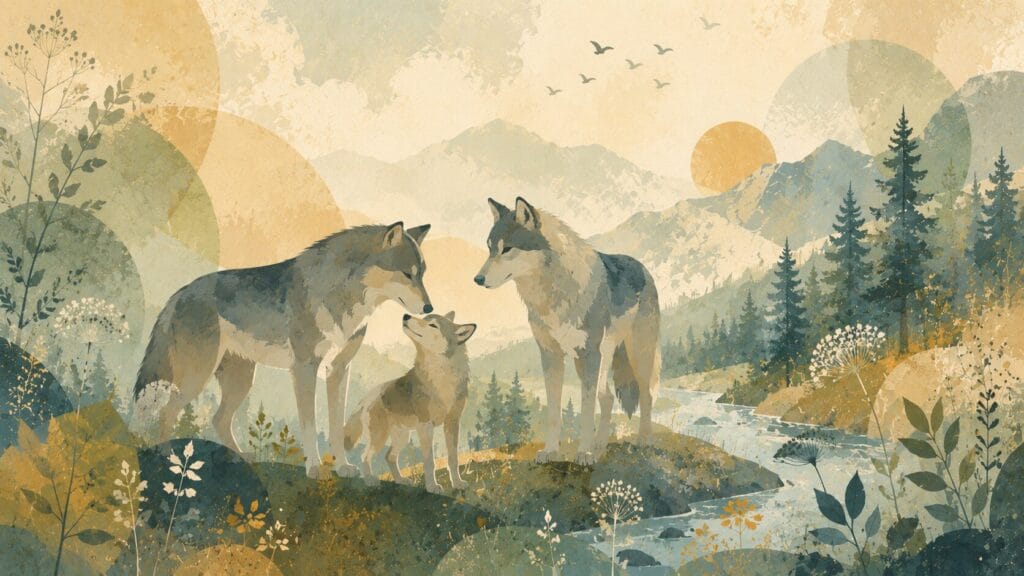
Wolf packs are usually family groups led by parents caring for their offspring. They cooperate closely, protect one another, and raise pups together.
Wolves Communicate Constantly
Wolves communicate using:
- Facial expressions
- Body posture
- Tail position
- Scent marking
- Vocalisations including howls
Their howls are often used to locate pack members and avoid conflict with rival wolves.
Wolves Rarely Attack Humans
Despite popular myths, wolf attacks on humans are extremely rare. According to the International Wolf Center, healthy wild wolves generally avoid humans whenever possible.
In many parts of the world, wolves will retreat long before a person even notices they are nearby. Most documented attacks throughout history have involved unusual circumstances such as rabies, severe starvation, or wolves becoming habituated to humans through feeding.
In modern times, healthy wild wolves are far more likely to fear humans than actively hunt them, which is one reason wildlife experts emphasise respectful coexistence rather than panic or fear.
Wolves Are Highly Intelligent
Wolves display advanced problem-solving skills, teamwork, memory, and social intelligence. Scientists continue studying wolf cognition because of its fascinating similarities to cooperative human behaviour.
Problem-Solving and Cause-and-Effect Understanding:
In 2025, researchers in British Columbia documented a wild wolf pulling a submerged crab trap ashore to access bait inside. The wolf appeared to understand the relationship between the floating buoy, the attached rope, and the hidden trap beneath the water — suggesting impressive problem-solving abilities and an understanding of cause and effect.
Strategic Hunting Behaviour:
Wolves do not simply chase prey blindly. Packs carefully assess herds, often targeting weaker, injured, or isolated animals. They are known to coordinate attacks, divide roles within the pack, and use ambush tactics that demonstrate planning and teamwork.
Advanced Social Cooperation:
Scientific studies have shown that wolves understand when cooperation is necessary to solve a task. In rope-pulling experiments, wolves were able to synchronise their actions and work together to gain rewards, demonstrating what researchers describe as “cooperative cognition.” Wolves often outperformed domestic dogs in these collaborative tasks.
Social Learning and Memory:
Wolves are highly observant learners. Studies suggest they can learn by watching both other wolves and humans, remembering useful behaviours and adapting strategies over time. Researchers have found that wolves often outperform dogs in tasks involving comprehension, memory, and understanding physical relationships between objects.
Complex Communication:
Wolves communicate using a rich combination of howls, body posture, scent marking, facial expressions, barks, and whines. Their howls can travel across long distances, helping packs coordinate movement, defend territory, and reconnect with one another. Their communication system reflects highly social and emotionally connected family structures
Dogs Are Descended from Wolves
Did you know that every single dog is related to wolves? Modern dogs evolved from ancient wolves thousands of years ago. In many ways, wolves helped shape human civilisation itself through the domestication process. There is even a theory that our domestication of wolves helped us to out compete other human species. They helped us hunt and protected us. Now dogs are truly man's best friend.
Did you know that wolves do not bark? Though all dogs come from wolves, it is a trait unique to dogs. It's a vocalisation technqinue that dogs have developed exclusively to use to communicate with humans.
How Wolves Help Humans and the Environment
Wolves are not just important animals. They are critical to ecosystem health. Without them, the forest ecosystem starts to collapse. Lets explore just how important wolfs are.
Wolves Keep Ecosystems Balanced
As apex predators, wolves help regulate deer and elk populations. Without predators, herbivore numbers can grow excessively and damage forests through overgrazing.
Wolves Help Forests Recover
One of the most famous examples comes from Yellowstone National Park.
After wolves were reintroduced, researchers observed major ecological improvements including:
- Regrowth of trees and vegetation
- Healthier riverbanks
- Increased biodiversity
- Improved habitats for birds and small mammals
The National Park Service explains how wolves created ripple effects throughout the ecosystem.
Wolves Support Other Wildlife
Wolf kills provide food for:
- Ravens
- Eagles
- Foxes
- Bears
- Smaller scavengers
By controlling prey populations, wolves indirectly support countless other species.
Wolves Help Prevent Disease
Wolves often target weak, sick, or injured animals, which may help reduce disease spread within prey populations.
How Humans and Wolves Can Peacefully Coexist
You do not need to love wolves to coexist with them respectfully. However, you can often turn fear into deep appreciation and fascination.
Understanding their behaviour reduces fear and encourages safer interactions.

Wolves Usually Want to Avoid You
Wild wolves are generally cautious around humans and prefer distance rather than confrontation.
Practical Coexistence Tips
If visiting wolf habitats:
- Stay calm and aware
- Travel in groups when hiking
- Store food securely when camping
- Never feed wolves
- Keep dogs under control
- Make noise when walking through dense wilderness
These precautions are about respecting wildlife, not fearing it.
Building Compassion for Wolves
Many wolves have historically been hunted, persecuted, and feared because of misunderstanding. Sadly, thousands of wolves are also poisioned and suffer long prolonged deaths. Additionally, many people set out cruel traps that hold wolves chained by steal death painfully digging into their legs. They are then shot or left to starve to death. This also means if the wolf was a mother, her babies will then also starve to death.
From the wolf’s perspective, humans are often the greater threat.
Wolves are simply trying to:
- Protect their young
- Defend territory
- Survive harsh environments
- Find food
- Avoid danger
When people begin seeing wolves as intelligent and important animals rather than monsters, fear often softens into curiosity and respect.
Dispelling Common Myths About Wolves
“Wolves constantly hunt humans”
This is false. Wild wolves almost always avoid human contact.
“Wolves are savage killers”
Wolves are predators, but they are not mindless killers. They are highly social, strategic, and family-oriented animals.
“All wolves are aggressive”
Like dogs, wolves have individual temperaments and behaviours shaped by environment and circumstance.
“Wolves are evil”
This myth comes largely from folklore and storytelling rather than science. No animal is inherently evil and wolves are just one of nature's many wonderful diverse animals.
How to Overcome the Fear of Wolves
The good news is that the fear of wolves is highly treatable.
The brain is capable of learning new emotional associations through gradual and structured experiences. Below are several different proven methods that can help someone overcome a fear of wolves.

Education and Understanding
Learning accurate information about wolves helps reduce uncertainty and catastrophic thinking.
Nervous System Regulation
Breathing exercises, posture work, and relaxation techniques can help calm the body during fear activation. It is scientifically proven that when you imitate positive body posture, breathe slowly, relax your muscles and smile, you will start to geniunely feel more confident calm and brave.
Gradual Exposure
Exposure therapy helps retrain the nervous system by safely experiencing wolf-related triggers without avoidance.
This may begin with:
- Looking at illustrations
- Watching videos
- Listening to howls
- Visiting wildlife parks
- Learning about wolf behaviour
Over time, the brain learns that the trigger is not actually dangerous.
Therapeutic Techniques Used to Treat Lupophobia
At Creature Courage, we use a holistic and neuroscience-informed approach to treating the fear of wolves. Rather than relying on one technique alone, we combine multiple approaches to retrain both the thinking brain and the emotional fear response.
- Animal Education: To build fascination and compassion, and to dispel myths
- Exposure Therapy: To allow the brain to update its fear response
- CBT: (Cognitive Behavioural Therapy): To give powerful thought awareness
- Guided Imagination Exercises: To transform how people see the animal
- NLP Techniques: (Neuro-Linguistic Programming) Change how you understand the animal and anchor courage
- Hypnotherapy: To make changes in the deep subconscious and create relaxation
- Art Therapy: To help strengthen other techniques and make them memorable
Nervous System Regulation
Breathing exercises, grounding, posture work, and body awareness techniques help calm the body’s survival response during therapy and exposure exercises.
We combine all these techniques together to create a powerful, integrated holistic approach to phobia treatment.
Creature Courage: Specialist Help for the Fear of Wolves

At Creature Courage we specialise in helping people overcome animal phobias using compassionate, experiential, science-informed therapy.
Our approach focuses on:
- Understanding how fear works
- Retraining the nervous system
- Building confidence through action
- Replacing fear with understanding and curiosity
Many clients attend intensive one-day therapy sessions designed to create powerful emotional learning experiences in a concentrated format.
You can also learn more about the science behind this here:
Why One-Day Phobia Therapy Works
You may also wish to explore our powerful animal phobia testimonials as well as exploring animals in our dedicated information page: About Animal Phobias (Zoophobia)
Get Help for the Fear of Wolves
You do not have to stay trapped in fear forever.
With the right support, education, and therapeutic approach, it is entirely possible to retrain your fear response and feel calmer around wolves and wolf-related triggers.
Whether your fear is mild or severe, Creature Courage is here to help you move from fear to understanding, confidence, and freedom. Contact Creature Courage today!

FAQ: Fear of Wolves
What is the fear of wolves called?
The fear of wolves is called lupophobia. It is a specific animal phobia involving intense anxiety or panic connected to wolves.
Are wolves dangerous to humans?
Wild wolves are powerful predators, but attacks on humans are extremely rare. Healthy wolves usually avoid people.
Can the fear of wolves spread to dogs?
Yes. Some people with lupophobia also become anxious around large dog breeds that resemble wolves, such as huskies or German shepherds. A dog phobia for all dogs might even develop. However, with treatment, it's possible to overcome this fear. In fact, treating a dog phobia is a great way to help treat a wolf phobia.
Can lupophobia develop even if I've never encountered a wolf?
Yes, phobias can develop without direct experience. Media portrayals, stories, or even a general fear of predators can contribute to lupophobia.
Can lupophobia be treated?
Yes. Animal phobias respond very well to therapies such as exposure therapy, CBT, education, and nervous system regulation techniques.
How long does it take to overcome a fear of wolves?
This varies between individuals, but many people experience significant progress surprisingly quickly when using structured, evidence-based approaches.
Is it normal to be afraid of wolves?
A healthy respect for wild animals is normal. However, if your fear is intense and impacts your daily life, it may be classified as a phobia.
Remember, lupophobia is a treatable condition. With the right support and strategies, you can overcome your fear of wolves and gain a new appreciation for these remarkable animals. By understanding their crucial role in our ecosystems and learning to coexist with them, we can foster a more balanced and harmonious relationship with nature.