
Fear of Bats (Chiroptophobia): Understanding and Overcoming Bat Phobia
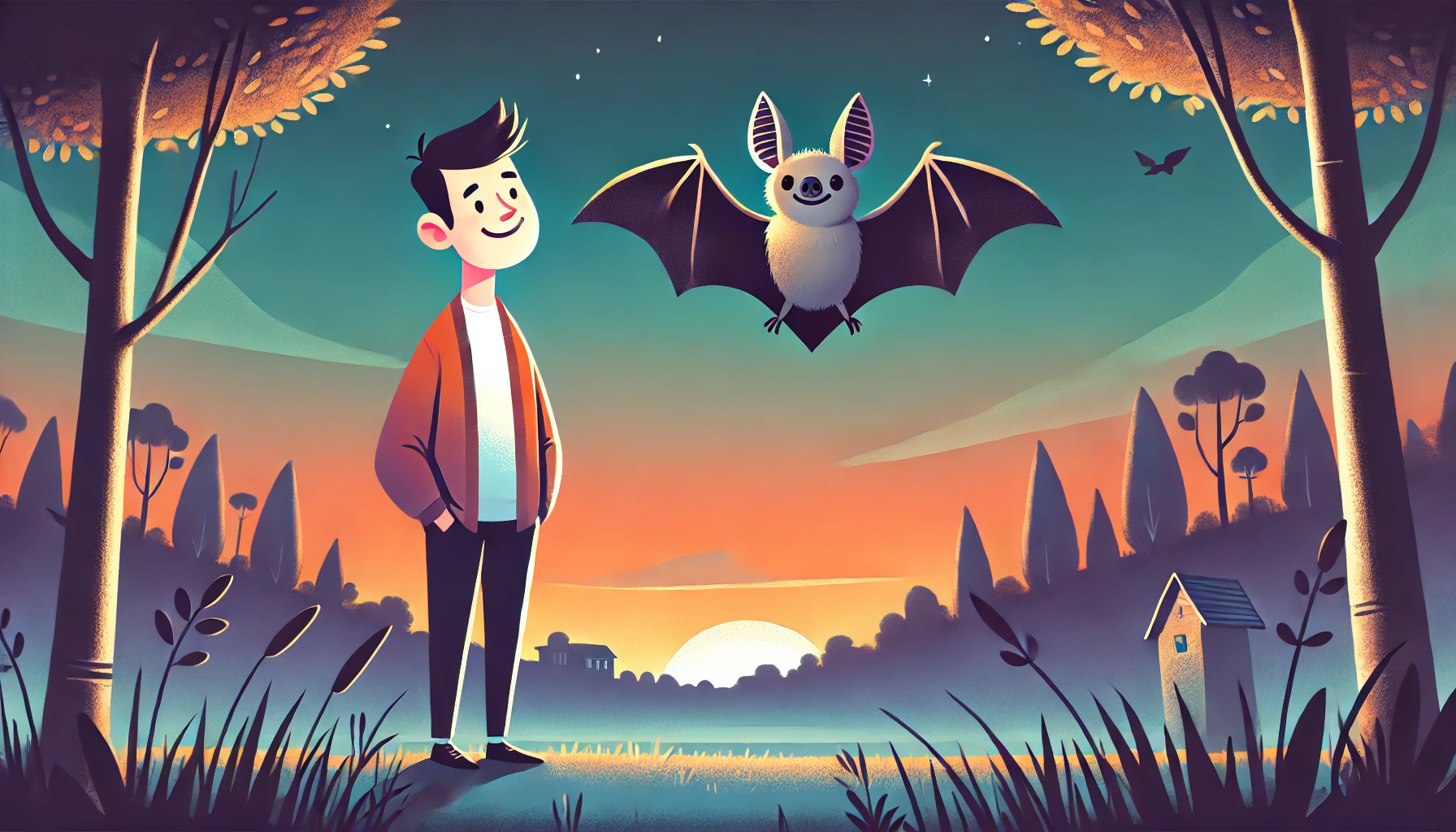
Understanding the Fear of Bats
A bat flickering past at dusk can be a lovely sight for one person and a sudden jolt of panic for another. If you feel the latter, you do not need to apologise for it. A fear of bats, often called chiroptophobia, can make gardens, evening walks and even wildlife pictures feel difficult.
Some people worry about unpredictable flight or an animal getting too close. Others feel uneasy about wings, dark spaces, disease or the possibility of a bat entering their home. These are different worries, so helpful support starts with understanding yours. Our guide to animal phobias and zoophobia explains the wider pattern.
This profile brings together clear information, gentle ways to build curiosity and options for animal phobia treatment. You do not have to become a bat enthusiast. Being able to enjoy an ordinary evening without fear taking over is a worthwhile goal.
What Causes a Fear of Bats?
You may remember a particular encounter, or your fear may feel as though it has always been there. Either way, understanding how it developed can make it easier to respond with patience rather than self-criticism.
Stories, Films and the Reputation of Bats
Bats often arrive in stories accompanied by ominous music, vampires and dark corridors. Repeated images can become familiar shortcuts: wings mean danger, dusk means something frightening is coming. The feeling can persist even when you know a film is fiction. Learning about ordinary bat behaviour gives your mind a fuller picture to work with.
Frightening Encounters and Learned Bat Fear
A surprise encounter or another person’s alarm can help shape a phobia. You might have seen a parent panic, heard repeated warnings or felt trapped when an animal entered a room. There is no need to dismiss that memory. Equally, one frightening moment does not have to determine every future encounter.
How Avoidance Can Keep Bat Phobia Going
Avoiding a picture or cancelling an evening walk may bring immediate relief. However, it can also leave the frightening prediction untested. Over time, the places that feel comfortable may become fewer. Recovery can involve finding small, appropriate ways to widen those choices again, with support where needed.
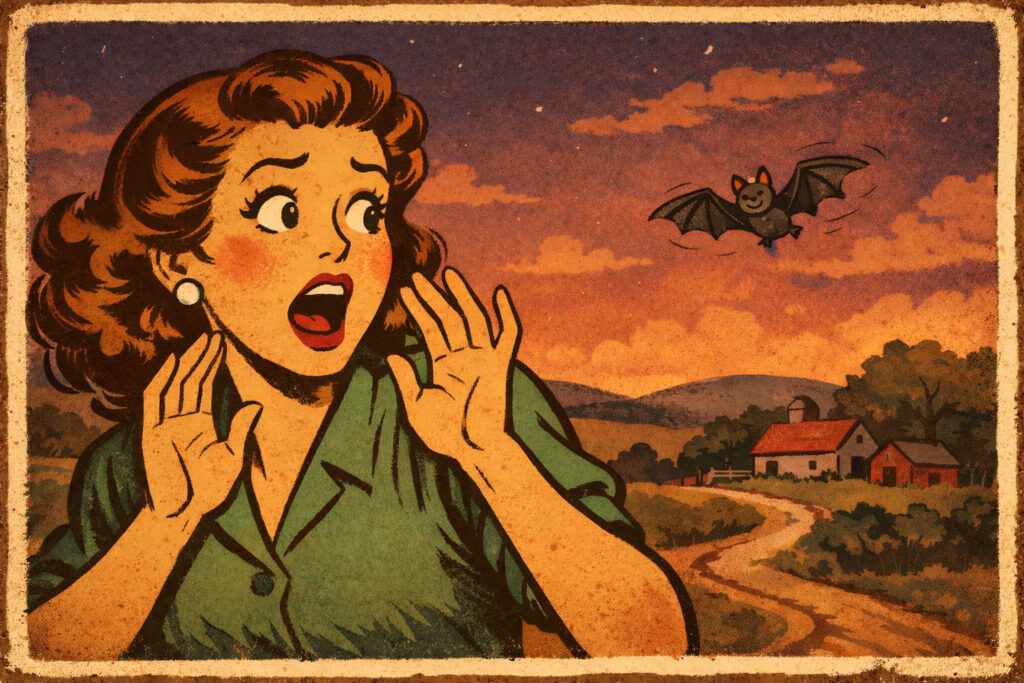
Fear of Bats: Symptoms and Common Triggers
Bat phobia may show up before a bat is anywhere nearby. A shadow, a wildlife programme or the approach of dusk can be enough to set off worry. The response can involve your body, thoughts and everyday choices.
Physical Symptoms of Bat Phobia
- A racing or unusually noticeable heartbeat.
- Shaking, sweating or feeling lightheaded.
- Nausea or an unsettled stomach.
- A strong urge to leave the situation.
How a Fear of Bats Affects Thoughts and Feelings
You might imagine a bat flying towards you, replay an unpleasant encounter or feel unable to stop checking the sky. Panic can arrive alongside embarrassment, frustration or a sense of losing control. Being told “it is only a bat” rarely helps. The distress deserves care, even when other people do not share it.
Avoidance and Everyday Bat Phobia Triggers
Some people avoid gardens after sunset, keep windows closed on warm nights or feel anxious about holidays, attics and old buildings. Pictures and silhouettes can be triggers too. Noticing your own pattern is useful: it shows which parts of life you want support to help you reclaim.
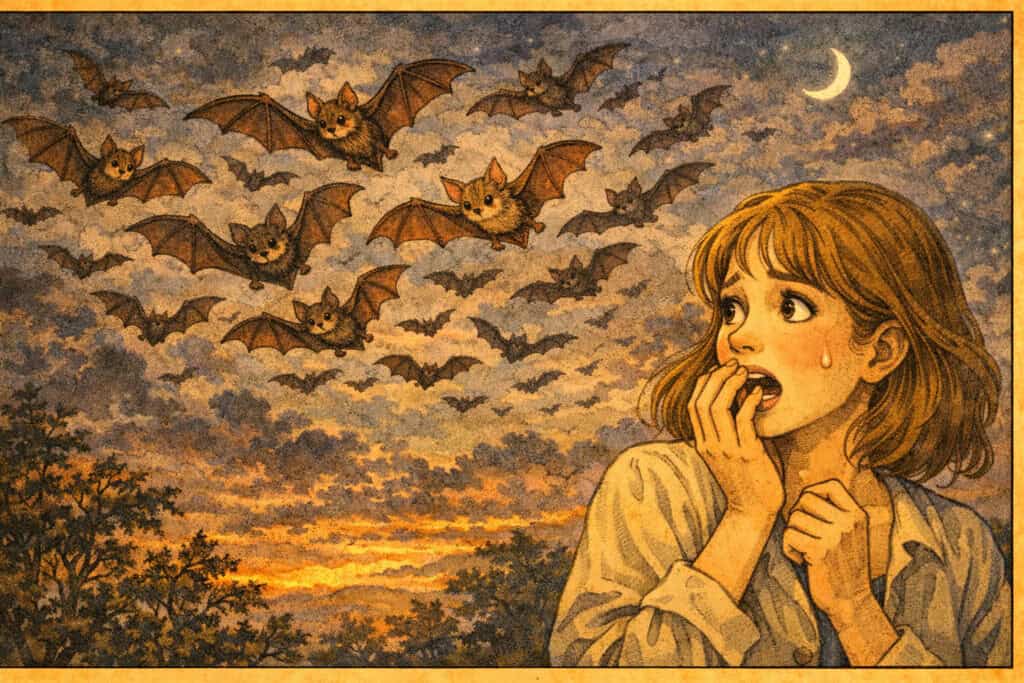
You do not need to diagnose yourself from a checklist. If the fear is restricting your life, that is enough reason to ask about support. The aim is to understand what happens for you, rather than judge whether your reaction is “too much”.
Fear of Bats: Separating Myths From Facts
When information is vague, imagination has plenty of room to fill in the gaps. Calm explanations can help you distinguish an ordinary wildlife encounter from a frightening story. They also make room for sensible precautions.
Are Bats Blind, or Likely to Fly Into Hair?
Bats can see. UK bats also use echolocation to navigate and locate insects: they produce calls and listen to the returning echoes. Their quick changes of direction can look unpredictable to us, but they are skilled flyers. Flying into people’s hair is not a behaviour they seek out. The Bat Conservation Trust’s guide to flight and echolocation explains how they find their way.
Do Bats Attack People or Feed on Human Blood?
UK bats eat insects. They are not hunting people, and a bat passing through a garden is usually going about its own feeding route. A frightened or handled wild animal may defend itself, so respecting distance is still important. Keeping that boundary is compatible with feeling calmer.
Are All Bats Infected With Rabies?
No. However, some UK bats can carry rabies-related viruses. You should not handle a bat with bare hands. A bite, scratch or possible saliva exposure needs prompt medical advice. The Bat Conservation Trust’s guidance on bats and rabies separates direct-contact risks from simply seeing bats fly nearby.
Are Bats Pests, and Do They Only Live in Caves?
Bats use a variety of roosts, including trees and buildings as well as caves. They are also valuable insect-eating wildlife. Finding a roost may understandably raise questions, but it does not mean the animals intend to invade your living space. Specialist advice is a better starting point than trying to move them yourself.
Does Grooming Mean a Bat Is Safe to Handle?
Bats groom themselves, but cleanliness is not a measure of whether a wild animal is safe to touch. You can appreciate their behaviour while leaving handling to trained people. This balanced view avoids treating bats as either monsters or pets.
Fascinating Bat Facts: Bringing Curiosity to a Fear of Bats
If bats make you anxious, fascination may sound like a very ambitious destination. You do not have to start there. A small question, such as “How does it find its food?”, is enough to open another way of looking.
Curiosity can give your attention something to do beyond watching for danger. You may begin noticing behaviour, habitat or the care an animal gives its young. At Creature Courage, we use education to encourage this broader perspective. Facts alone are not a cure, and you do not need to force admiration. They can support the wider work of building confidence, at a pace that feels manageable.
Remarkable Flight, Senses and Life Cycles
- True flight: bats are the only mammals capable of sustained powered flight. Their wings are adapted hands, with flexible membranes supported by elongated fingers.
- A remarkably varied family: more than 1,500 bat species have been described worldwide. Their sizes, diets and habitats differ considerably.
- Tiny and large: the bumblebee bat weighs about two grams, while some flying foxes have wingspans approaching two metres.
- Finding food through sound: many bats use returning echoes to locate objects and prey. Other species rely more on vision and smell.
- Long lives: some bats can live for decades, despite their small bodies. Females of many species usually have one young each year.
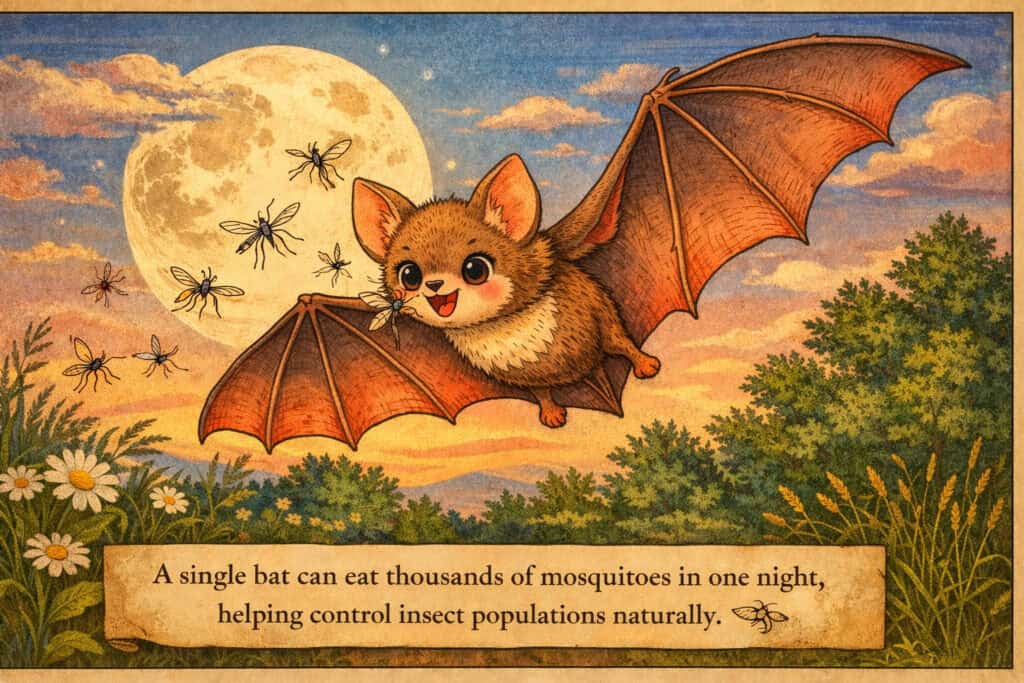
- A busy night’s feeding: a pipistrelle can consume thousands of small insects in a night. It is meeting its energy needs, rather than seeking contact with people.
You can explore these details in the Bat Conservation Trust’s bat facts and guide to different types of bats. Choose written information first if photographs still feel uncomfortable.
Bat Guano and the Movement of Nutrients
Bat droppings, known as guano, can contribute nutrients to ecosystems and have been used as fertiliser. It is another reminder that even the less glamorous parts of an animal’s life can have a role. This is background information, rather than a suggestion to collect or handle droppings yourself.

You might find one of these facts interesting and still feel anxious about a bat picture. That is not failure. Understanding and emotional confidence do not always grow at exactly the same speed.
Bats in the UK: Species, Habitats and Conservation
The Bat Conservation Trust’s UK bat guide lists 18 species, with 17 known to breed here. These include pipistrelles, noctules, horseshoe bats and long-eared bats. Learning their names can help replace the idea of one mysterious creature with a more varied picture of local wildlife.
For someone with a fear of bats, the useful starting point is often ordinary context. Bats have places to rest and routes to find food. A garden sighting does not mean you are the focus of their attention. You can learn about nearby species without searching for a roost or going closer than feels appropriate.
Conservation matters because bats depend on suitable habitats, food and roosting places. If you suspect bats are living in a building, seek specialist advice before changing their access or disturbing a roost. You do not need to solve a wildlife problem alone.
Why Bats Matter to People and Nature
It is easier to feel compassion for an animal when we can place it in a living landscape. Bats are part of that landscape, rather than an unwelcome interruption to it.
- Insect consumption: insect-eating species form part of natural food webs and can consume insects that damage crops.
- Pollination: some bats outside the UK visit flowers and transfer pollen between them.
- Seed dispersal: fruit-eating bats move seeds, helping plants spread and forests regenerate.
- Understanding biodiversity: monitoring bats helps researchers understand changes in the environments they use.
The Bat Conservation Trust explains why bats matter across different habitats. These contributions do not oblige you to like every bat. They simply give you another way to understand its place in the world.
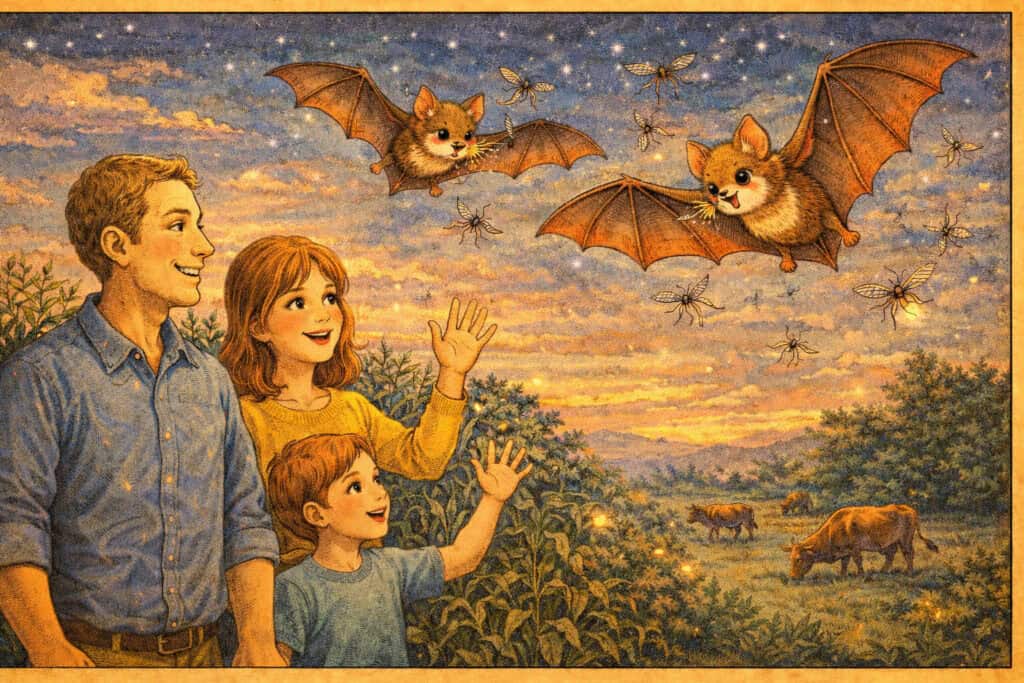
Living With a Fear of Bats: Respectful Coexistence
Coexistence can begin with distance. You can support wildlife, enjoy your garden and keep appropriate boundaries around bats. Recovery does not require installing a bat box, entering a cave or handling an animal.
- Start with learning: the Bat Conservation Trust’s gardening guidance offers ideas for wildlife-friendly spaces if and when that interests you.
- Keep encounters voluntary: a brief look from a comfortable place may be enough for now. There is no need to arrange an unexpected encounter to “prove” you are brave.
- Respect roosts: do not block entrances or disturb animals. Ask a bat specialist about concerns involving your home.
- Ask for wildlife advice: if a bat is grounded or indoors, keep people and pets away and contact the National Bat Helpline rather than handling it.
Separating the practical question from the emotional one can help. A wildlife specialist can advise about the bat; a phobia practitioner can help with the fear. You deserve clear support for both.
How a Fear of Bats Can Affect Daily Life
Bat phobia can reach further than a direct encounter. You might leave a barbecue early, avoid walking home at dusk or hesitate to book a countryside holiday. Some people spend warm evenings indoors while others enjoy the garden, then feel frustrated with themselves afterwards.
The costs may be quiet: repeated reassurance, checking windows, watching the sky or feeling unable to relax during a family outing. You do not have to wait until those patterns become severe to take them seriously.
A useful question is, “What would I like to do if this fear had less say?” Perhaps it is sitting outside after dinner or watching a wildlife programme comfortably. Those ordinary hopes make better recovery goals than a dramatic test of courage.
Overcoming the Fear of Bats: Therapy Techniques and Treatment
There are established treatments for specific phobias, including cognitive behavioural approaches and carefully planned exposure. The NHS guide to phobias outlines treatment options. The following links explain the techniques discussed across Creature Courage’s profiles, so you can understand their purposes before deciding what support to explore.
- Cognitive Behavioural Therapy (CBT) helps examine anxious predictions and the behaviour that keeps them going.
- Exposure therapy involves planned, manageable encounters with feared material or situations. With bats, this may include pictures or observation from a suitable distance; it should not involve handling wild bats.
- Animal education offers balanced information about behaviour and ecology, helping separate the animal from its frightening reputation.
- Guided imagination exercises offer a way to explore mental images and rehearse calmer responses.
- Hypnotherapy is an approach some people explore for relaxation and working with fearful responses.
- NLP techniques are included in Creature Courage’s approach to language and mental associations.
- Art-based therapeutic exercises provide a creative way to express and explore feelings about animals.
These methods do not all have the same research evidence. CBT and exposure have a stronger established evidence base for specific phobias than some complementary approaches. A useful plan explains why a method is being suggested and how progress will be assessed.
Breathing and grounding can help you manage a difficult moment. Medication is a separate discussion with a qualified medical professional, based on your circumstances; it should not be presented as a routine requirement for bat phobia.
Self-Help Steps for Managing a Fear of Bats
- Name the particular worry: is it flight, touch, darkness or disease? A specific concern is easier to discuss than a general feeling that “bats are frightening”.
- Choose gentle material: start with a calm description or illustration, avoiding dramatic footage and surprise images.
- Set a small, repeatable goal: practise an appropriate step that feels challenging but manageable. Ask for professional help if you feel overwhelmed.
- Notice what actually happens: compare your prediction with your experience, without demanding that every anxious feeling disappear.
- Respect wildlife boundaries: do not use handling, roost visits or close encounters with wild bats as self-directed exposure.
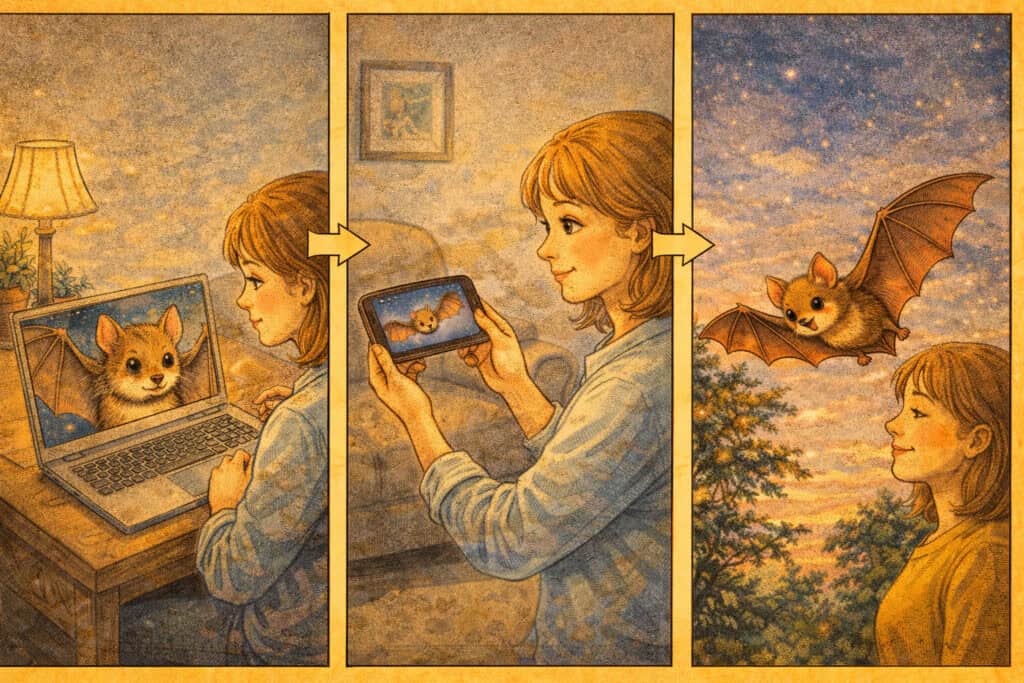
Progress may look modest from the outside. Reading a paragraph you once avoided or staying on the patio a little longer can still matter. A difficult day does not cancel earlier progress.
When to Seek Help for Bat Phobia
If the fear is limiting your choices, support is worth considering. You do not have to demonstrate extreme panic before asking. Repeated checking, sleep disruption or avoiding things you care about are all useful reasons to have a conversation.
You can speak to your GP about anxiety and available services, or explore Creature Courage’s animal phobia treatment. For practical details about sessions, our therapy frequently asked questions can help you prepare.
A good first conversation should leave room for questions, hesitation and your own priorities. You should understand the proposed approach and feel able to say what is too much.
Overcoming a Fear of Bats With Creature Courage
Our starting point is you: what sets off the alarm, what you have already tried and what you want life to feel like afterwards. We explore the situations, memories and expectations around your fear, rather than assuming everybody needs the same sequence of exercises.
The Creature Courage animal phobia therapy programme brings education and practical confidence-building together. Our holistic approach considers thoughts, bodily responses, imagination and avoidance as parts of the same experience. The technique guide above explains individual methods; this section describes how we plan support around your needs.
Together, we can identify a meaningful goal and choose suitable steps towards it. That may begin with conversation and gentle imagery, followed by reviewing how your response changes. Any observation of bats must be appropriate, lawful and respectful of wildlife. We will discuss what is feasible rather than promise a particular live-animal encounter.
Some people ask about intensive support. Our guide to one-day phobia treatment and session length explains that format, while a more gradual plan may suit others. The pace and expected outcomes should be discussed individually. For younger clients, our children’s animal phobia therapy page explains age-appropriate support.
The goal is a life with more choice: enjoying an evening walk, leaving a window open when appropriate or hearing about bats without panic deciding what happens next. You do not need to love bats for those changes to count.
Getting Help With Your Fear of Bats: Hope and a Next Step
A fear that has lasted for years can feel permanent, yet support can help people change their responses to feared situations. CBT and exposure provide an established foundation for specific-phobia treatment. Our client testimonials and animal phobia success stories also share personal accounts of working with Creature Courage.
You do not need instant confidence or a plan to become fascinated by bats. If you would like to enjoy your evenings with less worry, contact Creature Courage to tell us what feels difficult and ask about support. We can discuss the process, your goals and a suitable next step. Hope can begin with a conversation.

Frequently Asked Questions About the Fear of Bats
What Is Chiroptophobia?
Chiroptophobia is a term for an intense fear of bats. It may involve anxiety about the animal itself, its movement, pictures or situations where you imagine encountering one. The effect on your life matters more than the label.
Can a Fear of Bats Develop Later in Life?
Yes. A frightening experience, a stressful period or repeated alarming information may contribute at different ages. You do not need a clear starting memory to seek support.
What Are Common Symptoms of Bat Phobia?
People may notice panic, physical anxiety, frightening predictions and avoidance. Your particular pattern might centre on dusk, windows, gardens or images. A practitioner can help you explore it without relying on a checklist alone.
How Can a Fear of Bats Be Treated?
CBT and gradual exposure are established approaches for specific phobias. Education and other support may form part of an individual plan. Our animal phobia treatment page explains the support available through Creature Courage.
Can I Work on Bat Phobia Without Touching a Bat?
Yes. Handling wild bats is not a recovery requirement. Work can begin with conversation, gentle visual material and appropriate observation. Your goals should reflect everyday life and sensible wildlife boundaries.
Are There Self-Help Resources for a Fear of Bats?
The NHS offers guidance on facing fears gradually. The Bat Conservation Trust provides wildlife information. Choose resources carefully if images are a trigger, and seek support if exercises feel overwhelming.
What If My Fear of Bats Is Affecting Daily Life?
You are welcome to seek help before things become unbearable. Discuss the impact with your GP or contact Creature Courage to ask about an individual plan. Explain the activities you are avoiding and what you would like to feel able to do again.
Are Bats Dangerous to People?
Watching bats fly nearby is different from direct contact. Do not handle wild bats with bare hands. If you have been bitten, scratched or may have had saliva exposure, seek prompt medical advice. For a grounded bat or an animal in your home, ask the Bat Conservation Trust for guidance.
Does Creature Courage Have a Bat-Specific Testimonial?
This profile links to testimonials about other animal phobias, rather than presenting a bat-specific client story. They can help you understand people’s experiences, while your own suitability and goals should be discussed individually.